
Desertcart purchases this item on your behalf and handles shipping, customs, and support to Seychelles.
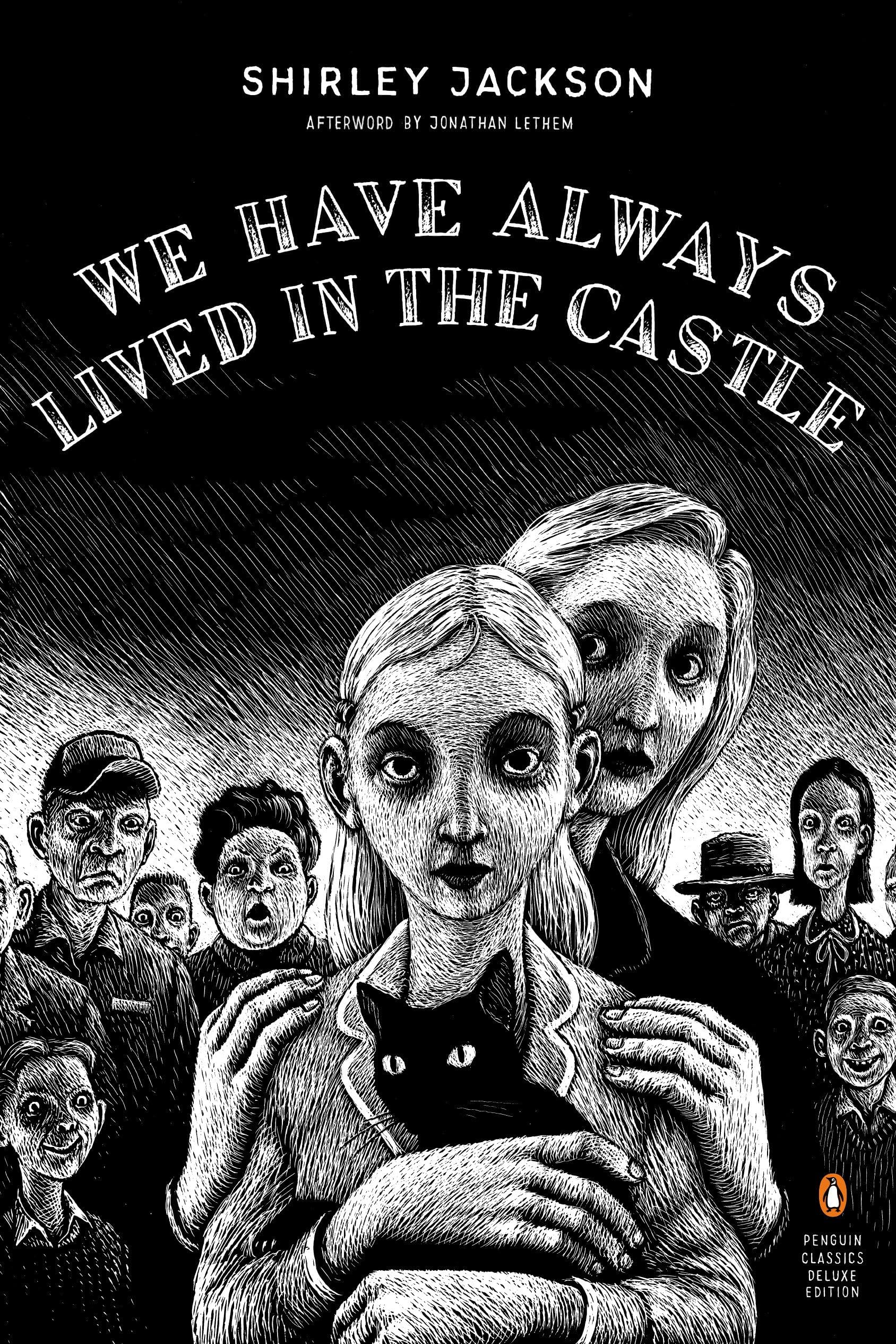
Shirley Jackson's beloved gothic tale of a peculiar girl named Merricat and her family's dark secret Taking readers deep into a labyrinth of dark neurosis, We Have Always Lived in the Castle is a deliciously unsettling novel about a perverse, isolated, and possibly murderous family and the struggle that ensues when a cousin arrives at their estate. This edition features a new introduction by Jonathan Lethem. For more than seventy years, Penguin has been the leading publisher of classic literature in the English-speaking world. With more than 1,700ย titles, Penguin Classics represents a global bookshelf of the best works throughout history and across genres and disciplines. Readers trust theย series to provide authoritative texts enhanced by introductions and notes by distinguished scholars and contemporary authors, as well as up-to-dateย translations by award-winning translators.


| Asin | 0143039970 |
| Dimensions | 5.71 x 0.47 x 8.43 inches |
| Edition | Deluxe |
| Isbn 10 | 9780143039976 |
| Isbn 13 | 978-0143039976 |
| Item Weight | 6.6 ounces |
| Language | English |
| Print Length | 160 pages |
| Publication Date | October 31, 2006 |
| Publisher | Penguin Classics |
User
Merricat, Merricat, May I Come and Play?: A Fatal Case of Sugar and Spite
'It's a little too candy-box pretty for me', George said with that wonderful wit of his, narrowing his eyes with glee, adjusting his driver's seat and lowering his voice into a comical growl. 'Yes', he continued 'for behind these quiet houses often lurks evil in the heart of mankind'. George, one of my weekend guests and I, were exploring a village in New England on a spring day, a small community which has long become a tourist draw for New Yorkers along the shore of the Connecticut River. Chuckling, I glanced out the window at the sleepy Main Street early at dawn, and his comment brought to mind one of my favorite books, first read with great enchantment when published in the early 60's. It was: "We Have Always Lived in The Castle", by the late author Shirley Jackson.This short novel is about a young girl Merricat now eighteen when the story begins, and her older sister Constance Blackwood, the sole survivors of their intimate family circle, and their elderly Uncle Julian, a now addled invalid confined to his chair, busy with his papers documenting the purported crime that his niece Constance was accused of, that of polishing off her family with a serving of berries and arsenic-laced sugar. Merricat, thirteen at the time of the tragedy, had been sent to her room without supper for some infraction and thus survived; their Uncle Julian only barely, having asked for a modest sprinkling of sugar on his dessert. Constance was acquitted after the trial was over and the case was closed, but the village people remain hostile to her and the house, and she rarely ventures outdoors. Merricat has to go once a week to the the village for groceries, attracting hostile stares from the locals and meeting up with the village bully, Jim Donell, an arrogant man who enjoys his attempts to rattle and tease her.Occasionally some young boys from the village on a dare, creep up at night and throw stones at the windows of the Blackwood house, chanting their little mockeries before running away as fast as they can and this local legend continues to grow among them. And, then one day a cousin of the family, Charles, a first-time visitor shows up in the midst of their quiet existence, moves into the house, courts Constance and starts to make changes with a firm agenda in mind. Havoc ensues as a result of this intruder.Merricat narrates the story, and after I finished this mysterious, magical and dark delight, for that was my interpretation at a young age, I wanted to join her as a playmate, and her intriguing unusual voice in the telling of her adventures and forays into nature drew me in right away. Merricat in fact will remain forever thirteen.Many years later when I picked Jackson's novel up again, it was with finer clarity and a more mature and experienced eye. Words such as creepy, depressing and weird are some of the comments one finds among new and younger readers today and while they all carry validity, to my mind the word 'sinister' comes to the forefront. It is not the gentle Constance, nor the troubled Merricat, nor their ailing Uncle Julian, who are the sinister ones here, it is the collective cruelty of people banding together that is frightening. A theme which the author Shirley Jackson knew about first-hand, and addresses in this memorable and psychological masterpiece of hers, Jackson was to return to this topic in some of her other important works.There are several defining moments that stood out on this second reading: when circumstances reach an explosive edge, Uncle Julian comes out of his reality from the past, and in a moment of rare if fatal lucidity, joins his two nieces protectively against Charles, the dangerous and manipulative trespasser. There is a tinge of unexpected conviction laced with pathos to be found here. The turning point in the story, however, is perhaps when the leader of the village, Jim Donell, after removing his professional hat, picks up a rock as a sign to the pack of malicious onlookers to have fun, and the destructive party begins.A tragedy? Reflections on the subject of collective shame? A horrifying tale? All of the above, and more perhaps. Some of the reviewers are able to articulate it better. On a side note, the author Eric Hoffer was to say that he was doubtful about 'collective shame' on the basis that association with others is almost always felt as an association with one's betters, and to sin with one's betters cannot be productive of a crushing shame. And, yet Shirley Jackson goes on to show that there are such cases as the above in this famous novel of hers.One might feel, after reading this classic, like joining the village people in the aftermath of their actions, in leaving a pot of jam, or some fresh bread, a small token of some kindness on the door-steps of this household now at peace while moving quietly away again. There are slight tinges of redemption to be found here as well. Known for her extraordinary Gothic novels, Shirley Jackson was also a fine psychologist of the human condition, and her own life, by all accounts, was not always a happy one although she could be wicked and witty at times especially when it came to her own family anecdotes and her short stories.To D. Friedlander, moderate and steady in his views, yet passionate in spirit; his wry humor and fine perception; his reasoned clarifications on important life issues, the many laughs and complexities we experienced over the years, and for explaining to me why Shirley Jackson's enduring short story "The Lottery", best remembered of all her writings today, caused such a furor among people when published in 1948. She will always be a favorite of mine
User
Due to the success of the TV adaptation of Shirley Jacksonโs, โThe Haunting of Hill Houseโ...
...and with Halloween just around the corner, Jacksonโs 20th century horror classics are making a comeback, and โWe Have Always Lived in the Castleโ is no exception.Eighteen year old, Mary Katherine Blackwood (Merricat), her older sister Constance, their Uncle Julian, and cat Jonas, happily co-exist together in their isolated mansion on the outskirts of town, shut away from the outside world in their own private, protective bubble. The gates are kept locked, and the Blackwoods receive few visitors, and Merricatโs weekly excursion into town to buy food, is her only contact with the villagers.They have lived this way for six years โ since that fateful dinner where four members of the Blackwood family were poisoned via arsenic in the sugar bowl (Shirley Jacksonโs 1962 far more drastic solution to the anti-sugar campaign). That is until, estranged cousin, Charles Blackwood knocks at their door, and changes their lives irrevocablyโฆEven though I tagged this as horror, it wasnโt essentially scary, a gothic horror tale sums it up nice and neatly. Although there was one scene that raised the hairs on my arms, and if you think too much about the specifics of the Blackwoods demise โ I mean one of the family members was a 10 year-old boy, then thatโs pretty horrific.I really loved Merricat, Constance, and Uncle Julian โ all three had such distinct and varied personalities. Our narrator, Merricat, had an imaginative, insane innocence, and her thoughts were as wondrous as they were disturbing. Constance was the one in charge, carer and protector, crippled with agoraphobia. Because she prepared the final meal, Constance was the one arrested of the crime, later acquitted. She was often lonely, and at least a part of her wanted to rejoin society, which meant she was eager and excited, as well as the most vulnerable, over Charlesโ visit. Julian (who consumed a small amount of arsenic that day which left him paralysed) was obsessed with his familyโs deaths, living that day over and over in his head, writing detailed accounts of what he recalled, desperate to make sense of it all.Ignorance, intolerance, and fear of anyone who is different, as well as lack of understanding in regards to mental illness, was a prevalent theme throughout. The very existence of the Blackwoods frighten the villagers because they are viewed as strange, odd, and anti-social, and such people do not belong in their town. On top of that, they know that at least one of them is a mass murderer. The three Blackwoods are just as scared of the villagers, live in constant terror that one, or worse a group, will invade their property, and all they want is to be left alone, and live a quiet live in peace and security.Light spoiler ahead!The mystery isnโt who poisoned the Blackwood family (I think thatโs pretty much a given), but the why is left purposely ambiguous, and not knowing the reason, or what lead up to it, freaked me out even more. I had my theories of course, but will never know for sure.The close of the book will leave you feeling unsettled, haunted, and saddened, yet touched. An eerie, poignant read for Halloween, perfect for those who donโt like to be too scared, as well as a must read for hardcore horror fans.
User
we will be so happy together...
We Have Always Lived in the Castle by Shirley Jackson is what many consider to be a classic gothic tale. I dove into the book without any pretense or knowledge of what the story would be about. I personally find the story to be that much more engaging as I read along, especially for short stories such as these. Is this story dark? Yes. Is it depressing? Yes. Is it weird? A little. Is the story fun to read? No, not really. The story was engaging in the beginning due to its quirkiness and the need to know what really happened to the family, but once you get past that part, it starts to get a bit hollow as itโs just a constant repetition of events. I do admit having to skim through some of the final pages in the last few chapters (never skipped any dialogue parts) only because it was just too dragging and I knew nothing of importance will be missed.I wished they were all dead and I was walking on their bodies. - MerricatThe stars of the story are obviously Merricat and Constance. These two have a weird relationship in that at first it seems normal and sweet, but then as the story goes on, the psychological elements come into play. Obviously, Merricat is a twisted child harboring dark thoughts about hurting others. Mental health issues may also come into play as she spends a lot of time going over rituals she believes will protect herself, Constance, and Uncle Julian. I found her behavior obviously odd and, at times, just plain irritating. Constance, on the other hand, just caters to Merricatโs every whim. At first this could be seen as family love and survival, but it could also be something darker.โPoor strangers. They have so much to be afraid of.โ - MerricatI guess the best thing I can say about this short novel is that regardless of how repetitive and dull the story can be at times, it still forced me to think at a deeper level about whether things really do seem to appear as they are, or is there a darker tone underneath that the author wishes for the readers to decode? Why is there hardly any interaction between Merricat and Uncle Julian, and why must she always remind herself to be โnicerโ to him? Can we really trust the words of Merricat with Constance being damaged as she is and Uncle Julian who has lost his memories? In a way, I have more questions than answers after having completed this short novel, and for once in a long while, I find that actually okay.
User
Masterful writing
Anyone who knows great writing and can see the intricate, subtle ways this novel creeps into your mind and takes up residence will realize what a masterpiece it is. Jackson is a legend of creative writing, breaking the rules and making it work. ATTN AUTHORS: Study her and learn.
User
Intriguing!
When I first began reading I couldnโt quite understand where the story was going. Was this a ghost story? Is every one dead? Then I realized three characters were certainly alive. There were no ghosts about. This was indeed a strange kind of story yet I found myself continuing to read because of the peculiarities of Sisters Constance & Mary. Found out this story revolved around two sisters taking care of their uncle. Constance tends to him and Mary runs the errands. Turns out entire family besides these three were killed by being poisoned with arsenic. Constance was arrested, Mary put into an orphanage while trial went on. Constance was acquitted but never left home again due to the stares and whispers that went about the village. Mary was Constanceโs protector. Always wanting to make sure that Constance was not afraid or worried. Along comes cousin Charles, his father and The girls father were brothers; however, never spoke or knew of one another due to differences between the brothers. Charles comes along acting like he will be the man in charge now. Manipulating Constance into feeling overworked. His aim was to get rid of Mary and the uncle put into a nursing home. Mary seen his ways and did everything in her power to make him leave. Mary removed all her fathers belongings so that Charles could not use them. Sheโd check his room always. Charles smoked a pipe and Mary could not stand the smoke or smell. Upon being in his room, she took the pipe and dumped the ashes into the garbage bin. At dinner, smoke was smelled to find the upper level completely in flames. The fire department arrives putting the fire out. As the girls look on, they also see and hear their home being looted. Windows purposely being broken, their dishware thrown around to crashing sounds. The harp being pushed over. Then on the side, thereโs Charles yelling for all to hear that they started the fire. By the time the fire is out, all spectators leave. Uncle Julian died in his sleep. He was removed. Mary is angry and states she wishes she could kill them all (the spectators) and Constance says as you killed the family? Wait. What? Yes! As a reader you find out that Constance took the blame for what Mary did with the poison. As a reader you come to terms that there is definitely something โspecialโ about Mary. They both go into the house. Mary blocks all windows so no one can see in. They close all doors to all the other rooms where the fire causes damage and the roof is gone. They live in their kitchen and Uncle Julianโs room thatโs next to the kitchen. They eat. They wash clothes. They ignore all who come around. Never answering anyoneโs call. The story ends with them proclaiming their love to one another. After all that, it seems they both have that specialness going on. This is why I gave a 4 rating. I donโt want to assume they just grow old inside the house and die. I wanted to know what became of them. Did they ever become in need of food? Did Constance die before Mary being the older sister? Or did they decide to die together? Did Charles ever try and come back for all the money that was there? What happened to the house and its valuables when the sisters were gone? I was shocked at finding out it was Mary who killed everyone. Although her behavior is so strange, it made sense that it was her.
User
Idiosyncratic Fun!
If you haven't read it, you might want to go ahead and get her read before reading what I am posting here.It's a great little book. I loved the message it sent. You can still be happy, even in the midst of destruction, so long as you aren't around annoying people. Also, notice how the villagers started leaving goodies for the girls only to make themselves feel better? It was a selfish way to gain control of the situation since the girls completely and utterly ignored them with every ounce of their beings. If the townsfolk really were doing something truly for the girls, they would have just left them alone like they wanted. Still wasn't really sure why Charles called them old maids. It's not like they were that old. All and all We Have Always Lived in A Castle is written in a captivating style that holds your attention. What moves the story along is this idea that every time the youngest daughter, Mary, is threatened, something bad happens, like contaminated food or a fire, and she manages to keep her existence intact. Nothing changes. No asylums to attend and she gets to keep her caregiver, too.A castle is a safe place that protects members of the royal caste and that's pretty much what this house does for Mary or MerryKat as she is nicknamed, and Constance, her older sister. It keeps people away. So yeah, the title of the book does it justice. Its just a good, down home, anti social read in the voice and experience of someone who wants nothing at all to do with a single soul except one other person and I love it!This story definitely has a Lizzie Borden quality to it. I was so reminded of that particular story just by the circumstances - the two women for instance, and one of them murdering their parents. So much reasonable doubt, too, so that we never know exactly who it was that murdered them. Toward the story's (non) conclusion, we are made aware it was quite possibly Merrikat who did it due to an argument her parents had, perhaps over sending her away. She is rather destructive at times. I got the feeling all she wanted was to live that existence forever, with Constance to look after her, whom she trusted. The story is told entirely from her point of view, not taking into consideration of anyone's needs but hers. I felt sad the only one she felt she could trust in life was Constance. Everyone else seemed to let her down. She does her best to turn Constance into a shell of a person, kind of lobotomizes her through circumstance or trial by fire or something. Constance ends up surviving but only if she fulfills the role of guardian and caretaker to Merrikat. She is terrorized and traumatized by putting on trial for the murder of her parents and eventually acquitted. She is too fragile to ever face the hatred and scorn of the townspeople, so she hides in the house with Merrikat, whom it seems to work out fine for. The circumstances constantly cocoon her as she manages to manipulate them without really seeming to look as if she is. Perhaps she is such a person, no one would afford her that power so it is easier for her to get away with it. She is pretty much an innocent only not exactly. She is very protective of her own way and if someone perishes in preserving it, so be it. Preservation is a theme in this tale. The family cellar is full of generations of home grown food canned over the generations which everyone is too afraid to eat. So they just sit there on the shelves for thousands and thousands of years, well, eventually.Things took a turn for the worst when their father locked up the property, banning the locals from taking a cherished short cut to the highway. That must have been where the ill will started between the townsfolk and the family and it only gets worse from here.I really liked the story but one thing I think would have made it more interesting, for me, personally, is if Jackson would have included Charles in the family's "last supper" and toyed with the idea of not knowing, for sure, who murdered the family - Merrikat or Charles. I like that mysterious, unknown element. Life's question marks.
User
Must read!
This is the third time we read this, and get something new out of it every time! I have never read anything like it. Short, scary, sad, funny, poignant, and magical.
User
Brilliantly creepy
Itโs amazing how Shirley Jackson can take the everyday and twist it somehow into a subtle and creepy tale. Thereโs an element of Gothic in her last book, We Have Always Lived in the Castle. What I also believe Jackson can accomplish so impeccably in her writing---and through her characters and their situationsโis leaving an element of subjectivity and the โunknownโ within. The reader is often left seeing various pieces of characters and context, but often must make their own conclusions and put some pieces together. To me, that makes for a remarkable reading experience.The basis for this novel is a family, the Blackwoods, whose remaining family members have been ostracized by a small community. We learn why: a terrible tragedy years beforeโpoisoning, it seemsโtook the lives of everyone of the Blackwood clan excerpt three, Uncle Julian, Constance, and the narrator, Mary Katherine(aka โMerricatโ). Constance was suspected, but ultimately acquitted of the poisoning. Living a life mainly of alienation away from the whispers of this town, the Blackwoods are able to manage. Merricat believes in such things as omens, and is vastly different compared to her sister, Constance. Uncle Julian is an invalid because he did have a bit of the poison that claimed the other Blackwoodsโ lives, but not enough to kill him. This is a book that is difficult to reveal too much about plot without spoiling, but, when a certain cousin Charles suddenly arrives to the Blackwood home, the plot thickens.We Have Always Lived in the Castle is very reminiscent of Jacksonโs short story โThe Lotteryโ in its themes of mob mentality. As the remaining family members by to go about their lives, they are often the subject of subtle and not so subtle taunts and threats.There is a brilliantly atmospheric vibe to this novel. My feeling is that Shirley Jackson is incredibly underrated as an author, not being given quite the accolades she deserves. This book is one such example of her genius, an expertly crafted eerie tale with brilliant prose. It is a perfect book for a Halloween night.
User
Stunning Read!!
It may be surprising to some people, but I had never heard of Shirley Jackson before reading this book, and so I was surprised to find that she has such a following. Stephen King, Neil Gaiman and the amazing Richard Matheson โ author of one of my favourite books โ I Am Legend, are just a few well-known authors who claim to have been inspired by her writing. I must point out that I only looked into that once I was halfway through the book. I found her writing so powerful, affecting and strangely melancholy, that I had to find out more about the author before I had finished the book.The story is told in first person through the eyes of a young tomboy-girl called Merricat, who lives in the Blackwood family home with her sister, Constance, her cat, Jonas, and her uncle Julian. Uncle Julian is the man of the family, but it is Constance who does all of the cooking, cleaning and tending to the garden. We learn that the rest of the family have all since died from an unfortunate incidence of food poisoning. Constance was put on trial for the murders of all that died, but we learn that she was cleared of all charges. Now they live a rather solitary life in the house, whilst being surrounded by the staring and cruel evil eyes of people from the village, who believe that Constance, or her sister Merricat, did in fact kill their family. They are treated mostly as outcasts by all of their neighbours, and every time Merricat goes into the village to get food, they all give her plenty of space, that is apart from the brave few who bully her in the hope that the sisters will pack up and leave town for good. It is always Merricat who has to go to the village for supplies, for since the incident of poisoning and the trial, Constance will only go as far from the house as the vegetable garden. And she is also very busy tending to Uncle Julian, who is wheelchair-bound and gradually losing his memory. The only thing he is sure about, and quite obsessive about, is his papers, which contain his memory and details about the family poisoning.I must say this story hooked me from the very start, and what made it so brilliant for me were the sad, mellow undertones that come from Merricat. She often says how happy she is to her sister Constance, but I sensed an aching and desperate sadness beneath her skin. And Jackson does a brilliant job of turning the mundane actions in the house, into illuminations of spirit and character. For there are numerous scenes, especially those with Jonas, where the strange and perverse melancholy within the house is almost like a thunder rattling the floorboards, but the fact that thunder makes no sound, only strengthens the eerie and bleak atmosphere of the story. Having said that, the characters are so likeable, and the daily chores they get up to are so simplistic and pleasing, that as a reader we feel a strange cosiness within that world, and perhaps a need for it not to be disturbed. For after all, perhaps to them this is happiness, and we the reader are merely projecting some melancholy onto the page. The ambiguity raised by the author in this point is stunning, and the sense that this humble world that they exist in, will not, and cannot last for long, is what carries are curiosity along.The arrival of Cousin Charles sure puts an end to the cosy and in some ways perfect lives led by the two sisters, for though Constance is happy to accept him into their home, Merricat doesnโt take to him at all, and in fact does almost everything in her power to make him feel ill at ease, everything from destroying his room, to talking at the dinner table about the different tasteless poisons that can kill. I shall not go into what happens with Charles in the second half of the book, but just when you wonder exactly where, or how Jackson will move the story on, she does so with effortless and cunning invention, and somehow guides the story to a wholly fitting and satisfying end. That end is perhaps a little predictable, but as a reader I was actually pleased, and wouldnโt have wanted it to end any other way.In summation then, I found this to be a marvellous read, and one whose characters will live on in my head for a long time to come. They are written with such skill and warmth, that they perfectly contrast with the cold, dark and treasure filled house in which they live. I especially loved the relationship with Merricat and Constance, a sisterly love that you feel no secret could ever break.
User
Bellissimo
Bellissimo libro e comprensibile in lingua originale anche per chi ha un b2 in inglese!
User
Great product
Great product. Recommended seller.
User
Interesting, Interesting, Interesting!
I promise I didn't know this book had already been made into a movie starring Sebastian Stan! Had I known that, maybe I would have skipped directly to the movie and not bothered to pick the book up at all. But I'm so freaking glad I didn't! Because this book is one hell of a gem and I would have definitely missed out on such a deep message that comes in at the end.In the backdrop of a terrific narration from its eccentric narrator, the book introduces us to the different shades of human fear, often triggered by shock or trauma. The book satirizes the unfounded danger and fear that are often attached to "haunted" houses and mansions. It's all one big joke albeit not as funny as expecting your most trusted people to turn on you just like YOU had in the past. It's like, you cannot even hold people accountable for betraying you because you know you deserved it. But then you make your own way like you always have.An eye-opening novella with some really interesting characters. A perfect read for quarantine.
User
Great book
Didn't realise the book was supposed to looked very diy and a bit ripped up. Great book.
Trustpilot
3 weeks ago
1 month ago