
Buy anything from 5,000+ international stores. One checkout price. No surprise fees. Join 2M+ shoppers on Desertcart.
Desertcart purchases this item on your behalf and handles shipping, customs, and support to Seychelles.
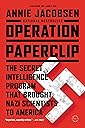
The โremarkableโ story of America's secret post-WWII science programs ( The Boston Globe ), from the New York Times bestselling author of Area 51 . In the chaos following World War II, the U.S. government faced many difficult decisions, including what to do with the Third Reich's scientific minds. These were the brains behind the Nazis' once-indomitable war machine. So began Operation Paperclip, a decades-long, covert project to bring Hitler's scientists and their families to the United States. Many of these men were accused of war crimes, and others had stood trial at Nuremberg; one was convicted of mass murder and slavery. They were also directly responsible for major advances in rocketry, medical treatments, and the U.S. space program. Was Operation Paperclip a moral outrage, or did it help America win the Cold War? Drawing on exclusive interviews with dozens of Paperclip family members, colleagues, and interrogators, and with access to German archival documents (including previously unseen papers made available by direct descendants of the Third Reich's ranking members), files obtained through the Freedom of Information Act, and dossiers discovered in government archives and at Harvard University, Annie Jacobsen follows more than a dozen German scientists through their postwar lives and into a startling, complex, nefarious, and jealously guarded government secret of the twentieth century. In this definitive, controversial look at one of America's most strategic, and disturbing, government programs, Jacobsen shows just how dark government can get in the name of national security. "Harrowing...How Dr. Strangelove came to America and thrived, told in graphic detail." โKirkus Reviews Review: View Into a Rapidly Spinning Moral Compass - In World War II, Germany waged some of the most technically advanced warfare ever witnessed. They leveraged advances in aerodynamics, rocketry, chemicals and medicine to rain destruction and terror on their enemies. As the war ended, the fate of the scientists and engineers who created these innovations were of major interest to the victorious allied forces. There was, however, a huge problem with these Nazi scientists: Many were significant war criminals, some personally responsible for committing atrocious crimes during the conflict. In the warโs aftermath, the US was left with a dilemma: Should they take advantage of the scientistโs expertise? Prosecute them for their crimes? Or risk having them captured by the Soviets, just as the Cold War was beginning? Author Annie Jacobsen chronicles the rapidly spinning moral compass the US faced dealing with the fate of the German experts. Using a wide range of documents (including some only recently de-classified for this book) she traces the stories of many notable scientists, and the โOperation Paperclipโ the US set up to sanitize their Nazi past. Wernher von Braun, for example, is known to most Americans as the heroic NASA designer who designed the Saturn-V rocket carrying astronauts to the moon. But in WWII, his V-2 missiles killed thousands of civilians in England and northern Europe. The underground factory constructing these missiles worked thousands more concentration camp prisoners to their deaths. This book traces the frantic search for the scientists and their work as WWII wound down, then the bureaucratic push and pull as various agencies struggled with the scientists fates as well as prosecuting others for war crimes. Finally, she traces the ultimate fate of some of the scientists. Some had prosperous new lives as successful engineers and businessmen. Others ultimately died in disgrace as their Nazi past caught up to them. The book is an important chapter of post-war history just now coming to light. Review: Great and Disturbing Book - For those (like me) who only have a rudimentary understanding of the history of the US bringing the "Nazi scientists" over to the US, this was a disturbing and eye-opening book. Contrary to what I believed, a number of the scientists that were brought over to the US were not "innocent" and/or totally unaware of Nazi atrocities. In truth, a number of these scientists should have (at a minimum) been imprisoned for the rest of their lives for war crimes. Given the exigencies of the Cold War, I do not condemn the U.S. government for Operation Paperclip. But I think it's a damn close call regarding whether America made the "right call" with Paperclip. This book made me put myself in the shoes of Harry Truman, Dwight Eisenhower, and the other POTUS during the Cold War to think about whether I would have acted as they did. I don't envy the choice they had to make on this issue.


| Best Sellers Rank | #27,388 in Books ( See Top 100 in Books ) #10 in Nuclear Weapons & Warfare History (Books) #21 in Intelligence & Espionage History #149 in World War II History (Books) |
| Customer Reviews | 4.7 out of 5 stars 3,220 Reviews |
O**T
View Into a Rapidly Spinning Moral Compass
In World War II, Germany waged some of the most technically advanced warfare ever witnessed. They leveraged advances in aerodynamics, rocketry, chemicals and medicine to rain destruction and terror on their enemies. As the war ended, the fate of the scientists and engineers who created these innovations were of major interest to the victorious allied forces. There was, however, a huge problem with these Nazi scientists: Many were significant war criminals, some personally responsible for committing atrocious crimes during the conflict. In the warโs aftermath, the US was left with a dilemma: Should they take advantage of the scientistโs expertise? Prosecute them for their crimes? Or risk having them captured by the Soviets, just as the Cold War was beginning? Author Annie Jacobsen chronicles the rapidly spinning moral compass the US faced dealing with the fate of the German experts. Using a wide range of documents (including some only recently de-classified for this book) she traces the stories of many notable scientists, and the โOperation Paperclipโ the US set up to sanitize their Nazi past. Wernher von Braun, for example, is known to most Americans as the heroic NASA designer who designed the Saturn-V rocket carrying astronauts to the moon. But in WWII, his V-2 missiles killed thousands of civilians in England and northern Europe. The underground factory constructing these missiles worked thousands more concentration camp prisoners to their deaths. This book traces the frantic search for the scientists and their work as WWII wound down, then the bureaucratic push and pull as various agencies struggled with the scientists fates as well as prosecuting others for war crimes. Finally, she traces the ultimate fate of some of the scientists. Some had prosperous new lives as successful engineers and businessmen. Others ultimately died in disgrace as their Nazi past caught up to them. The book is an important chapter of post-war history just now coming to light.
A**Z
Great and Disturbing Book
For those (like me) who only have a rudimentary understanding of the history of the US bringing the "Nazi scientists" over to the US, this was a disturbing and eye-opening book. Contrary to what I believed, a number of the scientists that were brought over to the US were not "innocent" and/or totally unaware of Nazi atrocities. In truth, a number of these scientists should have (at a minimum) been imprisoned for the rest of their lives for war crimes. Given the exigencies of the Cold War, I do not condemn the U.S. government for Operation Paperclip. But I think it's a damn close call regarding whether America made the "right call" with Paperclip. This book made me put myself in the shoes of Harry Truman, Dwight Eisenhower, and the other POTUS during the Cold War to think about whether I would have acted as they did. I don't envy the choice they had to make on this issue.
J**H
An Intriguing Dive Into History
I was first introduced to Annie Jacobsen on Joe Rogan's podcast, and I have been intrigued by her work ever since.Annie Jacobsen's "Operation Paperclip" is a captivating and meticulously researched exploration into one of the most enigmatic chapters of post-World War II history. In this compelling book, Jacobsen delves deep into the covert operation that brought German scientists, engineers, and technicians to the United States after the war, shedding light on the complex moral and ethical dilemmas faced by the U.S. government in the pursuit of scientific advancement. One of the standout features of "Operation Paperclip" is Jacobsen's ability to weave together a gripping narrative while maintaining academic rigor. She presents a wealth of archival material and firsthand accounts, allowing readers to truly grasp the magnitude and implications of this secretive mission. From the early days of the program to its lasting impact on American scientific achievements, Jacobsen leaves no stone unturned. What sets this book apart is Jacobsen's balanced approach. She skillfully navigates the gray areas of history, presenting the motivations behind Operation Paperclip without shying away from its controversial aspects. Readers are encouraged to ponder the ethical implications of recruiting former Nazi scientists, a topic that remains relevant and thought-provoking. Furthermore, Jacobsen's writing style is both accessible and engaging, making this complex historical account a page-turner. Whether you're a history buff or simply intrigued by the intersection of science and politics, "Operation Paperclip" offers a comprehensive and insightful examination. Operation Paperclip is a must-read for anyone interested in the untold stories of post-World War II America. It is a testament to her skill as a writer and researcher, offering a nuanced perspective on a controversial yet pivotal moment in history. This book not only educates but also challenges readers to consider the complexities of the past, leaving a lasting impact long after the final page.
L**A
Extraordinary detailed and well written
I had difficulty reading this book because I am Jewish and I could not reconcile Americanโs government complicity in shielding nazis who committed crimes against humanity. But it was a different era of โred scareโ and Joe McCarthy.
L**S
Great book.
This book is very well written and obviously the author has done a huge amount of research. It was hard to read tho because it made me angry. I tried to look at it from a national defense standpoint but it didnโt make it any easier to swallow.
D**S
A Book That Raises Important Ethical Questions
This history of Operation Paperclip is very detailed yet quite readable. The author, Annie Jacobsen, raises important ethical questions about Americaโs recruitment of Nazi scientists to work on scientific research in the United States following the end of World War II. I still donโt know how I feel about Operation Paperclip. I certainly want to see evildoers punished for their crimes, but when I understood that Operation Paperclip was devised in large part as an effort to deny the Soviets access to scientists whose knowledge had enormous strategic potential โ even the potential to change the outcome of the Cold War โ it really made me wonder what the right course of action with regard to these Nazi scientists was. For example, if the Soviets had succeeded in capturing Wernher von Braun, the American space program certainly would have taken longer to reach the moon, possibly five or ten years more than it did. Not only that, but the Soviet space program would likely have developed at a faster pace than it did, very possibly allowing the Soviets to put humans on the moon first. Such a high profile achievement could in turn have decisively altered the balance of power between the Soviet Union and the United States, even to the point where the Soviet Union could have won the Cold War. Whatever your views about Operation Paperclip, this book is a worthwhile examination of the origins, controversies, and legacy of this program, and well worth the time spent reading it.
J**T
Bringing Nazi tech and scientists to America
I remember hearing about Operation Paperclip back in the 80's. I always thought it was just about rockets and jet planes. This goes way beyond all of that and into some very dark and sinister stuff. A very detailed and disturbing account of just how far our government was willing to go to bring Nazi technology and scientists back to America. Excellent book!
A**N
And excellent, often suspenseful and informative read.
In reading this book, I learnt a great deal about America's maniac love affair with Defense and Security and how it was born. The roots of our current paranoid 'security culture' were cultivated in the wake of the fall of Hitler's Germany and abetted by the Nazi doctors and scientists who lied about their sometime horrendous crimes and not only escaped punishment, but went on to live the american dream. The author, quite methodically, reveals the the complicity of those in the National Security Establishment who enabled and abetted the criminals. These 'patriotic americans', for whom the 'Communist Threat' justified any action so long as it fed their paranoia about the Evil Empire of the USSR, built a culture of blindness and stupidity into our national defense aparatus that still rules the roost today. The CIA, who've been wrong about just about everything for well over half a century - the WMD fiasco in Iraq is just the latest of many - have created far more enemies than they've ever managed to rid us of. Turns out the Agency was born out of the black ooze of Nazi criminality as they rescued one murderer after another from prison or the gallows. And just to show how appreciative they were, Hitler's Scientists - in several instances - bit the hands that fed them and laughed all the way to the bank - all at taxpayers expense! An unexpected side effect of this book for me was the inescapable conclusion that the US security establishment would have served our country far better if it had been run by the Keystone Kops. But there are the heroes too. Those who, like Leo Alexander who fought for justice for the victims of the Nazi's and the persecution of the criminals who ran the regime, provided some counterbalance to the wave of blind anti-communism that swept America in the late 40s and early 50s. For those who enjoy the drama of the post war period and want to discover the Truth behind the myths of our Security Establishment, be it in chemical or biological weapons, guided missile systems or even the space program, this book is a great place to start.
J**.
Outstanding
Outstanding! The amount of research carried out for this book really shows in the level of detail in every page.
E**D
Muy bueno
Muy recomendable.
K**R
Fantastic and horrifying
It's an amazing account of the shadier side of the world. I watched an interview with Mrs. Jacobsen where she said something akin to war is evil but is it a necessary evil? It's a tough question to grapple with if the west didn't bring these guys over to this side what would the world look like now?
J**A
Operation Paper Clip
I very rarely experienced reading a book in which the love and passion are so tangible, I`m enjoying myself readin this, amazing research too! Annie Jacobsen is one hell of a writer, I will purchase her other books in the future!
M**S
Good.
Very good.
Trustpilot
1 day ago
2 weeks ago