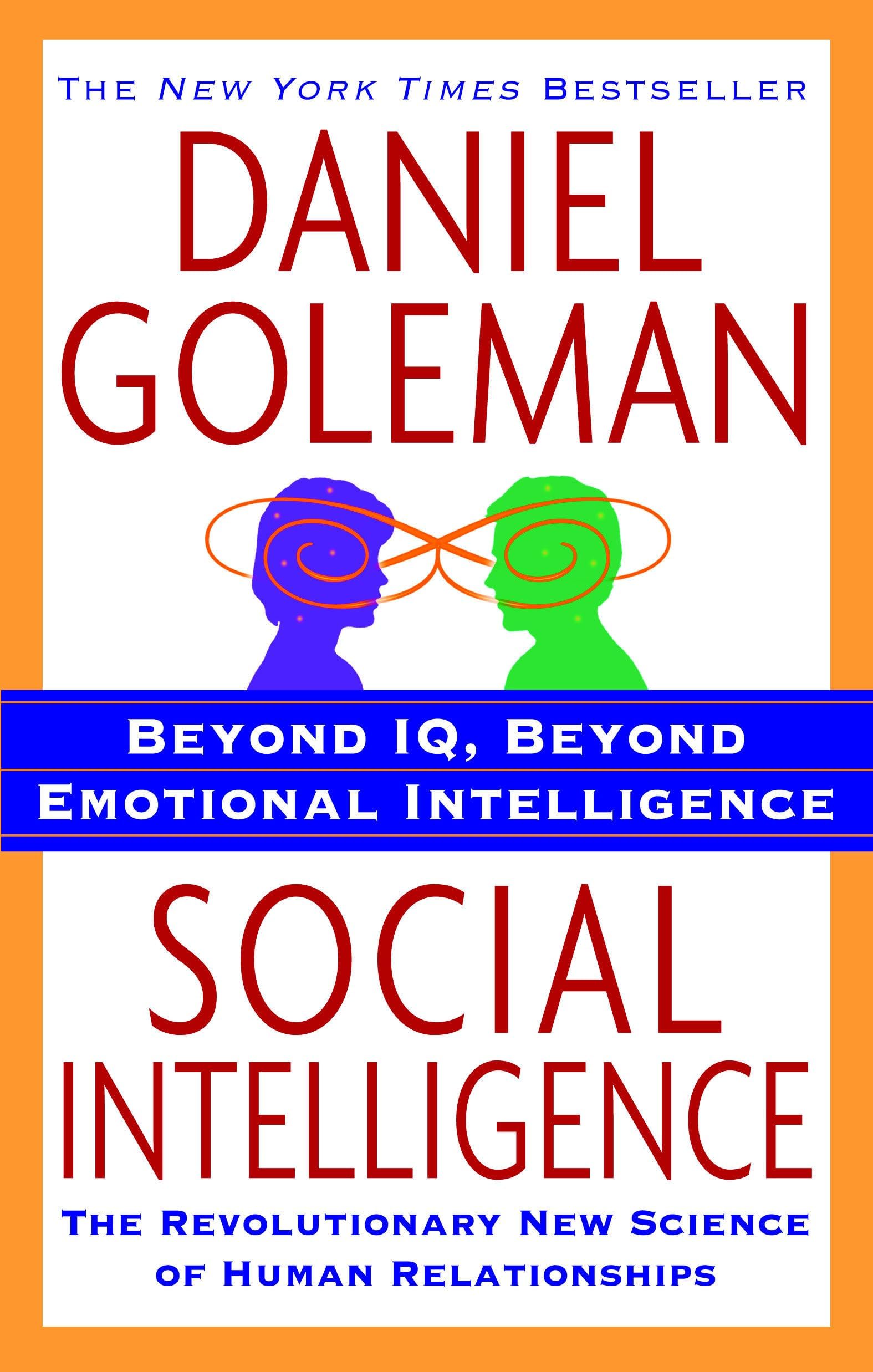
Social Intelligence: The New Science of Human Relationships
Product ID: 1266180
Desertcart purchases this item on your behalf and handles shipping, customs, and support to Seychelles.
Emotional Intelligence was an international phenomenon, appearing on the New York Times bestseller list for over a year and selling more than five million copies worldwide. Now, once again, Daniel Goleman has written a groundbreaking synthesis of the latest findings in biology and brain science, revealing that we are “wired to connect” and the surprisingly deep impact of our relationships on every aspect of our lives. Far more than we are consciously aware, our daily encounters with parents, spouses, bosses, and even strangers shape our brains and affect cells throughout our bodies—down to the level of our genes—for good or ill. In Social Intelligence , Daniel Goleman explores an emerging new science with startling implications for our interpersonal world. Its most fundamental discovery: we are designed for sociability, constantly engaged in a “neural ballet” that connects us brain to brain with those around us. Our reactions to others, and theirs to us, have a far-reaching biological impact, sending out cascades of hormones that regulate everything from our hearts to our immune systems, making good relationships act like vitamins—and bad relationships like poisons. We can “catch” other people’s emotions the way we catch a cold, and the consequences of isolation or relentless social stress can be life-shortening. Goleman explains the surprising accuracy of first impressions, the basis of charisma and emotional power, the complexity of sexual attraction, and how we detect lies. He describes the “dark side” of social intelligence, from narcissism to Machiavellianism and psychopathy. He also reveals our astonishing capacity for “mindsight,” as well as the tragedy of those, like autistic children, whose mindsight is impaired. Is there a way to raise our children to be happy? What is the basis of a nourishing marriage? How can business leaders and teachers inspire the best in those they lead and teach? How can groups divided by prejudice and hatred come to live together in peace? The answers to these questions may not be as elusive as we once thought. And Goleman delivers his most heartening news with powerful conviction: we humans have a built-in bias toward empathy, cooperation, and altruism–provided we develop the social intelligence to nurture these capacities in ourselves and others. Review: Very Insightful - This is a well thought out, well organized and very insightful work. In my opinion it is heavy reading. I generally can read a book a week. This one took about 50% longer. There are a number of reasons for this. There is very little white space on any page. The subject matter is new and different and unless you have made a deep study of the brain, its various parts and functions, you will often need to refresh your memory about what the various parts do. Having said that, I would highly recommend the book to anyone who wishes to learn more about why we do what we do. There are some very valuable lessons that have application in everyday life. For example, Goleman talks about how fear in social situations engages the the flight or fight part of the brain, overriding the cognitive part. He gives everyday examples of how this shows up in our daily lives. The teacher randomly calling on students in the classroom can evoke social fear, shutting down the cognitive/learning part of the brain. Goleman deals with numerous other social situations in life - love, anger, empathy, prejudices, crime and punishment. His insights are sharp and easy to understand. Some are real eye-openers. The book is long, some 334 pages with 65 pages of notes. This means that the concepts set forth in the book have been well researched and he provides the sources for those who wish to do additional research on a particular point of view. If you have any interest in why people do what they do, then this is an important book. Just realize that it requires some thought to read and grasp all the concepts put forth in the book. Review: A persuasive argument for a new social model of intelligence - In this companion volume to his bestseller, Emotional Intelligence, Goleman persuasively argues for a new social model of intelligence. He expresses concern at our creeping disconnection from one another as we connect instead to iPod, computer, and television. Another example of that disconnection is how medicine is being taken over by the "accountant's mentality," which is a disservice to patient and doctor alike. "We are wired to connect," Goleman says. "Neuroscience has discovered that our brain's very design makes it sociable, inexorably drawn into an intimate brain-to-brain linkup whenever we engage with another person. That neural bridge lets us affect the brain-and so the body-of everyone we interact with, just as they do us." Drawing on numerous studies, Goleman examines how our brains are wired for altruism, compassion, concern and rapport. The skills of social intelligence include the social awareness of empathy, listening, and social cognition. He demonstrates how the power of social interaction influences mood and brain chemistry and discusses the "toxicity" of insult and unpleasant social experience and the positive effects of neurochemicals that are released in loving relationships and caregiving. He shows how social sensitivity and wisdom can profoundly reshape conflicts. In one encounter in Iraq, a quick-witted U.S. commander turned a Muslim mob's threats into laughter when he ordered his soldiers to kneel, lower rifles and smile - averting a potentially fatal clash. Given our socially reactive brains, we must "be wise," he says, and be aware of the ways that our moods influence the biology of each life we touch.

| Best Sellers Rank | #45,840 in Books ( See Top 100 in Books ) #53 in Sociology of Marriage & Family (Books) #182 in Emotional Mental Health #212 in Emotional Self Help |
| Customer Reviews | 4.5 out of 5 stars 1,335 Reviews |
J**R
Very Insightful
This is a well thought out, well organized and very insightful work. In my opinion it is heavy reading. I generally can read a book a week. This one took about 50% longer. There are a number of reasons for this. There is very little white space on any page. The subject matter is new and different and unless you have made a deep study of the brain, its various parts and functions, you will often need to refresh your memory about what the various parts do. Having said that, I would highly recommend the book to anyone who wishes to learn more about why we do what we do. There are some very valuable lessons that have application in everyday life. For example, Goleman talks about how fear in social situations engages the the flight or fight part of the brain, overriding the cognitive part. He gives everyday examples of how this shows up in our daily lives. The teacher randomly calling on students in the classroom can evoke social fear, shutting down the cognitive/learning part of the brain. Goleman deals with numerous other social situations in life - love, anger, empathy, prejudices, crime and punishment. His insights are sharp and easy to understand. Some are real eye-openers. The book is long, some 334 pages with 65 pages of notes. This means that the concepts set forth in the book have been well researched and he provides the sources for those who wish to do additional research on a particular point of view. If you have any interest in why people do what they do, then this is an important book. Just realize that it requires some thought to read and grasp all the concepts put forth in the book.
J**E
A persuasive argument for a new social model of intelligence
In this companion volume to his bestseller, Emotional Intelligence, Goleman persuasively argues for a new social model of intelligence. He expresses concern at our creeping disconnection from one another as we connect instead to iPod, computer, and television. Another example of that disconnection is how medicine is being taken over by the "accountant's mentality," which is a disservice to patient and doctor alike. "We are wired to connect," Goleman says. "Neuroscience has discovered that our brain's very design makes it sociable, inexorably drawn into an intimate brain-to-brain linkup whenever we engage with another person. That neural bridge lets us affect the brain-and so the body-of everyone we interact with, just as they do us." Drawing on numerous studies, Goleman examines how our brains are wired for altruism, compassion, concern and rapport. The skills of social intelligence include the social awareness of empathy, listening, and social cognition. He demonstrates how the power of social interaction influences mood and brain chemistry and discusses the "toxicity" of insult and unpleasant social experience and the positive effects of neurochemicals that are released in loving relationships and caregiving. He shows how social sensitivity and wisdom can profoundly reshape conflicts. In one encounter in Iraq, a quick-witted U.S. commander turned a Muslim mob's threats into laughter when he ordered his soldiers to kneel, lower rifles and smile - averting a potentially fatal clash. Given our socially reactive brains, we must "be wise," he says, and be aware of the ways that our moods influence the biology of each life we touch.
W**K
Promise Not Quite Fulfilled
The good news is that the book presents fascinating tidbits such as how certain facial expressions universally represent the same emotions throughout all cultures, why most people use their left arm to cradle infants, and a layman's guide to neuroscience. He has great ideas on why emotions are contagious, a striking definition of "rapport" (mutual attention + sharing positive feeling + a well-coordinated nonverbal duet), and the neuroanatomy of a kiss (hint: the eyes sit at the critical juncture where the uppermost part of the emotional center and the lowermost part of the thinking center meet). The bad news is that the ingredients sit on the kitchen counter. There are no overriding concepts that tie the data together in a compelling fashion. As interesting as they might be, the facts and theories as presented in the book don't significantly contribute to one's understanding of social intelligence. Goleman's earlier book "Emotional Intelligence" promised that you could improve your EQ. "Social Intelligence" does not quite deliver on that promise.
C**H
A Neurological Basis for Adopting Good Manners
"Social Intelligence" is a natural follow on to the ground-breaking "Emotional Intelligence". Reviews of this fine book gush on for hundreds of words. Yes, this is a book that every thinking adult should read. It's that important. WEAKNESSES: You have to endure the Golman's pedantic, somewhat tedious monologue. (I now know more about studies of white mice, children and college students than I care to know.)Hang in there! STRENGTHS: Now comes the gold nuggets. Golman synthesizes these data from some of today's finest researchers and rewards you with stunning insights. His writing is well structured and compelling. SUMMARY: Golman provides the psycho-social basis for good manners -- be open and honest, look people in the eye, smile, encourage others, never resist the opportunity to touch others in emotionally generous ways. Hey, Doc, I think you're on to something. Well done.
D**N
Very Insightful!
This book brought a lot of good information and insight into perspective. I study people and the mind so a lot of the information in this book, I knew but could never put a name to it, nor did I know the reason behind a lot of it, but this book did a great job in breaking things down and informing me on the part the brain plays in it all. Very well written and easy to understand if you don’t know a lot about brain function or parts of the brain. Very happy I purchased this book. And if you’re big on learning emotional and social intelligence, this book is a must have for the arsenal.
N**G
A boring, disappointing treatment of a wonderfully interesting and important topic
I read Goleman's famous EQ book over 20 years ago and remember having a positive opinion of his thought and writing. I've recently been interested in "social intelligence" in its many forms, and was excited to find a book by that title by an author I remember and like. On receiving the book, I'm pretty disappointed. The topic is as interesting and important as I had imagined: the brain and behavior science of recent decades has shed new insight into how humans are "hard wired" in the brain to synchronize feelings and behaviors across multiple individuals. Hence, from a cognitive sciences perspective, we are now in a position to discuss "social intelligence" -- what is it, how does it function, how can one become more socially intelligent? My qualm with the book is that the presentation is so repetitive, shallow, and downright boring that I find it an unrewarding chore to push onto the next chapter, in hopes that strong insights or implications will eventually appear.. What do I mean? From his earlier books, I think of Goleman as a bright fellow and capable writer. Will he just tell us what he thinks -- what is social intelligence, and why is it important? I would be very interested in that, in fact that's why I purchased the book! But no, the author's perspective doesn't strongly appear, instead there is a meandering journalistic narrative rambling past a huge number of references to scientific publications. Well then about these science pubs, will Goleman concisely synthesize, extract the meat of the findings and most interesting implications, and take advantage of his obviously deep and broad research to present a compelling overarching viewpoint? No, the science is treated in a cursory manner -- we hear that so and so study happened, but only the scientific buzz words or single sentence abstract make it into our text. Most fatiguing, from my viewpoint, is the writer's reliance on a huge number of analogies (we hear again and again of the social intelligence represented in the coordinating behavior of mother and infant, or among musicians, or among romantic couples) and short stories, seemingly put to work in an attempt to make the scientific concepts accessible to the 'lay reader.' Every chapter is cut into thematic sub-chapters, and nearly every sub-chapter begins with an instantly-forgettable story meant to illustrate some aspect of social intelligence. So much non-fiction these days is put forward in the formulaic "tell it with stories" recipe, that people seem to have forgotten the stories actually have to be good for that device to work. Given the presentation challenges in the book, the actual reading experience I find to be hugely repetitive and meandering. Over and over, there are the ideas that our brains influence how we feel, allow us to feel how others feel, and coordinate behavior among people. Not a big surprise, in other words. We add a few cognitive science buzz words to those basic premises, but in over 300 pages, I'm finding little further depth, breadth or nuance. All told, this book reads like an assemblage of many short, okay but not great magazine articles. I will stop there, and actually I feel a bit bad about writing so negatively about the book -- after all, I do like the topic a lot, and I still like Goleman as an author even though I wouldn't call this a good book. For me, the best part of the book is that the references are broad and deep, and the most interesting of those I can follow up on to hopefully find more interesting and useful information. So my 3 star rating: 5 stars for topic and references, and a very unfavorable view of the actual writing. Especially since I like his earlier books, I was quite disappointed in the execution of this one. In the future, I'd like to see someone treat essentially the same subject as appears in this book, but with a much stronger presentation.
L**N
Why Read Social Intelligence?
I believe this book should be a required read by the entire human race. Social Intelligence give any individual who reads it a much better understanding of themselves and others and how we interact with each other unknowingly and how all of our daily interaction have an effect on us and everyones else. It most definitely will make you take a step back and take a good look at things that you have probably never thought of that are actually very important in your daily lives. I highly reccomend this book for anyone because it will definitely spark an interest and the author has a dry sarcasim that you will enjoy.
L**R
A Textbook on Human Communication
I am a huge fan of Daniel Goleman. He's the bestselling author who coined the term "Emotional Intelligence" with his 1995 book of the same name. Now he's got a new book, "Social Intelligence: The New Science of Human Relationships." Social intelligence is the ability to read other people's cues and then act on them. Life is all about relationships, and there is a science to how we relate to each other. It's fascinating to see how Goleman breaks down each aspect of communication. We can learn how to more effectively express ourselves so that we feel understood. And we can learn how to better "read" other people so that we can better understand. This helps to improve our interactions and ultimately strengthen our relationships. He talks about "synchrony" or interacting smoothly at the nonverbal level, which is an important, yet often overlooked, part of relating. Goleman also scientifically explains "the capacity for joy" and how that affects our social intelligence. He shows how our resilience plays an important role in our happiness, which comes into play as we express ourselves to others.
I**.
On time
The delivery occurred on tome, the book was in perfect condition!
C**A
Buen libro
Muy buen libro. Muy interesante. Si eres profe es súper útil. Yo lo usé como fuente para mi TFM y genial.
D**.
An Excellent Book of social intelligence
I bought this book long ago. As it is in a bad shape, I bought this book once again.
B**E
great explanation of how the mind works
Great explanation of how the mind works in social situations
R**A
Recomendado !
Lo recomiendo para quienes se dedican a ventas o quieren mejorar su paradigma de las relaciones sociales.
Trustpilot
3 days ago
1 month ago