
Buy anything from 5,000+ international stores. One checkout price. No surprise fees. Join 2M+ shoppers on Desertcart.
Desertcart purchases this item on your behalf and handles shipping, customs, and support to Seychelles.
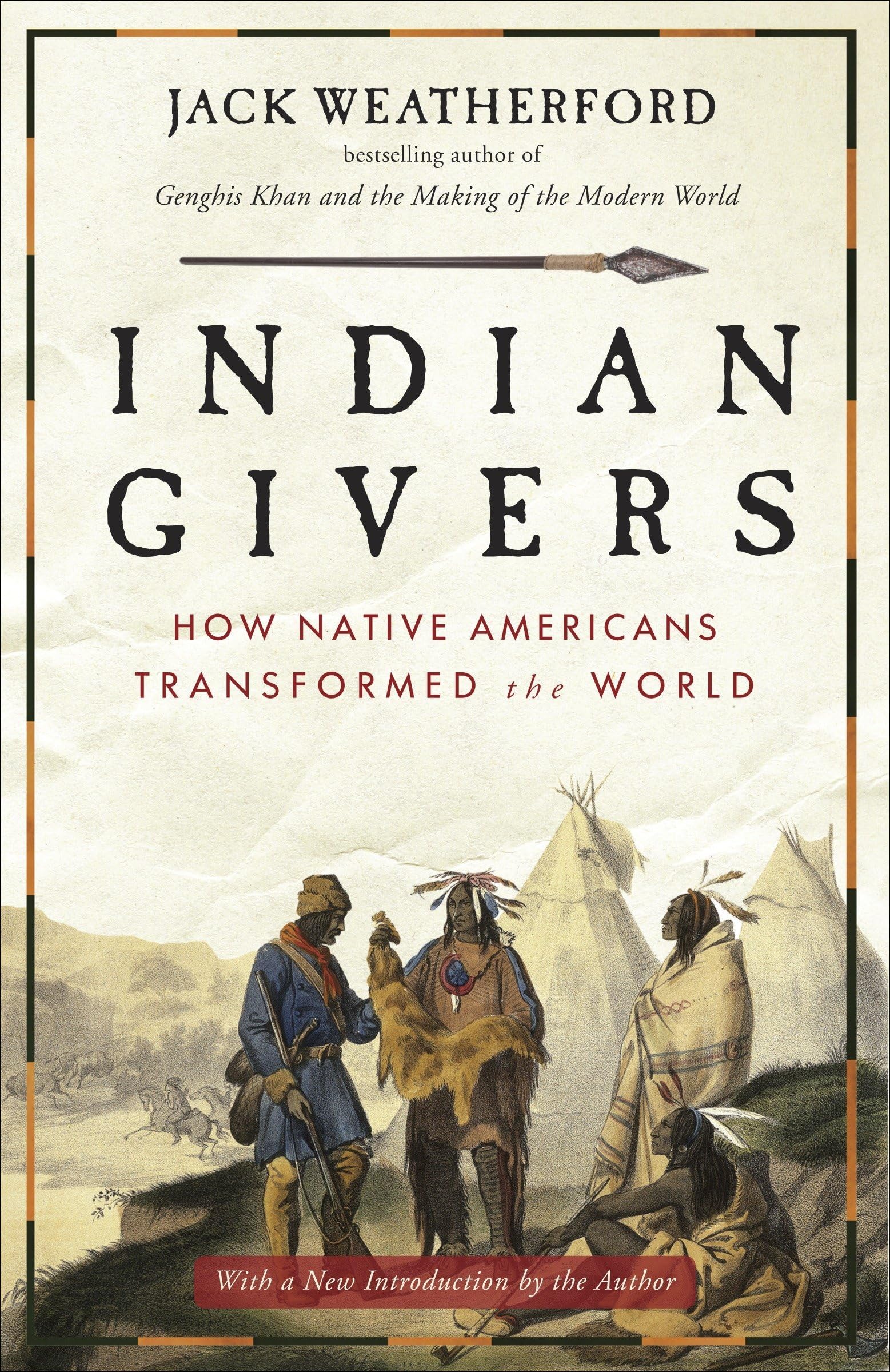
Indian Givers: How Native Americans Transformed the World [Weatherford, Jack] on desertcart.com. *FREE* shipping on qualifying offers. Indian Givers: How Native Americans Transformed the World Review: BOOK - GREAT READ/ INFORMATION THAT EVERY KID AMD ADULT SHOULD KNOW ABOUT THIS COUNTRY. Review: Two versions of this book - A version of this book was published in 1988. This 2010 version is unchanged from 1988. I find no new text. No new references. The 2010 version has a short introduction. The 2010 version is much easier on the eye, with 327 pages vs 255 in 1988. The page background color is much whiter in2010, thus easier to read.

| Best Sellers Rank | #68,270 in Books ( See Top 100 in Books ) #24 in Weather (Books) #37 in Native American Demographic Studies #349 in Sociology Reference |
| Customer Reviews | 4.5 4.5 out of 5 stars (556) |
| Dimensions | 5.13 x 0.78 x 7.98 inches |
| Edition | 1st |
| ISBN-10 | 0307717151 |
| ISBN-13 | 978-0307717153 |
| Item Weight | 9.6 ounces |
| Language | English |
| Print length | 368 pages |
| Publication date | August 3, 2010 |
| Publisher | Crown |
P**N
BOOK
GREAT READ/ INFORMATION THAT EVERY KID AMD ADULT SHOULD KNOW ABOUT THIS COUNTRY.
M**.
Two versions of this book
A version of this book was published in 1988. This 2010 version is unchanged from 1988. I find no new text. No new references. The 2010 version has a short introduction. The 2010 version is much easier on the eye, with 327 pages vs 255 in 1988. The page background color is much whiter in2010, thus easier to read.
B**S
A very good and interesting read
A very good and interesting read. I learned things that were very new to me which was great.It was amazing how things came out of our past, and were a great learning value to our lives today.
L**E
Should be required reading in American schools
"Indian Giver" was a derogatory term defining one who gave but then took the gift back. That's the way I remember the usage during my childhood in Upper Michigan (the UP). I never quite understood why the phrase existed, so I just assumed Indians were accustomed to give then take back, leaving the receiver feeling deprived. And I did experience such malice at the hands of other children my age or older. What this well researched and thoughtful treatise has to do with such a title can only be ironic, for all the American Indians have given the world, they have received nothing but greif in return. I WOULD HOPE this book could be taught all our young, all races included but especially our Native peoples, who could benefit by having pride in their so many contributions to modern world-wide improvements in the human condition. Jack Weatherford's account of the myriad contributions of the indigenous peoples of the Americas to the world is well organized, illustrated by specific examples, explained, and and done so in the clear language and tone of a truth-sayer. I HAVE NEVER READ A BETTER ACCOUNT OF THIS underdeveloped SUBJECT.
R**R
Highly recommend this book on the contributions of the Native American. Bravo!
This is a good read. Makes on aware of the great contributions of the Native America's contributions to our culture. Enjoyed it so much and was made of the historical importance that I purchased other books by author Jack Weatherford. Expand your knowledge base by reading his works!
C**L
Great Research But Reads Like a Textbook
I would give the writer 5 stars for his research but only 2 stars for his writing. I am glad I read the book because I did find the facts interesting. However, I felt as if I were reading a text book because there were many facts that were not presented in a way to help the reader stay alert and motivated to keep reading. If I had not been the one who nominated this book for our discussion group to read, I probably would not have finished reading it, and it is very unusual for me not to finish reading a book I have begun to read. It is a good thing I kept some hand-written notes because none of my highlighting and none of my notes were retained by my Kindle, and I don't know why they weren't. I made these notes by hand: Chapter 1 - too long, 90% boring. Chapter 2 - too long, 80% boring Chapter 3 - didn't seem as long, but I want to read about Indians and their contributions, not about factories. Chapter 4 - finally we get some facts about the Indians and how their food helped others. Not too boring. Chapter 5 - Indian agriculture and food processing technology. Parts very interesting. . . . . . . . Chapter 10 - Best chapter so far! . . . . . . .
A**R
Indian Givers
I have now given this amazing book to seven people, some of whom have given copies to dozens more. Who knew? It is a scholarly well written story that very few know, about how amazingly sophisticated and scientific the pre Columbian Amerindian world was and what their experimentation gave the world before we destroyed their civilization. And it is fun, too. It is probably the most important book I read this year.
Y**Y
Really Early American History
This would be a great book to begin the study of American history. If more of us knew what Weatherford tells us here—about indigenous farming and food, land use, governance, medicine, and architecture, to name a few subjects—we would have renewed respect for survivors of the cultures that lived on the American continents before the arrival of Europeans. And we would understand the world's economic systems far better if we let Weatherford introduce us to the looting of Bolivia's silver, which revolutionized everything. Weatherford is both an anthropologist and a college professor, and years of teaching seem to have equipped him to build a clear narrative and document it with accessible and interesting information. I feel fortunate to have found this book, which was published in the eighties but seems up-to-date. The only reference I found dated was to "Eskimos," although there may be others. But his major point—that Europeans destroyed native cultures before they could appreciate the wisdom and sophistication that they engendered—is beautifully and poignantly laid out and documented.
K**E
Informative in telling the impact of North America's indigenous people. Must Read.
G**A
At last a book with non fairy tale. I love the objevity of the writer
R**L
This is one of the most fascinating books I ever came across: it fills a gaping hole in general education - the hole being the material and mental contributions of "Indians" (i.e. original inhabitants of the American continent) to the world we take for granted nowadays. To take everyday examples: who would have thought, that Bolivian silver stolen by Spaniards increased money supply in Europe to the extent of enabling capitalist development ... or that the Italian and the Hungarian cuisines would not have developed, had there not been tomatoes (Italy) and bell peppers from South America. And it has to be said that the book is written in a very accessible style - it reads almost like a detective novel.
C**E
Jack Weatherford surely is the most well-documented non native author. An amazing book, far from myths and cliches, based on pre-Colombian America. The different chapters will allow Western people to have a new look on what is thought of as the fruit of their civilization. Jack Weatherford est certainement l'auteur non Native-American le mieux documenté sur les Indiens. Un livre remarquable, loin des mythes et des clichés, basé autant se faire que peut sur l'Amérique pré-colombienne, qui permettra au lecteur de remettre en perspective ce qui apparaît aux Occidentaux comme le fruit de leur culture.
J**K
At first, I was reticent buying this book and did so only after reading an excerpt. (People of my age and origin remember the term "Indian giver" as highly derogatory.) After reading a few pages it became abundantly clear that this book is about the tremendous contribution of american aboriginal people to modern science and pharmacology (starting with quinine), government (the American system is modeled on aboriginal principles), food (starting with corn, potatoes and tomatoes) ... You get the picture. The book ends with a summary that makes clear that aboriginals were conquered because they had few domesticated animals (beasts of burden), no horses for example; used metals for ornamentation instead of warfare; used the wheel mostly in toys; had no immunity to Old World diseases; did not use wind power for travel; had not been gifted gunpowder by the Chinese ... In nearly everything else, they were far more advanced than their european conquerors. Excellent read.
Trustpilot
2 weeks ago
1 month ago