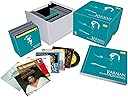
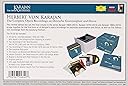


Product Description KARAJAN THE OPERA RECORDINGS on Deutsche Grammophon & Decca, with 5 Salzburg Festival opera recordings, and an Appendix of Haydns The Creation.70 CDs25 operas (12 DGG; 8 DECCA; 5 Salzburg)3 Mozart, 5 Puccini, 6 Verdi, 5 Wagner, 2 Rosenkavaliers.With this original jackets box set Deutsche Grammophon concludes its series of 4 grand sets that present the totality of Herbert von Karajans output for the Yellow Label and hence perhaps the most magnificent legacy in the history of recorded music.On 70 CDs KARAJAN THE OPERA RECORDINGS features the 14 operas Karajan recorded for DGG from Carmen to Parsifal, from The Merry Widow to Rosenkavalier, from Mozart to Puccini. And, of course, the complete Ring.Incorporated are Karajans 8 opera recordings for DECCA (+ Verdis Falstaff that was originally released on Philips), as well as 5 live recordings from the Salzburg Festival, including, as bonus, Haydns The Creation.PRODUCT OVERVIEWORIGINAL ARTWORK: Sleeve covers (front and back) are all reproduced from the original LP releases, or, in the few cases where there wasnt an LP, from the original CDs. THE BOOK: 220+ pages. Profound and extensive new linernotes by the acclaimed opera critic Jürgen Kesting, detailing all aspects of Herbert von Karajans career as an opera conductor. In addition, the book will contain a Karajan timeline, a tracklist with full recording details and many rare photos of the maestro in rehearsal, in performance and in the recording studio.PACKAGING: 70 CDs once again arranged in four snug compartmentsBONUS: This time again, we reprint 5 facsimile recording protocols from some of the most famous recordings.CD 1 3BIZET: CarmenCD 4 5GLUCK: Orfeo ed Euridice (Salzburg)CD 6 7LEHÁR: Die lustige WitweCD 8 9LEONCAVALLO: PagliacciMASCAGNI: Cavalleria rusticana CD 10 12MOZART: Le nozze di Figaro (Decca)CD 13 15MOZART: Don GiovanniCD 16 17MOZART: Die ZauberflöteCD 18 20MUSSORGSKY: Boris Godunov (Decca)CD 21 22PUCCINI: La Bohème (Decca)CD 23 24PUCCINI: Tosca (Decca)CD 25 26PUCCINI: ToscaCD 27 28PUCCINI: Madama Butterfly (Decca)CD 29 30PUCCINI: Turandot CD 31 32Johann STRAUSS: Die Fledermaus (Decca)CD 33 35Richard STRAUSS: Der Rosenkavalier 1960 (Salzburg)CD 36 38R. STRAUSS: Der RosenkavalierCD 39 40VERDI: Il trovatore (Salzburg)CD 41 42VERDI: Un ballo in mascheraCD 43 44VERDI: Don Carlo (Salzburg)CD 45 46VERDI: Aida (Decca)CD 47 48VERDI: Otello (Decca)CD 49 50VERDI: Falstaff (Philips)CD 51 64WAGNER: Der Ring des NibelungenCD 65 68WAGNER: ParsifalCD 69 70HAYDN: Die Schöpfung (Salzburg) Review Herbert von Karajan always rolled out a magic carpet for us, the singers. With him, our musical work took on another dimension. --Jessye Norman Review: Comparison with my older CD versions - As can be seen from the reviews, people have different opinions about whether remastering is a good thing or not for these recordings. In any case, I did a byte-level comparison between what's contained in this collection and older CD's that I have. If the bytes are same, the recording-mastering is the same. Different bytes can be a remastering or a slight adjustment (gain, or volume difference). I don't have comparisons of all the operas - if I had older recordings of all of these, I wouldn't have bought the collection! The release date of the CD is in parenthesis, "OIBP" = Original Image Bit Processing, "ADRM" = Digital Remaster to Audiophile Standards (Decca). OIBP seems to have started around 1995. These recording are the same as older CD release: Carmen (1983 release) The Merry Widow (1992 release) Pagliacci (1996 OIBP release) Figaro (1988 ADRM release) Don Giovanni (1986 release) Tosca - Ricciarelli / DG (1984 release) Die Fledermaus (1987 release) Der Rosenkavalier - studio recording (1984 release) - mostly same (3 tracks were different) Parsifal (1984 release) These are different (see caveat above), with my speculation: La boheme (1987 ADRM release) Madama Butterfly (1987 release) - there was a later ADRM release Turandot (1982 release) - there was a later OIBP release Gotterdammerung (1985 release) - I'm guessing all the Ring recordings in this collection are OIBP All of the Salzburg live recordings were done in mono. The Rosenkavalier matches the recording included in the 50-year Salzburg Festival retrospective released in 2010. That's the only match of the Salzburg operas in my collection. Review: Sculpted Beauty... - If you love HvK's symphonic conducting (who doesn't?) you should have no difficulty with these accounts. Tempos tend to be slightly fast, with an overall primary concern for BEAUTY! Recommended, of course.
| ASIN | B00ULE2W42 |
| Customer Reviews | 4.5 4.5 out of 5 stars (43) |
| Date First Available | March 30, 2015 |
| Is Discontinued By Manufacturer | No |
| Label | Deutsche Grammophon |
| Language | English |
| Manufacturer | Deutsche Grammophon |
| Number of discs | 70 |
| Product Dimensions | 8 x 8 x 5.75 inches; 6.45 Pounds |
M**K
Comparison with my older CD versions
As can be seen from the reviews, people have different opinions about whether remastering is a good thing or not for these recordings. In any case, I did a byte-level comparison between what's contained in this collection and older CD's that I have. If the bytes are same, the recording-mastering is the same. Different bytes can be a remastering or a slight adjustment (gain, or volume difference). I don't have comparisons of all the operas - if I had older recordings of all of these, I wouldn't have bought the collection! The release date of the CD is in parenthesis, "OIBP" = Original Image Bit Processing, "ADRM" = Digital Remaster to Audiophile Standards (Decca). OIBP seems to have started around 1995. These recording are the same as older CD release: Carmen (1983 release) The Merry Widow (1992 release) Pagliacci (1996 OIBP release) Figaro (1988 ADRM release) Don Giovanni (1986 release) Tosca - Ricciarelli / DG (1984 release) Die Fledermaus (1987 release) Der Rosenkavalier - studio recording (1984 release) - mostly same (3 tracks were different) Parsifal (1984 release) These are different (see caveat above), with my speculation: La boheme (1987 ADRM release) Madama Butterfly (1987 release) - there was a later ADRM release Turandot (1982 release) - there was a later OIBP release Gotterdammerung (1985 release) - I'm guessing all the Ring recordings in this collection are OIBP All of the Salzburg live recordings were done in mono. The Rosenkavalier matches the recording included in the 50-year Salzburg Festival retrospective released in 2010. That's the only match of the Salzburg operas in my collection.
P**I
Sculpted Beauty...
If you love HvK's symphonic conducting (who doesn't?) you should have no difficulty with these accounts. Tempos tend to be slightly fast, with an overall primary concern for BEAUTY! Recommended, of course.
R**T
My only disappointment was that some of the recordings were of live ...
Of course the music was uniformly first-rate, given that it's Karajan. My only disappointment was that some of the recordings were of live performances, which invariably impacts on the sound quality. But to get this many operas at such a low price is wonderful. The complete Ring Cycle alone makes it worth buying.
M**Y
Its worth the money.
The recordings are fantastic, thus I must spend the time to listen to it all
A**N
Five Stars
Wonderful production of the Karajan conducted operas on DG, Decca and Philips!
R**D
Five Stars
this was great
D**G
Five Stars
Excellent!
G**T
DG Remastering, or the Original Analaog Recording
I have a slightly different view than some of the commenters on the desirability of newer remastering on these recordings. The "digital edge" that a few people have noted is in many cases, unfortunately, not a digital artifact, but the way DG recorded many of these originally in analog. They liked a bright, analytic sound then, and frankly, they sounded pretty spectacular in the LP era. Unfortunately, the CD versions tend to accentuate this characteristic. The best DG transfers to CD were made before 1995 IMO. The later 24 bit and still later subsequent remasterings, if anything, tend to accentuate the analytic DG engineering of the late 60s and 70s even more. (Most DG recordings in the 80s were digital -- not much you can do to help those.) All that aside, these are superb performances, and pretty soon you'll care not at all about the mastering details and get to the real point -- this is great Opera conducted by "the maestro." If there is a glaring omission on this set it is the marvelous opera recordings he did for EMI, particularly the mono recordings of Nozze de Figaro and the Magic Flute. This was the young Karajan before he became "Karajan," and the frisky deftness of his conducting was something he was never again able to muster in his later, more "serious" performances. No set of his opera recordings is truly complete without them.
S**A
La Deutsche Grammophon pubblica finalmente "l'ultima puntata" della saga dedicata a Karajan, dove i primi tre cofanetti contenevano tutte le registrazioni sinfoniche e concertistiche del grande direttore suddivise per "decennio" (Karajan '60, Karajan '70, Karajan '80). Il quarto e ultimo cofanetto della serie DG contiene invece la tutta la straordinaria eredità discografica operistica di Karajan, quella per la DG medesima ma anche quella per la Decca. Un contributo quello della casa discografica inglese non indifferente, sia dal punto di vista quantitativo, con ben 8 opere su 22 totali targate Decca., sia soprattuto dal punto di vista qualitativo perché le 8 Opere targate Decca sono altrettanti vertici insuperati della discografia di ogni tempo e ogni luogo. Sí, perché se la grandezza del Karajan direttore d'orchestra può essere talvolta messa in ombra da interpreti più "liberi da qualsiasi vincolo" (Bernstein) o "più rispettosi dello spirito e della volontà dell'autore" (Abbado), nel settore delle registrazioni operistiche Karajan ha davvero un dominio assoluto e incontrastato e soprattutto oggettivamente meritato. Considerando anche le numerosissime registrazioni operistiche per la EMI, Karajan é l'unico direttore mai vissuto che sia riuscito a dare interpretazioni ritenute al vertice assoluto della discografia in autori che vanno da Mozart a Beethoven, da Verdi a Wagner, da Puccini a Richard Strauss, da Bizet a Mascagni e Leoncavallo. Il contributo della Decca é fondamentale perché alla qualità straordinaria della direzione d'orchestra, nelle registrazioni della casa inglese si unisce la qualità vocale di interpreti straordinari. Ecco la Boheme e la Madama Butterfly di Puccini con la giovanissima Freni e il giovane Pavarotti, che sono da sempre ritenute il vertice assoluto della discografia. La Tosca con la Leontyne Price strepitosa interprete giunge "seconda" solo perché il podio é occupato dalla mitica registrazione EMI della Callas sotto la bacchetta di De Sabata. L'Aida e l'Otello di Verdi, con la Tebaldi superba interprete, sono registrazioni rimaste sempre nel catalogo Decca per oltre 50 anni proprio perché assai difficile trovare alternative dello stesso livello qualitativo. Senza parlare del Boris Godunov di Mussorgsky o del Pipistrello di Johan Strauss, capolavori assoluti resi tali dall'interpretazione di Karajan così come dalla classe vocale insuperabile dei protagonisti vocali. Le Opere registrate per la DG, negli anni'60-'70 sono altrettanto mitiche difficilmente eguagliabili. E sto parlando della Cavalleria Rusticana con Bergonzi e la Cossotto, così come al Ciclo del Ring, dove il Wagner della tetralogia é affrontato con una carica di poesia e di intimo struggimento così elevata, da collocarsi comunque al vertice assoluto della discografia di questo monumento operistico. Nelle registrazioni DG degli anni '80 invece qualche problema c'é, e non riguarda quasi mai la direzione d'orchestra quanto piuttosto la qualità vocale degli interpreti. É anche vero che, se fino agli anni '70 i cantanti d'opera superlativi non erano merce rara, dagli anni '80 in poi sono improvvisamente diventati merce rarissima. Ed é così che la Carmen di Bizet degli anni '80, con la Baltsa nelle vesti della protagonista, non si avvicina neppure ai risultati strepitosi della Carmen degli anni '60 che Karajan registrò per la RCA con la Leontyne Price. E lo stesso vale per la Tosca e la Turandot, dove la Ricciarelli, che già aveva perso lo smalto delle sue prime registrazioni con Abbado, non può essere ritenuta una protagonista vocale di rilievo. Ed, essendo il risultato finale nell'opera lirica un insieme di fattori diversi ma sempre imprescindibili dalle doti vocali e interpretative dei singoli contanti, va da sè che queste ultime registrazioni operistiche degli anni '80 non possano essere considerate di riferimento assoluto. Anzi, purtroppo é proprio la "debolezza" del protagonista vocale Peter Hoffman a rovinare in gran parte lo splendido lavoro interpretativo che Karajan aveva fatto per il Parsifal di Wagner. Con questi presupposti é del tutto evidente che le registrazioni dal vivo al Festival di Salisburgo anni '60, sono documenti preziosi di spettacoli operistici straordinari per il sinergismo fra direzione d'orchestra impeccabile da parte di Karajan e prestazioni canore da primi della classe da parte della maggior parte dei cantanti lirici di questi anni. La tecnica di registrazione é assai variabile, considerando che le registrazioni sono state fatte nell'arco di oltre 35 anni....ma spesso sono registrazioni superbe per tecnica di ripresa e resa sonora (con l'ovvia eccezione delle opere riprese dal vivo a Salisburgo!). Il cofanetto é al solito (come i tre precedenti di questa serie) bello, pratico e robusto, ma non comodissimo da usare a meno di non "lasciare fuori dalla scatola" i quattro contenitori con i CD. Comunque sia, un cofanetto straordinario per tutti gli amanti dell'opera anche perché include, accanto ad edizioni così diffuse da essere sicuramente già in casa di molti appassionati, anche registrazioni scomparse dal mercato da molti anni. Buon ascolto a tutte e tutti voi...... Karajan: The Complete Opera Recordings on Deutsche Grammophon & Decca Bizet: Carmen Agnes Baltsa (Carmen), José Carreras (Don José), José van Dam(Escamillo), Katia Ricciarelli (Micaëla), Christine Barbaux (Frasquita), Jane Berbié (Mercédès), Gino Quilico (Le Dancaïre), Heinz Zednik (Le Remendado), Mikael Melbye (Moralès), Alexander Malta (Zuniga) Paris Opera Chorus, Berlin Philharmonic Orchestra Gluck: Orfeo ed Euridice Salzburg Giulietta Simionato (Orfeo), Sena Jurinac (Euridice), Graziella Sciutti(Amor) Wiener Philharmoniker, Wiener Staatsoper Haydn: The Creation Live recording from Salzburg, 1965 Gundula Janowitz, Fritz Wunderlich, Kim Borg, Hermann Prey Wiener Philharmoniker, Singverein der Gesellschaft der Musikfreunde Wien Lehár: Die Lustige Witwe Elizabeth Harwood (Soprano), Teresa Stratas (Soprano), Donald Grobe (Tenor), Werner Hollweg (Tenor), Zoltan Kelemen (Tenor), René Kollo (Tenor), Werner Krenn (Tenor) Berliner Philharmoniker, Chor der Deutschen Oper Berlin Leoncavallo: I Pagliacci Carlo Bergonzi (tenor), Joan Carlyle (soprano), Giuseppe Taddei(baritone), Ugo Benelli (tenor), Rolando Panerai (baritone), Giuseppe Morresi (bass) & Franco Ricciardi (tenor) Coro e Orchestra del Teatro alla Scala Mascagni: Cavalleria Rusticana Carlo Bergonzi, Fiorenza Cossotto, Adriane Martino, Maria Gracia Allegri, Giangiacomo Guelfi Coro e Orchestra del Teatro alla Scala Mozart: Le nozze di Figaro, K492 Recorded live in 1977 Ileana Cotrubas (Susanna), José van Dam (Figaro), Tom Krause (Il Conte), Anna Tomowa-Sintow (La Contessa), Frederica von Stade(Cherubino), Jane Berbié (Marcellina), Jules Bastin (Bartolo), Heinz Zednik (Basilio), Kurt Equiluz (Curzio), Zoltán Kéléman (Antonio), Janet Perry (Barbarina) Wiener Staatsopernorchester und-Chor Don Giovanni, K527 Samuel Ramey (Don Giovanni), Anna Tomowa-Sintow (Donna Anna), Agnes Baltsa (Donna Elvira), Kathleen Battle (Zerlina), Gosta Winbergh (Don Ottavio), Ferruccio Furlanetto (Leporello), Alexander Malta (Masetto) & Paata Burchuladze (Il Commendatore) Chor der Deutschen Oper Berlin & Berliner Philharmoniker Die Zauberflöte, K620 Francisco Araiza (Tamino), Jose van Dam (Sarastro), Edith Mathis(Pamina), Gottfried Hornik (Papageno), Karin Ott (Königin der Nacht), Heinz Kruse (Monostatos), Janet Perry (Papagena), Volker Horn (Erste Geharnischter), Victor von Halem (Zweite Geharnischter), Anna Tomowa-Sintow, Agnes Baltsa, Hanna Schwarz (Drei Damen) Berliner Philharmoniker Mussorgsky: Boris Godunov Recorded: Sofiensaal, Vienna, 11/1970. Edited by Rimsky-Korsakov Nicolai Ghiaurov (Boris), Olivera Miljakovic (Fyodor), Aleksei Maslennikov (Shuisky/Simpleton), Martti Talvela (Pimen), Ludovic Spiess (Grigory/False Dmitry), Anton Diakov (Varlaam), Nadejda Dobrianova (Xenia), Milen Paunov (Missail), Galina Vishnevskaya(Marina), Zoltan Kélémén (Rangoni), Margarita Lilowa (Hostess) Wiener Sängerknaben, Sofia Radio Chorus, Wiener Staatsopernchor& Wiener Philharmoniker Puccini: La Bohème Mirella Freni (Mimi), Luciano Pavarotti (Rodolfo), Nicolai Ghiaurov(Colline), Elizabeth Harwood (Musetta), Rolando Panerai (Marcello), Gianni Maffeo (Schaunard), Michel Sénéchal (Alcindoro/Benoit), Gernot Pietsch (Parpignol), Hans-Dieter Appelt (Sergente dei doganieri), Hans-Dietrich Pohl (Un doganiere) Chorus of German Opera Berlin, Berlin Philharmonic Orchestra Tosca Studio recording, 1962 Leontyne Price (Tosca), Giuseppe di Stefano (Cavaradossi), Giuseppe Taddei (Scarpia), Fernando Corena (Il Sagristano), Carlo Cava (Angelotti), Piero De Palma (Spoletta), Leonardo Monreale (Sciarrone), Herbert Weiss (Un pastore), Alfredo Mariotti (Un carceriere) Wiener Staatsopernchor & Wiener Philharmoniker Tosca Katia Ricciarelli (Tosca), Jose Carreras (Cavaradossi), Ruggero Raimondi (Scarpia), Fernando Corena (Il Sagristano), Gottfried Hornik (Angelotti), Heinz Zednik (Spoletta), Victor von Halem (Sciarrone), Wolfgang Bünten (Un pastore), Victor von Halem (Un carceriere) Chor der Deutsche Oper Berlin & Berliner Philharmoniker Madama Butterfly Mirella Freni (Butterfly), Luciano Pavarotti (Pinkerton), Robert Kerns (Sharpless), Christa Ludwig (Suzuki), Michel Sénéchal (Goro), Giorgio Stendoro (Yamadori), Marius Rintzler (Bonzo) Wiener Philharmoniker Turandot Katia Ricciarelli, Piero de Palma, Ruggero Raimondi, Plácido Domingo, Barbara Hendricks, Gottfried Hornik, Heinz Zednik, Francisco Araiza, Siegmund Nimsgern Wiener Philharmoniker, Wiener Staatsopernchor, Wiener Sängerknaben Strauss, J, II: Die Fledermaus Hilde Güden (Rosalinde), Eberhard Wächter (Eisenstein), Giuseppe Zampieri (Alfred), Rita Streich (Adele), Gerhard Stolze (Orlofsky), Peter Klein (Blind), Walter Berry (Falke), Erich Kunz (Frank), Josef Meinrad (Frosch), Elfriede Ott (Ida) Wiener Staatsopernchor & Wiener Philharmoniker Strauss, R: Der Rosenkavalier 1960 (Salzburg) Lisa della Casa (Die Marschallin), Sena Jurinac (Octavian), Hilde Gueden (Sophie), Otto Edelmann (Ochs), Erich Kunz (Faninal), Renato Ercolani (Valzacchi), Hilde Rössl-Majdan (Annina), Giuseppe Zampieri (Italian Singer), Judith Hellwig (Marianne) Wiener Philharmoniker, Wiener Staatsopernchor Der Rosenkavalier Anna Tomowa-Sintow (Marschallin), Agnes Baltsa (Octavian), Janet Perry (Sophie) & Kurt Moll (Ochs), Gottfried Hornik (Faninal) Wiener Philharmoniker & Wiener Staatsopernchor Verdi: Il Trovatore Salzburg Franco Corelli (Manrico), Leontyne Price (Leonora), Ettore Bastianini(Il Conte di Luna), Giulietta Simionato (Azucena), Nicola Zaccaria(Ferrando), Laurence Dutoit (Ines), Siegfried Rudolf Frese (Ruiz) Wiener Philharmoniker, Wiener Staatsopernchor Un ballo in maschera Plácido Domingo, Josephine Barstow, Leo Nucci, Florence Quivar & Sumi Jo Konzertvereinigung Wiener Staatsopernchor & Wiener Philharmoniker Don Carlo Salzburg Fernandi, Jurinac, Simionato, Bastianini, Siepi & Stefanoni Chor der Wiener Staatsoper & Wiener Philharmoniker Aida Renata Tebaldi (Aida), Carlo Bergonzi (Radamès), Giulietta Simionato (Amneris), Cornell MacNeil (Amonasro), Arnold Van Mill(Ramfis), Fernando Corena (Il Re di Egitto), Eugenia Ratti (Una Sacerdotessa), Piero De Palma (Un Messaggero) Wiener Philharmoniker & Singverein der Gesellschaft der Musikfreunde Otello Mario del Monaco (Otello), Aldo Protti (Iago), Renata Tebaldi(Desdemona), Nello Romanato (Cassio), Athos Cesarini (Rodrigo), Fernando Corena (Lodovico), Tom Krause (Montano), Ana Raquel Satra (Emilia) Wiener Staatsopernchor & Wiener Philharmoniker Falstaff Studio recording, 1980 Giuseppe Taddei (Falstaff), Ronaldo Panerai (Ford), Francisco Araiza(Fenton), Piero De Palma (Dr Caius), Heinz Zednik (Bardolfo), Federico Davià (Pistola), Raina Kabaivanska (Alice Ford), Janet Perry (Nannetta), Trudeliese Schmidt (Meg Page), Christa Ludwig(Mistress Quickly) Wiener Philharmoniker & Wiener Staatsopernchor Wagner: Parsifal Peter Hofmann (Parsifal), Dunja Vejzovic (Kundry), Kurt Moll(Gurnemanz), José van Dam (Amfortas), Siegmund Nimsgern(Klingsor), Victor von Halem (Titurel), Hanna Schwarz (Alto Stimme) Berlin German Opera Chorus, Berlin Philharmonic Orchestra Wagner: Der Ring des Nibelungen Das Rheingold Dietrich Fischer-Dieskau (Wotan), Zoltán Kelemen (Alberich), Josephine Veasey (Fricka), Gerhard Stolze (Loge), Erwin Wohlfahrt (Mime), Martti Talvela (Fasolt), Karl Ridderbusch (Fafner), Donald Grobe (Froh), Simone Mangelsdorff (Freia), Helen Donath (Woglinde), Edda Moser (Wellgunde), Anna Reynolds (Flosshilde) Die Walküre Régine Crespin (Brünnhilde), Thomas Stewart (Wotan), Gundula Janowitz (Sieglinde), Jon Vickers (Siegmund), Martti Talvela (Hunding), Josephine Veasey (Fricka), Danica Mastilovic (Helmwige), Carlotta Ordassy (Ortlinde), Liselotte Rebmann (Gerhilde), Ingrid Steger (Waltraute), Barbro Ericson (Siegrune), Helga Jenckel (Rossweisse), Cvetka Ahlin (Grimgerde), Lilo Brockhaus (Schwertleite) Siegfried Jess Thomas (Siegfried), Thomas Stewart (Der Wanderer), Gerhard Stolze (Mime), Helga Dernesch (Brünnhilde), Karl Ridderbusch (Fafner), Oralia Dominguez (Erda), Catherine Gayer (Waldvogel) Götterdämmerung Helga Dernesch (Brünnhilde), Helge Brilioth (Siegfried), Karl Ridderbusch (Hagen), Zoltán Kelemen (Alberich), Thomas Stewart (Gunther), Gundula Janowitz (Gutrune), Christa Ludwig (Waltraute), Liselotte Rebmann (Woglinde), Edda Moser (Wellgunde), Anna Reynolds (Flosshilde), Lili Chookasian (First Norn), Christa Ludwig (Second Norn), Catarina Ligendza (Third Norn)
G**N
Todas las estrellas y algún cometa si se pudiera incluir. Considero una obligada referencia, las remasterizaciones están conseguidas, y el precio más que razonable (nos escandalizaríamos si viéramos algunas tiendas de discos de segunda mano lo que piden por grabaciones cd de las mismas operas y con calidad inferior). Las grabaciones con la Filarmónica de Viena son todas de un nivel a mi juicio ya inalcanzable para los días que corren. Algunas con la Filarmónica de Berlín son también mágicas, destacando como no, una etérea Viuda Alegre. Desde luego para todo el que quiera conectar con la ópera y a la vez con la personalidad del maestro Karajan, absolutamente recomendable. Gracias al sello y animar a seguir editando cofres de esta categoría.
U**R
As an experienced reviewer of box sets, I will give some examples of some of the CDs in this opera set. On the back of Pavarotti's LP sized box set, it states all "recordings newly remastered at 96kHz. 24 Bit- 2013". Pavarotti's set has Von Karajan's La Boheme and Madame Butterfly, the same recordings are in this Van Karajan opera box set. So I compared them, there is no difference to the sound. You have to look carefully but the Decca CDs on their dark blue labels, have printed Compact digital audio. All the DGG CDs on their yellow labels, have original image bit-processing, even the live ones. "DDD on some of the CD's means digital tape recorder used during session recording, mixing&/or editing and mastering (transcription). ADD. Analogue tape recorder used during session recording, digital tape recorder used during subsequent mixing &/ or editing during mastering (transcription)", (from EMI) Heard on live and stereo recordings. Also I tested Membran's Digital Audio, Von Karajan's 1938-1960 box set's Don Carlos, which is the same as this box's Don Carlos and they sound the same. I think I have solved the mystery, the sound was given a boost a number of years ago and seems to have done justice to this opera box set. Basically, one can sum up this set, that it is as good as the other three box sets. I know I own them. The box is Cobalt blue and is square, not long as is usual. One side has details of what this 70 CD set includes, 26 operas between 1958 and 1989, in Mono, Stereo and digital. The lid covers the entire box, which is grey. Inside are four smaller open blue boxes, with the numbers on the outside, for example 1-20 etc. You can take out each box and it makes it easier to play the CDs. I have put the small boxes in a square within the large grey box. This is a first. The CD numbers are on the spine like some RCA boxes sleeves with the composer and opera. I would turn the sleeves around and have the spine facing upwards in the box, so you can obtain the sleeves easily. Naturally, the sleeves are the originals, doubled up sleeve wise, sometimes with four compartments. You can easily retrieve the CDs from the sleeve, which has the track numbers and arias inside. The numbers are quite big on the label on the CDs. By the way, apart from DGG recordings there are those from Decca and Phillips. Decca has a dark blue label on the CD's, DGG yellow. The composer's of the operas are in Alpbetical order. You have a booklet in three languages with a essay "The opera conductor Karajan" by Jurgen Kesting. Von Karajan-a chronology. Text in English and German. Photo's in Black and white plus colour of singers and Von Karajan. Track listings and Cast, plus Index. 221 pages. This booklet sits on the CDs in the box, on top are the Facsimiles of session reports from five recordings. Merry Widow, Tosca 2nd Version, Gotterdammerung, Ballo in Maschera plus Carmen. There is a black cardboard band around them. NO libretto's or CD ROM. This is a well thought out high production box set, not only for long time collectors, but those new to Operas and want to begin to collect. Von Karajan taught himself to conduct by listening to records by other conductors, unheard of in his day. At the age of 27 at Aachen Theatre, he was to become the youngest general manager of an opera house in all of Germany. Goering and Gobbels to keep Furtwangler under control promoted Von Karajan as das wunderkind. So for the rest of Furtwangler's life he disliked K. But the irony is, that Von Karajan stated that he learnt all he knew from Furtwangler and Toscanini, that was why he considered himself connected to Niksich, who inspired Furtwangler, Reiner, Ansermet and Monteux. Just as Bernstein did, for his teacher was Reiner. I shall place the Opera, singers and orchestra first, then comments, and other versions of the opera you might like to hear. I shall not review all the operas as Amazon has kindly provided details, but merely give you an idea of what is in the box set. BIZET: CARMEN.(DIGITAL)1983. Baltsa, Carreras, Riccarelli, Van Dam. Berlin Philharmonic. Von Karajan combines affection with tension and polish. He uses the Oeser edition with its extra passages and spoken dialogue, which creates a more intimate approach to the drama. Carreas is lyrical and honey toned, more the anti hero. Katia Ricciarelli's big voice is scaled down. Van Dam is virile, but Baltsa is tough and commanding. She is larger then life but is believable. I do own Bizet's Carmen recorded in 1911, featuring Marguerite Merentie conducted by Francois Ruhlmann available on Marston. Interesting. Do not expect DDD quality, after it is 1911. GLUCK: ORFEO ED EURIDICE.(LIVE) SALZBURG.1959. Simionato, Jurinac, Sciutti. Vienna Philharmonic.The mezzo Simionato's rendition of the famous arias are beautiful and she fits well with Jurinac. I like Von Karajan live. LEHAR: THE MERRY WIDOW.STEREO.1972 Harwood, Kollo, Kelemen, Stratas, not sparkling enough. The best of all, Schwarzkopf, Wechter, Gedda. Conducted by Matacic. The following is a brillant Bonus with this opera, VON SUPPE OVERTURES:1969. Morning, noon and night in Vienna. Light cavalry. Pique Dame. The beautiful Galatea. The Jolly Robbers. Poet and Peasant. Berlin Philharmonic. LEONCAVALLO: I PAGLIACCI. STEREO.1965. Bergonzi, Joan Carlyle, Taddei,Panerai. La Scala, Milan Orch. Von Karajan makes you hear the music first and foremost, and that helps you understand the drama. Passions are no longer to the fore, that is why he chose the cast that he did. Bergonzi is a very sensitive tenor, Carlyle rather cool, Taddei is strong voiced. However, if you want Italian opera at its fire breathing best, Callas brings that out with her cast. But having another approach to this opera is rather a good idea. MASCAGNI: CAVALLERIA RUSTICANA. 1965. La Scala, Milan Orch. Karajan takes the composers markings literally so the melodies come out with freshness. Cossotto and Bergonzi take a pure, firm line. I have not heard this opera played like this before. MOZART: DON GIOVANNI. DIGITAL.1985. Berlin Philharmonic Orchestra. Ramey, Tomowa-Sintow. Baltsa, Battle, Winbergh. Von Karajan achieved an spontaneous result by deciding only at the last minute on each day which passages he would record. This is a performance of extremes, between slow and extremely fast speeds. Ramey is a noble Giovanni, Furlanetto's voice is quite beautiful as Leporello. Tomowa-Sintow is very animated as Donna Anna and the tone is beautiful. Donna Elivra sung by Balsa has venom and bite with a touch of sensitivity. DIE ZAUBERFLOTE: DIGITAL.1980. Berlin Philharmonic orchestra. Mathis, Ott, Araiza, Van Dam. Karajan is inspired to give one of his freshest, most rhythmic Mozart performances for DGG. He is spontaneous-sounding where vigor is prefered. Mathis has some beautiful moments, Van Dam is at his best. Do not forget the EMI 1939 Beecham recording which is a classic with Roswaenge, Lemnitz, Berger and Husch at their best. MUSSORGSKY: BORIS GODUNOV. STEREO (arr Rimsky-Korsakov) 1970. Ghiaurov, Vishnevskaya, Spiess, Talvela. Vienna State opera. With Ghiaurov in the title role Karajan came very close to conveying the rugged greatness of Mussorgsky's masterpiece. This recording is rated very highly. PUCCINI: LA BOHEME. STEREO. 1972. Freni, Pavarotti, Harwood, Panerai & Ghiaurov. Berlin Philharmonic orchestra. There is an electric intensity like in a live performance. Pavarotti is at his inspired best, Freni, who grew up with Pavarotti, her voice is beautiful and fits the part of Mimi and Harwood makes Musetta stand out. It is considered one of the best La Boheme's along with Beecham's, which features Victoria de los Angeles and Jussi Bjorling. TOSCA:(1st version) STEREO. 1962. Price, Taddei, di Stefano. Vienna Philharmonic Orchestra. It is a very fine version. I remember it in the LP days when it was in a red box with a large booklet. Price is at her peak with her distinctive dusky voice and Di Stefano sings sensitively. Taddei is very good as Scarpia. There is Callas, Di Stefano and Gobbi, La Scala, Milan, Cond de Sabata one of the greatest recordings of this opera. TOSCA: (2nd Version) STEREO.1979. Berlin Phlharmonic orchestra. Riccarelli, Carreras and Raimondi. In this version, Scarpia is the central character, and for this reason Von Karajan chose a bass Raimondi, and shows us why, this is no villian, but there is nobility in him. Ricciarelli singing is beautiful, Carreras gives a distinguished performance. PUCCINI: MADAME BUTTERFLY:STEREO.1974. Freni, Pavorotti, Ludwig, Kerns. Vienna Philharmonic. Von Karajan brings out all the beauty and intensity of Puccini's score, sweet and dramatic. Freni grows from the young girl to the tragedy that enfolds. Pavarotti is imaginative in his part as Pinkerton and creates an understanding of this complex character. Ludwig is an excellent Suzuki. Von Karajan makes you hear this opera anew. Although this is a good Butterfly, I have liked Victoria de los Angeles's first recording of this opera which was recorded in 1954. Her tone is more beautiful then the 1960 recording made with Bjorling. In the 1954 version she is accompanied with Di Stefano who is very ardent as Pinkerton and Gobbi. TURANDOT: DIGITAL.1981. Ricciarelli,Domingo, Hendricks, Raimondi. Vienna Philharmonic Orchestra. Hendricks has a sexy voice so you wonder how Calaf would have overlooked her. She is far from a chaste Slave. Ricciarelli is not a icy princess and is very vulnerable. No Nilsson is she. Domingo is well, Domingo, with his stunning voice. I own Turandot recorded in 1938 conducted by Ghione, with Gina Cigna taught by Emma Calve, with Francesco Merli and Magda Olivero, one of the great Spinto singers, who sung Tosca at the age of 65 at the Met. JOHANN STRAUSS: DIE FLEDERMAUS.STEREO.1960. Kmentt, Gueden, Koth, Berry, Wachter, Resnik, Kunz. Vienna Philharmonic. This opera has all the sparkle it requires. The singers are good. Also, included is the star studded cast for the gala.Act 2. Tebaldi, Corena, Nilsson (I could have danced all night) Mario del Monaco, Berganza, Sutherland, Bjorling (Dein ist mein ganzes Herz). Leontyne Price. Summertime. Simionato and Bastianini ( anything you can do, I can do better. Yes I can...No you can't) Ljuba Welitsch. Wien, Wein, nur du allein. RICHARD STRAUSS: DER ROSENKAVALIER.(1st version) LIVE.1960.SALZBURG.MONO. Della Casa, Jurinac, Gueden, Edelmann and Kunz. Vienna Philhamonic. This is one of the great Der Rosenkavaliers, which Della Casa made her own, so with Jurinac and Gueden you have a dream cast. But the 1956 version with Schwarzkopf is still is one of the great recordings conducted by Von Karajan. DER ROSENKAVALIER:(2nd Version) DIGITAL.1982. Tomowa-Sintow, Moll, Baltsa, Perry. Vienna Phil. A very different and beautiful look at this well known opera. The singers are suited to their parts. The DVD of this opera. Gwyneth Jones, Jungwirth, Fassbaebder, Lucia Popp. Bayerisches Staatsorchester Conducted by Carlos Kleiber. This DVD is considered a classic and is traditional. VERDI: IL TROVATORE: LIVE. MONO. 1962.SALZBURG. Corelli, Price, Simonato, Bastianini. Vienna Philharmonic. Well worth listening to. Price and Corelli at their peak, more like an ensemble of old. In this opera, Caruso stated you require four of the best singers, and in the early 1960's these singers were amongst the best. UN BALLO IN MASCHERA. DIGITAL.1989. Barstow, Domingo, Nucci, Sumi Jo. Vienna Philharmonic. Quick tempi. Barstow has a voice that is instantly recognised. Domingo is his usual passionate self. This was Von Karajan's last recording before he died. Made in January February 1989. So he did not conduct the stage production which was taken over by Solti at the last moment. I have the DVD of this Solti production. DON CARLOS: LIVE. MONO. 1958.SALZBURG. Siepi, Fernandi, Bastianini, Zaccaria, Jurinac, Simionato. Recorded in 1958. Fernardi is an underrated tenor. These are singers who understand each other for they have sung together many times. Live is a very good way to hear Von Karajan. Another great version of this opera is in the box set, Great Performances at Covent Garden 1955-1997. Remastered 2006-2010. Released 2014 Vickers, Gobbi, Brouwenstijn, Christoff and Barbieri. Cond Giulini. Rated a classic. AIDA: STEREO.1959. Tebaldi, Simionato, Bergonzi and Macneil. Vienna Philharmonic. Penguin guide 1977 states "This is one of those almost ideal gramophone performances: the more you hear it the more satisfying it becomes, largely because it lays stress all the time on the musical values, if necessary at the expense of the dramatic ones". This is the first staged Stereo recording by John Culshaw. Bergonzi emerges as a prince amongst tenors for his attention to detail. Tebaldi's interpretation of the part of Aida is well loved. Her creamy tone rides over most of the difficulties. Van Karajan's concept of the music is swifter then you may think. Recorded in 1928, Aida, Orch La Scala, Milan, was conducted by Carlo Sabajno. Pertile, Toscanini's favourite tenor, Dusolina Giannini, an American born of Italian parents, Irene Minghini-Cattaneo and Giovanni Ingeilleri. This Aida was considered very highly in 1930, for it was the sort of opera you could hear at a gala performance, because of its great cast. Phonographe. OTELLO: STEREO.1961. Tebaldi, Del Monaco. Vienna Philharmonic. Del Monaco is gloriously heroic and this is one of his finest collaborations with Tebaldi. John Culshaw created a sonic stage with this recording. One of the best recordings of this opera is conducted by Serafin with Vickers, Gobbi and Rysanek. There is a Naxos recording that is rated very highly, recorded in 1938. Martinelli, Rethberg and Tibbett. Met Orchestra cond Panizza. WAGNER: RING CYCLE.STEREO.1966-1969. Veasey, Fischer-Dieskau, Stolze, Kelemen, Dernesch, Jess Thomas, Stewart, Regine Crespin, Janowitz, Jon Vickers, Talvela, Brilioth, Ludwig and Ridderbusch. Berlin Philharmonic orchestra. Von Karajan brings a clarity to this music, but provides energy when required. More an emotional and melodic view, rather then a Solti view of Wagner. This is why he has chosen singers with an emotional edge like Dernesch, Crespin, Vickers, Janowitz and Stewart. One only has to hear the sheer beauty of Winterstrume wichen dem wonnemond sung by Vickers, singing with Janowitz, one of the best Sieglinde's on record since Lotte Lehmann, to understand this conductor's concept of this Ring. Here Van Karajan builds up the tension slowly until the end when it reaches a quick climax. However, there are changes in this Ring cycle. Crespin in the Walkure for Dernesch, in Siegfried and Gotterdammerung as Brunnhilde. Jess Thomas in Siegfried changed for Brilioth in Gotterdammerung. A few suggestions: The Classic 1962 Die Walkure conducted by Leinsdorf, with Ward, Nilsson, Brouwenstijn and London. In the big black box Von Karajan 1938-1960 117 CDs, released by Membran are the following, Wagner Die Walkure Von Karajan Cond La Scala, Milan 1958, Live. With Suthaus, Frick, Hotter, Rysanek, Nilsson, Madeira. Siegfried, Bayreuth Festival Orchestra 1951. With Bernd Aldenhoff, a true Heldentenor, Kuen, Sigurd Bjorling, Lipp, Astrid Varnay. Marvellous. So what do I make of Von Karajan's Ring cycle? He certainly creates a Ring that brings to the forefront the beauty of the music, and another point of view, but I dispute the view that it is like chamber music in some parts. So lets see how he compares with the Rings I own. Solti, Bohm, Janowski, Boulez, Furtwangler's Rome cycle, the two cycles of the 1955 Ring cycle at Bayreuth conducted by Keilberth, one with Varnay, the other with Modl and Furtwangler's La Scala Ring with Flagstad and Lorenz. And I like all of them, but if I was to pick one it would be the 1955 second cycle with Modl and the second, the Rome Furtwangler cycle. Also, the old testament of the Ring cycle, recorded 1926-1932 Vol 1 and 2 released by Gala. conducted by Coates and Blech, with Leider, Melchior, Easton, Schorr, Austral, Widdop. So in my opinion, Van Karajan would fit alongside the more modern Solti and Bohm, but each are different in their approach. Karajan's version would be a balance to the other two. I came to this Ring cycle via this box set, after many years of listening to different Ring cycles and seeing Solti conducting it at Covent Garden and hearing Boulez's Ring live at Bayreuth. I am glad I did, for when I was much younger, I would not have appreciated this cycle. This is merely an opinion, but this is one of the great modern Ring cycles around with great sound. Another suggestion, Membran's 10 CD set Great singers sing Wagner. 1920's to 1930's and a few from 1940 and early 1950's. Very cheap and should be in every Wagner fan's collection. PARSIVAL.DIGITAL. 1980. Berlin Philharmonic Orch. Hofmann, Van Dam, Moll, Vejzovic, Nimsgern. Penguin 1993 guide considers it a beautiful set and has given the recording a rosette for excellence. Although it has been doubted that a studio recording could ever match in spiritual intensity earlier ones made on the stage at Bayreuth, Karajan proves otherwise, his meditation the more intense because digital sound allows total silences. However, I do not think it reaches the heights of the 1962 Phillips live recording with Jess Thomas and Hans Hotter, conducted by Hans Knappertsbusch at Bayreuth. But this view is a matter of opinion, for music is a subjective art form. BONUS: HAYDN: MONO. 1965. SALZBURG. Die Schopfung. Salzburg. Janowitz, Wunderlich, Prey, Vienna Philharmonic. Enjoy this great box set. VOTES: 14 out of 19. USA and Brit Amazon have not replaced my votes after the change. Brit Amazon refuses to do anything about it.
Y**I
良かったです、
D**S
Herbert von Karajan war Zeit seines Lebens nicht nur ein Klangmagier, wenn es um Orchesterwerke ging, sondern auch ein begnadeter Operndirigent und -regisseur. Wer bereits die Vorgängerboxen dieser Reihe, Karajan 1960s Recordings , Karajan: The 1970s Recordings (Limited Edition) und Karajan: 1980s Orchestral Recordings (Limited) kennt, kann an dieser Stelle bezüglich der Orchesterwerke nachvollziehen, wovon ich spreche. Deutsche Grammophon komplettiert die Werkschau des wohl bedeutendsten Dirigenten des vergangenen Jahrhunderts nun mit dieser vierten und letzten Box, Karajan - The Opera Recordings (Limited Edition) . Das Wort "Complete" versteckt sich ein wenig im Innenteil des Booklets: Die Box enthält alle zwischen 1958 und 1989 entstandenen Opernaufnahmen für die Deutsche Grammophon und Decca, sowie fünf Liveaufnahmen aus Salzburg. Somit bleiben keine Wünsche offen und man kann sich eindrucksvoll davon überzeugen, was für ein Meister seines Faches Karajan auch im Opernmetier war: Wie kein zweiter schafft er es, die Sänger auf einem Teppich von Orchesterklang zu betten, der sie perfekt zur Geltung kommen lässt. Dies wohlgemerkt jedoch, ohne das Orchester zur Background-Begleitung zu machen und gleichsam ins Hintertreffen geraten zu lassen. Nein, im Gegenteil, an genau den richtigen Stellen schwelgt und wogt der Orchesterklang genauso, wie es die Partitur vorsieht oder die Stimmung der Szene benötigt. So entsteht die perfekte Balance zwischen Orchester und Sängern, und genau das, denke ich, war auch Karajans volle Absicht. Wie gut ihm das jeweils bei den einzelnen Aufnahmen gelungen ist, liegt dabei ganz im Auge des Betrachters, so dass ich diese Entscheidung jedem Hörer selbst ans Herz lege. Eine Bemerkung sei mir jedoch gestattet: Der oft kontrovers diskutierte "kammermusikalische Ansatz" bei Wagners "Ring"-Zyklus hat mir persönlich sehr den Zugang zu Wagners bombastischstem Bühnenwerk erleichtert. Insofern war dieser Ansatz für mich genau richtig, und im Übrigen fehlt auch dieser Aufnahme nicht der dem Werk eigene Bombast, er wird eben von Karajan nur besonders sorgsam, fast möchte ich sagen behutsam (und zwar immer genau richtig!), eingesetzt. Dieser Effekt wird durch das Remastering noch zusätzlich verstärkt. Aus den Vorgängerboxen ist die Qualität des Remastering hinreichend bekannt, vgl. meine Rezensionen ebenda; leider erreicht die Box beim Thema Remastering aber nicht das Niveau der Vorgängerboxen, da man offenbar nicht durchgängig neue Remasterings erstellt hat. So wurde beispielsweise für den "Ring"-Zyklus auf das Remastering der "Originals"-Serie zurückgegriffen. Dennoch ist das Remastering auch in dieser Box das Highlight schlechthin: Die Aufnahmen erscheinen kristallklar im Klang und sind luftig durchhörbar, jedes Detail ist deutlich wahrnehmbar. Diese Qualitätsverbesserung wirkt umso besser, je jünger die Aufnahme ist, dann entsteht sogar ein geradezu räumlich dreidimensionaler Höreindruck, bei dem man das Orchester und die Sänger direkt vor sich wähnt. Die Box wird abgerundet durch ein Booklet mit einem Text zu Karajans Tätigkeit als Operndirigent, ein ausführliches Werkverzeichnis, sowie mehrere faksimilierte Aufnahmeprotokolle. Fazit: Klare Kaufempfehlung! Was der Box zur Perfektion als einziges fehlt, ist eine Daten-CD mit den Opernlibretti. Dieses Manko kann man beispielsweise durch Reclam-Texte oder Online-Opernlibretti beheben. Den Stern, den ich hierfür abziehe, fülle ich mit einer Wertung zugunsten des unsterblichen Maestro und des unvergleichlichen, einzigartigen Eindrucks, den die Veröffentlichungen der vier Karajan-Boxen nachhaltig hinterlassen, wieder auf. Daher volle fünf Sterne!
Trustpilot
4 days ago
3 weeks ago