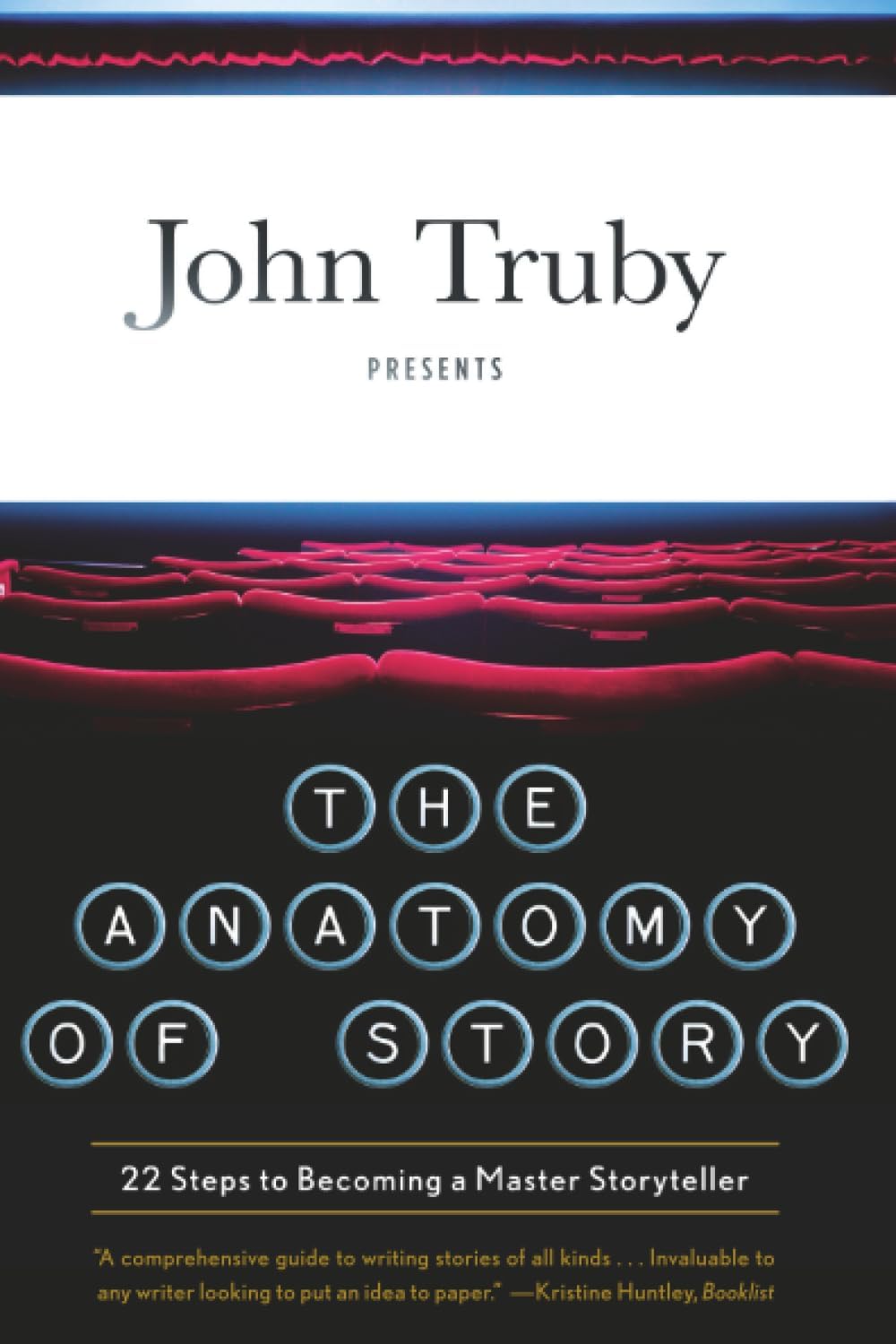
The Anatomy of Story
Product ID: 221419
Desertcart purchases this item on your behalf and handles shipping, customs, and support to Seychelles.
"If you're ready to graduate from the boy-meets-girl league of screenwriting, meet John Truby . . . [his lessons inspire] epiphanies that make you see the contours of your psyche as sharply as your script." ― LA Weekly John Truby is one of the most respected and sought-after story consultants in the film industry, and his students have gone on to pen some of Hollywood's most successful films, including Sleepless in Seattle , Scream , and Shrek . The Anatomy of Story is his long-awaited first book, and it shares all his secrets for writing a compelling script. Based on the lessons in his award-winning class, Great Screenwriting, The Anatomy of Story draws on a broad range of philosophy and mythology, offering fresh techniques and insightful anecdotes alongside Truby's own unique approach to building an effective, multifaceted narrative. Review: Best by far for novel or screen writers - I have spent a lot of money on screenwriting and novel writing books. I have had recommendations for books that were different, or foolproof; formula based, character based, plot based, etc. In my experience, the screenwriting books do it better than the novel writing ones, but it still takes some searching to find something really useful. I first used John Truby's book for a screenplay I was writing. I followed the first few chapters religiously and discovered I was solving problems I didn't even realize existed, creating deeper characters and stronger arcs all as part of the process. It wasn't formulaic and didn't give me a standard plot, but it did adhere to a few fundamental truths about story and character that cannot be ignored. As with any book, you need to use your brain and alter the rules to fit your story, but trust me, don't stray too far. It's very easy for someone to think that their character or story is "too good" or "above" the rules of conventional story telling but trust me, even the most obscure stories follow this basic format (if they are any good). It gives you relatable examples from a variety of movies, and the exercises are actually practical (none of the tired clichés such as "write about an experience you had where..." or "tell a story using these key words as a starting point"). All the exercises are specifically designed to help you develop YOUR story, not just any random plot. Because of the success I had with this method, I used the book again for planning my novel. Now, with a novel there are a few changes that need to be made. More happens in a novel, and of course things like "the audience reveal" are generally strictly cinematic tools and don't translate well to literature. However, I found the same successes with it for novel writing. Same problems being solved, same richness added to the plot and character. I would recommend this book to anyone writing something with plot. I bought this originally in paperback and purchased the kindle version so that I could just carry around my iPad. Use in conjunction with your favourite other texts (I like Blake Snyder's "Save the Cat" beat sheet for pacing. I cross referenced this with my favourite novels from the genre I was writing in to find the appropriate pacing for the novel). There is no such thing as a magic book that will make you a great writer, BUT if you have skills and a great idea, this will help you workshop and develop the idea to give you something you actually start writing. Review: An outliner's dream come true - Whew! For a writing craft book, this thing is long! Okay, first, a word of caution. Truby comes from a screenwriting background, as such, most of his teaching is geared toward that medium. That being said, however, he does make a decent effort to adapt everything to other forms as well. So whether you're a screenwriter, a novelist, a short story writer, a playwright, or just about any other type of writer dealing with story, you'll find help within these pages. Now, this book is extremely outlining/plotting heavy. If you're an outliner, solid 5-stars. If there's a better book of there on story, I don't know what it is. However, if (like me) you are a natural discovery writer/pantser/[insert cool-sounding term here], well, there's still value to be found, it's just less obvious. I give it a solid 3.75 Naturally, I don't agree with Truby on everything, especially this views on the fantasy genre (which aren't really discussed in this book). However, he makes a lot of awesome points in this book and presents a lot of things that I never consciously thought about and many others that I never could have imagined. I'm not convinced that following everything in this book is going to create an amazing story (a few bits of it just seem ridiculous to me), but no matter how you write you're going to find useful information here that is absolutely going to up your story game. Unlike some craft writers (C.S. Lakin comes to mind), Truby doesn't spend any time brow-beating you with his believe that only outlining can produce a great story. He makes it perfectly clear that it is, in fact, his belief, but no more time is spent on it. The book runs the entire gamut of storytelling, from creating the perfect hero and giving him/her the perfect story world to inhabit for the story you're telling, to how to craft amazing plots, creating scenes that pop and writing amazing dialogue. The one thing he doesn't cover is writing descriptions, but I agree with his assessment that such information would be beyond the scope of a book about story. In the end, I highly recommend this book to literally anyone and everyone who writes stories (regardless of medium). No matter what you write, no matter your background or skill level, you will absolutely find tremendous value herein.
| Best Sellers Rank | #10,938 in Books ( See Top 100 in Books ) #4 in Screenwriting (Books) #45 in Performing Arts (Books) #677 in Reference (Books) |
| Customer Reviews | 4.7 out of 5 stars 3,398 Reviews |
M**A
Best by far for novel or screen writers
I have spent a lot of money on screenwriting and novel writing books. I have had recommendations for books that were different, or foolproof; formula based, character based, plot based, etc. In my experience, the screenwriting books do it better than the novel writing ones, but it still takes some searching to find something really useful. I first used John Truby's book for a screenplay I was writing. I followed the first few chapters religiously and discovered I was solving problems I didn't even realize existed, creating deeper characters and stronger arcs all as part of the process. It wasn't formulaic and didn't give me a standard plot, but it did adhere to a few fundamental truths about story and character that cannot be ignored. As with any book, you need to use your brain and alter the rules to fit your story, but trust me, don't stray too far. It's very easy for someone to think that their character or story is "too good" or "above" the rules of conventional story telling but trust me, even the most obscure stories follow this basic format (if they are any good). It gives you relatable examples from a variety of movies, and the exercises are actually practical (none of the tired clichés such as "write about an experience you had where..." or "tell a story using these key words as a starting point"). All the exercises are specifically designed to help you develop YOUR story, not just any random plot. Because of the success I had with this method, I used the book again for planning my novel. Now, with a novel there are a few changes that need to be made. More happens in a novel, and of course things like "the audience reveal" are generally strictly cinematic tools and don't translate well to literature. However, I found the same successes with it for novel writing. Same problems being solved, same richness added to the plot and character. I would recommend this book to anyone writing something with plot. I bought this originally in paperback and purchased the kindle version so that I could just carry around my iPad. Use in conjunction with your favourite other texts (I like Blake Snyder's "Save the Cat" beat sheet for pacing. I cross referenced this with my favourite novels from the genre I was writing in to find the appropriate pacing for the novel). There is no such thing as a magic book that will make you a great writer, BUT if you have skills and a great idea, this will help you workshop and develop the idea to give you something you actually start writing.
K**R
An outliner's dream come true
Whew! For a writing craft book, this thing is long! Okay, first, a word of caution. Truby comes from a screenwriting background, as such, most of his teaching is geared toward that medium. That being said, however, he does make a decent effort to adapt everything to other forms as well. So whether you're a screenwriter, a novelist, a short story writer, a playwright, or just about any other type of writer dealing with story, you'll find help within these pages. Now, this book is extremely outlining/plotting heavy. If you're an outliner, solid 5-stars. If there's a better book of there on story, I don't know what it is. However, if (like me) you are a natural discovery writer/pantser/[insert cool-sounding term here], well, there's still value to be found, it's just less obvious. I give it a solid 3.75 Naturally, I don't agree with Truby on everything, especially this views on the fantasy genre (which aren't really discussed in this book). However, he makes a lot of awesome points in this book and presents a lot of things that I never consciously thought about and many others that I never could have imagined. I'm not convinced that following everything in this book is going to create an amazing story (a few bits of it just seem ridiculous to me), but no matter how you write you're going to find useful information here that is absolutely going to up your story game. Unlike some craft writers (C.S. Lakin comes to mind), Truby doesn't spend any time brow-beating you with his believe that only outlining can produce a great story. He makes it perfectly clear that it is, in fact, his belief, but no more time is spent on it. The book runs the entire gamut of storytelling, from creating the perfect hero and giving him/her the perfect story world to inhabit for the story you're telling, to how to craft amazing plots, creating scenes that pop and writing amazing dialogue. The one thing he doesn't cover is writing descriptions, but I agree with his assessment that such information would be beyond the scope of a book about story. In the end, I highly recommend this book to literally anyone and everyone who writes stories (regardless of medium). No matter what you write, no matter your background or skill level, you will absolutely find tremendous value herein.
M**.
Challenging but brilliant explanation of story structure for writers
One key failing of so many stories is a lack of good story structure. It’s such a common problem, and there are all kinds of ways to structure a story out there, from the Hero’s journey to Save the Cat, to a dozen or so others. The problem is, most of those structures work well for certain types of stories, but less well for others. The omnipresent Hero’s Journey, for example, is a poor fit for stories with female heroes because it’s heavily biased toward masculine motivations and drives. And romances are problematic with that structure. If the writer doesn’t know which structure works well for their story’s genre, their story can end up a mess. The brilliance of Truby’s book is that it works for ALL genres. Though he comes from a Hollywood background and primarily uses films as examples, his structure works for novels just as well. Furthermore, if you check out his ANATOMY OF GENRES book (also available here on Amazon at https://www.amazon.com/Anatomy-Genres-Story-Forms-Explain-ebook/dp/B09NK6VGT8) you’ll see how he adapts this structure to each major genre. It’s also less film-centered and includes explicit advice for novels as well as screenplays. I highly recommend BOTH Truby’s books for writers who are serious about their careers. The downside of this book is that it’s a VERY dense book to read and may require multiple readings to fully comprehend. But this book is well worth the effort if you want to become a writer of high quality stories. And his book on genres really needs prior reading of this book, ANATOMY OF STORY to fully grasp what he says.
J**S
Good book full of easy to understand examples but beware
I purchased the book and found the process well organized and the examples clear. As a non-MFA writer, I was able to follow the process. Within a surprisingly short time I was able to completely fill in the plot of my new book. I was so impressed, I decided to purchase the software and training from his website. (advertised in the book). That is where I quickly became less enthusiastic. The software is incredibly expensive. Be prepared to pay over $100. I for one, was prepared to pay the amount and completed the online purchase for download. That's when I got my first surprise. The download did not show up immediately which left me feeling a bit taken. I immediately sent an email and several hours later I received a followup email with my information. Relieved I calmed and bided my time till I could get home from work and download the software. I was very eager to enter my book information and get started. When I got home, I quickly got out my Macbook and started the download. Installation was a bit confusing but I was able to get it done. Then after I started the software it sits for a lengthy time doing nothing. Finally when I was about to send another email asking for technical assistance, the software pops up an activation entry screen. No warning messages anywhere in the emails or website about this frustrating little gem. I searched everything. So I called the listed number and of course, they are only open during the hours I am at work and since it is now Friday night, I have to wait till Monday to get to use software I paid $250 for. I'm disappointed and frustrated. So, if you want a good story structure book that is easy to understand for the non-writer beginner, this is a good choice. But if you want the additional help of the software I'd think twice and be prepared for a frustrating wait. If a company wants to use installation verification then they should use 24/7 automation to complete it.
J**E
Finally, a method that works!
Truby has become a new mentor for my fiction writing. "The Anatomy of Story," is not just an essay on the craft of story. Truby provides examples a plenty, dissecting the likes of Casablanca, Star Wars, Its A Wonderful Life, Ulysses, and Tootsie, to reveal the organic, interconnected web that weaves together their characters, plot, moral theme, dialogue, setting, and symbols. I've read reviews that suggest that Truby's examples are outdated and retrofitted to his 22 step method. This is a misunderstanding. Stories like Dickens's A Christmas Carol have stood the test of time and while I have never seen Casablanca in its entirety, Truby is so specific in his analysis that the story feels familiar now. Of course Dickens didn't use Truby's method but Truby illustrates how his 22 step method developed out of analyzing the organic stories of master story tellers. This method is not easy. But it's the first that I've come across that provides an organic process. Other methods prescribe a stiff, episodic frame work upon which the story is stretched. In Truby's method every story element serves in comparison or contrast to the main character's struggle. It is a very disciplined method. No fluff allowed. No part of the story is pulled out of thin air, made up out of whole cloth. The internal logic of the story provides the structure. Easier methods abound but produce inferior results. Worse, other methods provide no guidance to differentiate a workable premise from a fatally flawed premise. Now I can finally lay to rest ideas that would never have developed properly before I invest hundreds of hours in writing. Instead I can develop those diamonds in the rough until they sparkle.
P**S
I'd give it 10 stars if I could
If you can invest in only one book on the craft of writing, The Anatomy of Story would cover all your needs, and then some. Truby’s 22 Steps to Becoming a Master Storyteller is probably the single most comprehensive manual on writing you’ll ever find. I’ve read dozens of writing books from James Scott Bell, Robert McKee, Ursula Le Guin to Ray Bradbury, Stephen King, Dorothea Brande, Brenda Ueland, John Gardner, and more. Truby clarifies the much touted ‘three-act structure’ and brings you deeply into your hero’s emotional and moral growth. I love how he emphasizes where the story needs to go rather than literary mechanical devices. He lays out practical storytelling advice that shows you how a story is ‘organic’ and the writing process that will allow your storytelling to truly convey emotional knowledge to your readers. You will learn about the ‘dramatic code’ and how the story world is fueled by desire. ‘Story world’ contains the ‘story body’ and ‘story movement’ in a web and weave of constructions. This book is a keeper on your shelf for rereads, reference, and a rich foundation for all creative writing. I’d give it 10 stars if I could.
G**Y
The definitive writer on story and genre: a must for any fiction writer.
I knew that John Truby was the master of Hollywood script and highly influential among fiction writers in novel and short story. But I was blown away by the profundity of his thought. It comes through in his books more directly than in his many videos. Not merely a "how-to" by any stretch' his viewpoint, as expressed in the book, is more a philosophy of how the human imagination interprets the world through story. I went with the paperback version so I could stick it in the glove compartment for those sunny days when I want to read in the bright sun, scribble on the margins, and dog-ear a page here and there. You will not be disappointed, Truby is brilliant. I was also surprised to hear this theme from the lips of a leading (best seller) philosopher in an online discussion unrelated to the craft of writing. Many human conflicts, according to that conversation, are rooted not in atavistic animality, at all, but rather in the conflicting stories that the parties advance. Intriguing as that is, this book does not go too much into extension of the basic view, but it is implicit that Truby sees human as the story-telling animal. I am still delving into his work on genre and story, but I pledge to myself to refer to it often, in order to pick the brain of this surprisingly profound writer.
A**N
Truly Essential Reading
While I have a few criticisms, I'm still giving this 5 stars because The Anatomy of Story is by far the best book I've ever read on the subject of writing. Reading it has truly been a revelation and I'm so glad to have found it. I've read several other books and was always left with a sense that something fundamental was missing from them. This book fills in all the gaps. Instead of platitudes, Truby gives us explanations, multiple examples and insightful techniques for each point he makes. I was amazed by how many ideas are in this book that I had not seen anywhere else: four-corner opposition, psychological and moral need, attack by an ally, audience revelation - any one of these ideas by themselves are worth the price of the book, yet we get all of these and more in The Anatomy of Story. Don't waste your time on another re-hash of two plot points and a climax; buy The Anatomy of Story instead and prepare to bring your writing skill to a new level. But beware, there is so much new information in this book that you may want to read it twice (like I had to) in order to see the "big picture". Be sure to have your hi-lighter handy, then do the 9 exercises. Did I mention the exercises? Oh yes, that's almost the best part! 22 steps is a lot to weave together, so Truby lays out 9 exercises which guide us through each step in a detailed manner. The completion of the 9 exercises will leave you with a full first-draft story that you will be proud to have written. This is not a "color by numbers" approach. Think of the 22 steps like 22 tools for your writer's tool box; you may use them (or not) as you see fit. Either way, you'll have a clear understanding of how, why and when to use them. If you are an aspiring writer like I am, then you and I have a kinship. As a comrade of sorts, I highly recommend this book to you.
T**X
Best book
Your just need this. Buy it. And the Anatomy of the Genre
H**S
There are some excellent, very succinct ebooks that begin you on the ...
If you're going to buy a 'how to write books' book, this is the one you should buy. There are some excellent, very succinct ebooks that begin you on the 'how to' journey by pointing out that writing novels is a craft as well as an ability, and that craft can be learned. These are heartening because they offer a series of easy to follow 'steps' for structuring novels so that they work as novels. However, they are often cobbled together accounts of a range of theories on novel-writing, and they might lead one to believe that taking more than a month on a novel is a waste of time. Truby's book presents a coherent, depth account of what makes a good novel/film and why, and the steps he suggests build towards a far more comprehensive and intelligent sense of how writers can make their novels work in very clear and manageable ways. I had innumerable lightbulb moments, and it was a real pleasure to read something that doesn't dumb down what novels are but instead gives credit to smart writing and smart readers. The power of this particular book is that it looks at the range of writing, both literary and genre, novel and screenplay, in a way which allows one to see how good quality structure and therefore writing can be achieved in both. It's a much longer book than others in this field, which makes the reading experience far more satisfactory and fulfilling. A real find and now a cornerstone of my library.
C**R
Çok iyi
Mükemmel
N**R
good
Great
A**A
A Deep Dive into Storytelling
I had read many screenwriting books before this one, but when I came across John Truby’s The Anatomy of Story, it immediately stood out. What makes it exceptional is the depth of the concepts he explores. Unlike many others who focus primarily on the external aspects of a script—its form or structure—Truby approaches storytelling from the inside out. He shows how every element of a screenplay is organically connected, creating a unified whole. His understanding of the craft goes far beneath the surface, and the level of insight is remarkable. This is not a book you can fully grasp in a single reading; it demands revisiting in order to truly absorb its richness. What struck me most was his discussion of Theme. It was mind-blowing to realize how he demonstrates that theme is not something separate, but something organically interwoven with everything else in the story: the character, their desire, weaknesses, need, the unfolding story, and even the world of the narrative. For me, The Anatomy of Story redefined how I think about screenwriting, and it remains a reference point I return to. Read alongside his follow-up, The Anatomy of Genres, these books have profoundly expanded my perspective. They don’t just teach technique; they reveal the inner life of storytelling.
Trustpilot
3 days ago
1 day ago