Desertcart purchases this item on your behalf and handles shipping, customs, and support to Seychelles.
💎 Sharpen smarter, not harder — unleash your blade’s true edge!
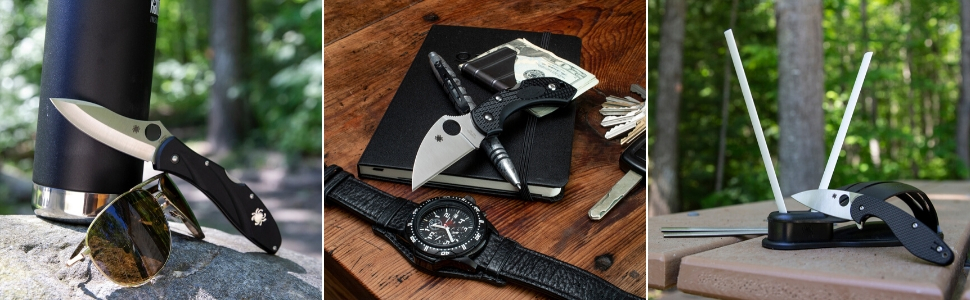
Spyderco’s 7-inch Diamond Stone rods deliver aggressive 220 grit sharpening power with industrial-grade diamond coating, designed exclusively for the Tri-Angle Sharpmaker system. Their triangular shape and matched pair design enable precise, versatile edge restoration on plain and serrated blades alike. Durable and easy to maintain, these rods provide professional-grade performance for years, making dull knives a thing of the past.


| ASIN | B000WUKFBM |
| Best Sellers Rank | #119,967 in Tools & Home Improvement ( See Top 100 in Tools & Home Improvement ) #188 in Sharpening Stones |
| Brand | Spyderco |
| Brand Name | Spyderco |
| Color | White |
| Customer Reviews | 4.7 out of 5 stars 629 Reviews |
| Global Trade Identification Number | 00716104640164 |
| Grit Type | Fine |
| Included Components | Product |
| Item Dimensions L x W x H | 0.51"L x 0.51"W x 7.01"H |
| Item Type Name | Holster |
| Item Weight | 2.4 ounces |
| Manufacturer | Spyderco |
| Manufacturer Part Number | 204D |
| Manufacturer Warranty Description | 2 Year Manufacturer |
| Material | Diamond |
| Material Type | Diamond |
| Model Number | 640164 |
| Number of Items | 1 |
| Product Dimensions | 0.51"L x 0.51"W x 7.01"H |
| UPC | 716104640164 716104640607 |
| Unit Count | 1.0 Count |
R**E
Coarse 220 grit, works well for re-beveling knives
This is the missing part of a Sharpmaker. The brown stones don't cut aggressively enough to remove nicks or change the profile angle of an edge. What would take an hour with the brown stones is a few minutes with these. I use the large DMT diamond plates for sharpening woodworking tools, so I'm used to not using heavy pressure. Some reviewers have said the diamonds fall off. Not for me with light pressure. Once you have used diamonds, you will quickly grow impatient with anything else for coarse sharpening. I use the diamonds, then side of brown stones, then side of white stones. I don't use the edges for anything except serrations if they fit, or the occasional hooked blade. It is true you can buy a nice diamond plate and a 4000 grit Shapton glass stone for about the same money as this plus the sharpmaker, but for ease of use I would recommend this for knives (not chisels or other woodworking tools of course). It's much easier to hold the knife vertically than to try to maintain an angle on a horizontal plate. Some people have built stands to hold their stones or plate at a similar 15 or 20 degree from vertical angle, if that appeals to you. If you are only going to sharpen short pocket knives, an alternative is to buy the lansky-style DMT aligner sharpening kit and get the optional ceramic stone for it if you want a polished edge. In addition to learning to feel for the burr and maintaining a constant angle, it's helpful to have a 10x triplet magnifier and look at the edge after each sharpening step. I see plenty of you tube videos where people will go through six waterstones in a ritual to get an edge, when a few more strokes on half that would remove any scratches with much less time. Look at videos from knife makers, not users - they don't waste time.
G**.
Spyderco Diamond Rod, does the job on dull serrated blades
I have had the Spyderco ceramic sharpener kit for many years, about 20. They work fine for most of my pocket serrated and straight edge knifes , if not too dull. For fine knifes I prefer to use a larger flat Arkansas stone. I got these diamond rods mostly for my serrated kitchen knifes, some of which were ignored for a while. The ceramic rods that came with a kit just required too much time and patience to sharpen . My hand hurt afterwords. I was going to send them to Wusthof to sharpen, but now during CV19 crisis they are closed. So I looked around and found these, new to me diamond rods. I read the reviews and was a bit concerned about the fit. No issues the uncoated end fits just like the original ceramic rods. I used them with about the same touch as ceramic rods holding the knife lightly and stroking down gently as if I wanted to whittle a piece off. The grit on these felt about like a 400 sandpaper, much more aggressive than the ceramic rods which are used best on semi sharp knifes to hone them. No problems with diamonds coming loose, that would take gorilla strokes. It helped to restore old serrated knifes and then I honed them with the ceramic rods. Now I will use the ceramic rods more frequently on them, mostly the brown one. I also use the honing steel rod that came with the knife set after every use, to smooth the edge.
D**R
The 204D diamond rods are a real improvement.
These diamond sharpeners are a really improvement for your existing Syperdco Sharpmaker kit. I have been a faithful user of this kit since 1992. This kit is worth the money: no oil, straightforward and simple to use. If your knife hasn’t been sharpened in a while, or you have the newer, super hard steels, this makes short work of putting an edge on your knife. What would take hours on the medium stones takes minutes on the diamonds. The simple caveat is don’t bear down while using them. A smooth, steady, even, light pressure is all it takes. No muscling is needed. The diamond rods won’t get your knife sharp alone: they will make it very easy to use the medium and fine stones to get a razor edge. Worth the money. They take all the work out of getting a great edge.
A**R
These are essential for reprofiling and thinning the edges of knives
If you have the Sharpmaker and you ever run into the task of having to reprofile a blade, you really should consider these diamond rods. They make for much faster work than the medium grit rods and they are easier than freehanding on a diamond benchstone. As noted, you should not put a lot of pressure on the diamond rods and expect them to wear in for the first few times you use them. Once worn in, the diamonds cut the metal cleanly and fairly quickly. I have several older knives as well as some newer knives that needed the edges thinned and reprofiled. The Spyderco diamond rods, while not magical, made the jobs fairly simple as long as I was persistent and maintained the blade on a vertical plane. A little extra time was needed near the points of the knives but that's to be expected. Once complete, a run through with the medium and fine rods at 30 degrees and a finish with the fine and ultra fine rods at 40 degrees made for a super sharp edge. Finally a good stropping with green compound on leather polished the edges mirror bright. This is an edge better than what the factory grind. You can do a decent job with the Sharpmaker with only the medium and fine ceramic rods. But I have found the diamond and ultra fine rods are essential to getting the best and sharpest edges on my knives.
S**E
Excellent addition to the Spyderco Sharpmaker system
PROS: - Aggressive diamond cutting edges quickly re-profiles blades - Effective with even the hardest tool steels and powdered steels CONS: - Slightly larger than stock rods, which stretches out the plastic baseplate and introduces excessive play when using the standard sharpening rods - Can damage knives if used improperly I had several knives (kitchen, hunting and tactical) that I had not properly maintained and which I was having trouble honing with my standard Spyderco Sharpmaker. Using these diamond rods, I was able to quickly reprofile my dull blades and hone them to a razor edge using my Sharpmaker. I would have given this product 5 stars, but the base of the rods is slightly larger than the standard rods (i.e., those that come with the Sharpmaker system) which stretches out the holes in the plastic base and introduces excessive play when using the standard rods. This has made it more difficult for me to sharpen but I'm figuring out how to hold the knives during sharpening to compensate for the slightly changed angle. Overall a great product for using the Sharpmaker with less-than-perfect knives. UPDATE: Putting a drop of dish soap on the base of the rods allows them to be inserted into the Sharpmaker without damaging it. Wish I had known this prior to initial installation...
R**!
You need these!
First off I see people saying the sharpmaker doesn't work but it does! If you watch the video instructions they leave out the most important part which is your knife must be already at the angle the SM is made for. If it's not it will cause your blade to be worse off. You can't reprofile good steel with the basic brown rods that come with the sharpmaker and it would take a long time to do cheap steel. This is the mistake most people make and get frustrated. These Diamond stones will get the job done, they will cut quick and reprofile your blade quickly and effectively. If you are using your Sharpmaker to sharpen any knife other than a Spyderco you will need a set of diamond stones! These are well made and will last a long time, just don't apply pressure. Let the stones do the work, and they will quick.
J**D
A must have for dull knives
Expensive, but these are a must. If your knife ever gets too dull it can be really hard to sharpen with the brown stone that comes with the Spyderco sharpener. It is just too fine. These diamond triangles are more aggressive and a few strokes gets your knife ready for the fine work of the brown and white triangles.
L**N
Saves alot of work
Saves a lot of work for really dull knifes. Light pressure per instructions
H**L
Optimal für Schleifwinkel größer 40 Grad
Hallo, ich besitze nun seit Jahren den Spyderco Sharpmaker. Leider konnte ich diesen bisher nur eingeschränkt einsetzen, nicht ohne Grund trägt das Produkt inoffiziell den Namen "Sharpkeeper". Das Problem ist nämlich, dass sehr stumpfe Klingen, vielmehr aber Klingen mit einem größeren Schleifwinkel als 40 Grad, nicht effizient mit den zwei unterschiedlichen Körnungen des Sharpmakers geschliffen werden können. Es wird einfach zu wenig Material abgetragen, sodass zum Beispiel bei einem Messer mit 50 Grad nur an den Seiten geschliffen wird, nicht aber unten an der Klinge, wo man einen Grat erreichen möchte. Da der Sharpmaker nur maximal 40 Grad Winkel untersützt, muss man also die Klinge auf 40 Grad schleifen und demzufolge sehr viel Material abtragen. Das funktioniert mit den Diamant-Schleifsteinen super! Ich konnte mit diesen Messer in 10 Minuten auf eine Grundschärfe bringen und endlich einen Grat herstellen. Dazu sei gesagt, dass ich nicht die offizielle Schleiftechnik benutze, sondern für mehr Materialabtragung ungefähr 40 Mal auf einer Seite schleife und hierbei auch mit Kontakt am Stein hochziehe statt nach dem herunterdrücken abzusetzen und neu anzulegen. Danach wechsel ich die Seite und folge daraufhin der Anleitung und schleife wie gewohnt abwechselnd. Kleiner Tipp: um festzustellen, ob man auf einer Seite genug Materiel abgetragen hat kann man mit einem Filzstift die Schneide markieren, wenn die Farbe bis zum Grat weggeschliffen wird kann man aufhören. Auch liegt dem Produkt ein Warnhinweis bei ausdrücklich darauf hinweist, nicht zu viel Druck auf die Klinge auszuüben, da sich sonst die Diamantstückchen lösen können. Mit leichtem Druck wird auch genug Material abgetragen. Ich kann die Diamantsteine nur wärmstens empfehlen, diese sind ein absolutes Muss für jeden Sharpmaker-Besitzer, ohne diese kann man stumpfe Messer nicht effizient schärfen.
R**F
For when you have particularly knackered knives to fix.
This additional set of sharpening "stones" for the Spyderco Tri-Angle Sharpmaker (actually they are a pair of hollow steel triangles coated in industrial diamonds) sorted out knives that were particularly dodgy (having been through the AnySharp Knife Sharpener -- not recommended!). A worthwhile addition to the main device.
D**E
Necessary to reprofile an apex or remove nicks in short order.
Drawing the blade in a downstroke is akin to riding a bicycle down some steps. Instead, I start with the hilt end of the blade on the bottom of the rod and then draw the knife upwards and backwards on each stroke. This is much smoother and easier to develop a feel for what's happening and this motion quickly defines the blade apex and develops a wire burr on the opposite side. I usually start with up to 5 strokes on one side to develop the burr, switch to the other side to knock that burr off and define the other angle, repeat as necessary and taper down to one stroke alternating between sides to achieve a rough working edge. Move to the coarse and then fine or superfine rods to finish the blade. Some steels work best with a coarser, toothier edge while others benefit from additional finishing. An app I found on the Play Store, Knife Steel Composition is helpful. It tells you the steel composition and percentages, a brief history of the steel's purpose and development and often includes comments related to sharpening. Fine grained steels like smoother finishes, larger carbide steels often cut better if left toothier. In any case, I usually finish my blades on a strop, sometimes with compound on the flesh side, sometimes not. This helps to remove traces of the wire burr and finishes the blade edge to a nice smooth cutter.
L**G
Una delle migliori bacchette portatili per affilature da campo
Indubbiamente costose ma di ottima fattura e di durata molto lunga. Non vedo errori o difetti di sorta (a parte il prezzo, che comunque è legato alla qualità). Il sistema id affilatura è molto semplice e quindi molto pratico anche a persone non completamente in grado di affilare una lama mediante una pietra.
M**U
Cool
Ces barres ne sont pas données mais elles sont efficaces, j'ai pu récupérer le tranchant d'une lame vraiment très abimée en assez peu de temps, sans forcer (il ne faut surtout pas forcer sur ces tiges sinon elles perdent leurs qualités abrasives)
Trustpilot
2 weeks ago
1 week ago