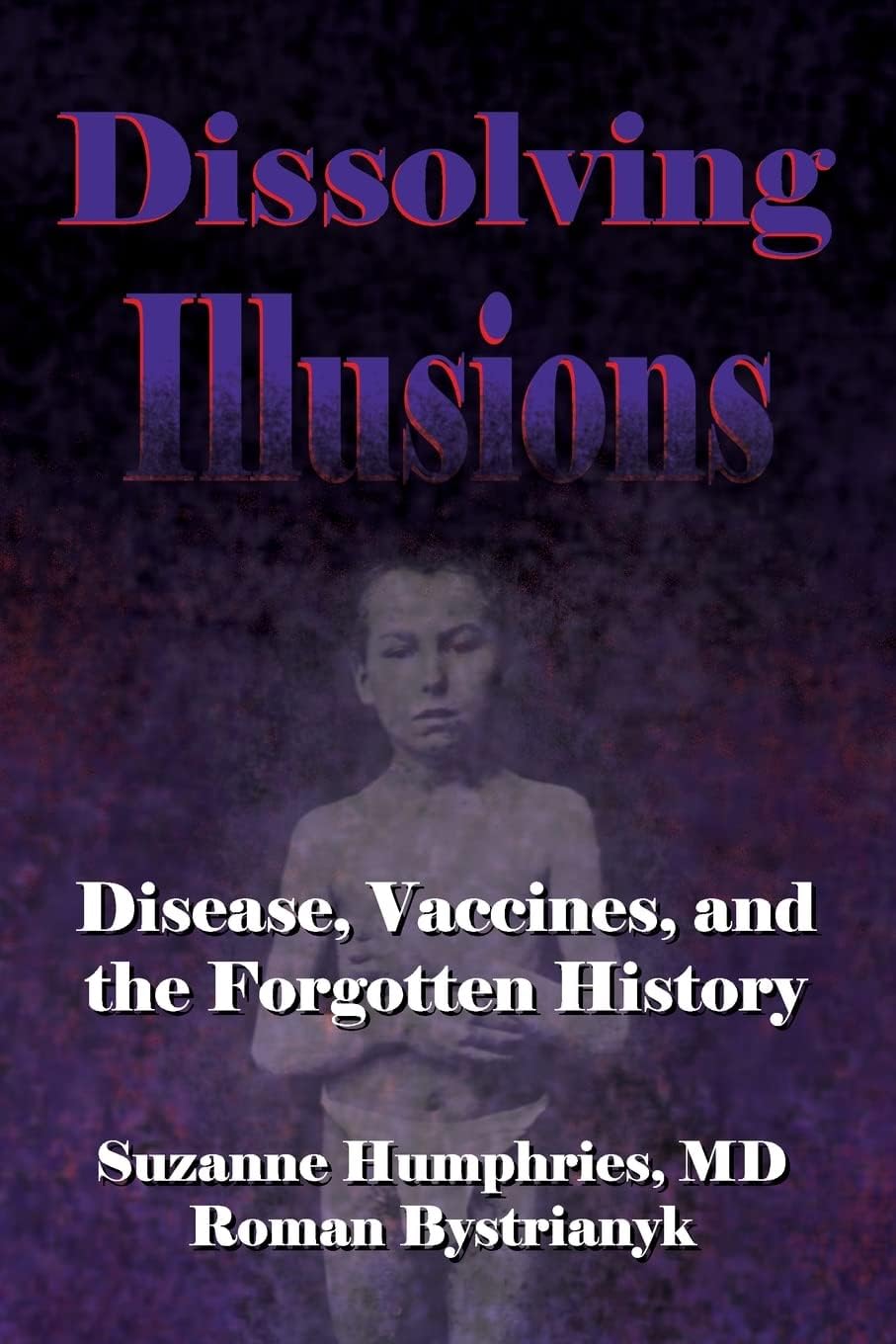
Dissolving Illusions: Disease, Vaccines, and The Forgotten History
Product ID: 286510586
⭐4.9/5 from 2,300+ readers
🏆Top 15 in Infectious & Viral Diseases
📚708g of deep historical insight
Desertcart purchases this item on your behalf and handles shipping, customs, and support to Seychelles.
📖 Unlock the forgotten history of health—because knowledge is the ultimate power move.
Dissolving Illusions explores the transformative history of disease and vaccines from the 1800s onward, revealing overlooked facts and challenging conventional wisdom. With over 2,300 rave reviews and top rankings in infectious disease literature, this 708-gram print book is a must-have for professionals seeking a deeper understanding of public health evolution.
| Best Sellers Rank | #1,806 in Books ( See Top 100 in Books ) #1 in History of Medicine #1 in Viral Diseases #1 in Infectious Diseases |
| Customer Reviews | 4.9 out of 5 stars 2,304 Reviews |
S**Y
Great read
I couldn't put this book down, I was shocked at the way vaccines have been forced throughout the years. Great history book and goes into details about all the different vaccines, their history and effectiveness. Must read!
C**R
Em inglês, a verdade sobre as causas das doenças e vacinas que ninguém ousa falar.
Excelente livro, com graficos e detalhado, bem explicado, recomendo o livro , me surpreeendeu com a qualidade das informações.
C**A
Great book, very informative, a must read for straightforward, unbiased info
This book is a fantastic look at many of the deadly diseases from the 1800's and on, and how big of a difference sanitation and nutrition made in mortality from those diseases. Dr. Humphreys points out that in med School they learned about the diseases that sanitation etc reduced and eliminated (typhoid, cholera etc) and the disease that sanitation and nutrition reduced but that there was a vaccine for, and how even when nutrition and sanitation played a pivotal role (and vaccines did little or in some cases made things worse) they are still categorized as vaccine defeated illnesses. There is some great information, data charts and a lot of insight. It's a big read but so worth it to get a bigger picture of our infectious diseases & our health, and how many components are ignored because we live in such a clean society compared to the days when refuse & carcasses littered the streets and air & food quality were appalling, along with deplorable working condition (for children especially). We don't think about just how much those details affect our immune systems, and taking the time to realize that a supported immune system does an amazing job against a host of illnesses. This is such important reading for anyone concerned about mandated medical treatment or about whether or not the risk benefit ratio of vaccines is as straightforward as the current (western) medical establishment so glibbly states. Many other countries are more reticent about accepting as many vaccines as quickly, and without as much study and testing, as any other drug... Worth a read for any parent, doctor, or anyone wondering what the deal is with diseases and their history.
K**Z
Buen libro.
Excelente libro. Amplia tu panorama y léelo.
M**T
Very good!!
Very good writer. She describes all, gives real data and sources. A real eye-opener
F**R
Integrity, Courage, and High Intelligence Characterize this Book
Vaccines have long been considered to be one of the greatest medical innovations of all time. It's common knowledge that vaccines greatly reduced or eliminated most infectious diseases that ravaged populations during the 19th century and into the first half of the 20th century… or so we are told. According to the authors of Dissolving Illusions, vaccines played a very minimal role in the reduction of infectious diseases. But why then would nearly everyone, including most medical doctors, be so much in favor of vaccines? Therein lies a fascinating story. Truth is, indeed, stranger than fiction! Author Dr. Suzanne Humphries was a very highly paid MD (as a kidney specialist) in a hospital, and for years was in synch with the hospital's pro-vaccine agenda. But then she began see problems in some of her patients that seemed to be connected to their vaccines. Her attempts to do something about this were brushed off by the hospital authorities. This eventually led to her voluntary resignation in 2011. She spent the next few years doing full-time research of the scientific literature and on the history related to vaccines. She then began to teach the shocking truths she had discovered, bucking threats and being called a "quack" in the process. Coauthor Roman Dystrianyk is a father of three children. He had researched vaccines and tried unsuccessfully to convince his wife that they were unsafe. She was a nurse who sided with the medical authorities. She had their kids vaccinated with multiple shots all in one visit, without Roman's knowledge. All three kids got sick and Roman found out what had happened. This led him to do much further research. It is apparent that money was a not a motivator for either Suzanne or Roman. (However, as we can see from other sources, money in the multi-billions is likely a motivator for the vaccine industry. And there is evidence of enormous conflicts-of-interest within and between Big Pharma, the CDC, FDA, and academia.) The formatting of this book is brilliant. Generally throughout we have a few paragraphs of authors' commentary followed by a supportive brief excerpt from an authoritative source (all sources identified), a bit more commentary, another referenced excerpt etc. This makes for enjoyable easy reading and maximum comprehension. Photos and graphs are appropriately inserted. The book starts with an overview of what life was like in "The Not So Good Ol' Days," (1700s and 1800s). Life was much harder than many of us can imagine. Disease was common, life spans were shorter. Crude inoculations against Smallpox were used in the 1700s and through the 1800s. Death rates remained high despite periods of mandatory vaccination until sanitation measures began to be employed in the late 1800s. The Smallpox story is discussed in great detail. Most infectious diseases declined markedly in the late 1800s and especially during the early decades of the 1900s before vaccines had even been invented for most to them. This was due to vast improvements in sanitation, sewage systems, better water, plumbing, the gasoline engine enabling trucking and better transportation, electricity, better farming and nutrition, refrigeration, and higher standard of living. The polio story is especially intriguing. Pictures of people encased in iron lungs and kids wearing braces hooked people emotionally. (I was 12 years old in 1954 when the Salk Vaccine was announced and I still remember the jubilation in my school.) Eventually reports of vaccine success against polio were reported. But research of the facts reveals that this was due to fudging of statistics and changing disease definitions to give the appearance of success. A modern version of the iron lung is still with us which is called a ventilator. It is a much smaller and far less dramatic-looking device for treating cases of breathing paralysis stemming from "transverse myelitis" – which still occurs, and which results from many possible causes usually NOT related to the polio virus, but which would historically have been generalized as "polio." Seventy pages of the book are devoted to the very complex and twisted story of the supposed "disappearance" of polio. The bottom line is that the wild polio virus itself was never as serious a threat as was assumed. Polio vaccines (Salk and Sabin) did much more harm than good for several reasons – the authors explain how so in detail. By the way, Franklin Roosevelt probably did not have polio, but Guilain-Bair syndrome (GBS). The story of vaccines against whooping cough (pertussis) is also involved and dramatic, as is the measles story, both of which are covered in detail. The authors explain why "herd immunity" for most diseases (if any) cannot be achieved through vaccinations no matter how high the percentage of people vaccinated. It is clear that vaccines in general are not nearly as effective as the authorities claim, and they are far more dangerous than is generally believed. The final chapter is on "Belief and Fear" – fear of disease leading to reliance on those considered to be knowledgeable authorities. Hopeful thinking along with big money have had much to do with the "authorities" becoming conditioned to believe the mythology of "safe and effective" vaccines. The effectiveness of the vaccine approach has long been greatly exaggerated, the science corrupted, and vaccine risk "continuously denied and underplayed." We humans have the ability to deceive ourselves, especially when fear or money is involved. Dissolving Illusions is a wonderful tool for educating people on the truth regarding vaccines.
Trustpilot
1 month ago
2 months ago