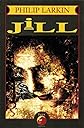
Jill
Product ID: 35004994
Desertcart purchases this item on your behalf and handles shipping, customs, and support to Seychelles.
Jill [Larkin, Philip] on desertcart.com. *FREE* shipping on qualifying offers. Jill Review: A Lovely Cake - Kingsley Amis dedicated LUCKY JIM to Philip Larkin. Both LUCKY JIM and JILL are novels about life at Oxford, and for purity of heart and prose, LUCKY JIM cannot touch the first half of JILL. JILL begins with John Kemp, working-class from Huddlesford, arriving at Oxford full of trepidation, only to find a raucous tea going on in his room, hosted by his wealthy roommate from London with the china John had purchased with his mother and shipped to his room. The rendering of the rest of John’s experience at Oxford – his attempt to assimilate, his attempt to free himself from his scholarly nature, and his attempt to love – is exquisite. Larkin was a gifted young novelist. He helped Amis with LUCKY JIM, which is why it is dedicated to him. If Larkin gave up fiction for poetry because LUCKY JIM triumphed in a way JILL did not, it is a shame. Many, seeing Larkin only as a poet, have ignored his achievement in fiction. Don’t. Review: Disjointed but worth reading - I read this book because one of my all-time favorite authors, Alan Hollinghurst, mentioned that he had drawn from it when writing The Sparsholt Affair (a book I've read twice already and will no doubt read again.) It was this connection that made the book so interesting to me -- many of the themes are in both books: the social divide between north and south, rich and poor, privilege and middle class values, etc. Also, Oxford during the war complete with blackouts and students passing through much faster than usual and all facing an uncertain future. There are other parallels and many little details in common (e.g. the tea set) all of which kept my interest, but I have to admit that the interest was so intense because of the Hollinghurst connection. Had I read this without any point of reference I would have found it interesting but disjointed and I would have read it to the end because of who the author was, not because it was such a compelling story. The writing was short and to the point without flowery descriptions and other digressions. The narrator's voice is quite sharp and did not make me want to invest too much of myself in the story. It was not a particularly enjoyable read. But it is definitely worth reading just because of who the author is.
| Best Sellers Rank | #4,355,885 in Books ( See Top 100 in Books ) #408,743 in Literature & Fiction (Books) |
| Customer Reviews | 3.8 3.8 out of 5 stars (147) |
| Dimensions | 5.4 x 0.68 x 8 inches |
| Edition | Reprint |
| ISBN-10 | 0879519614 |
| ISBN-13 | 978-0879519612 |
| Item Weight | 11.2 ounces |
| Language | English |
| Print length | 256 pages |
| Publication date | August 22, 1984 |
| Publisher | The Overlook Press |
L**R
A Lovely Cake
Kingsley Amis dedicated LUCKY JIM to Philip Larkin. Both LUCKY JIM and JILL are novels about life at Oxford, and for purity of heart and prose, LUCKY JIM cannot touch the first half of JILL. JILL begins with John Kemp, working-class from Huddlesford, arriving at Oxford full of trepidation, only to find a raucous tea going on in his room, hosted by his wealthy roommate from London with the china John had purchased with his mother and shipped to his room. The rendering of the rest of John’s experience at Oxford – his attempt to assimilate, his attempt to free himself from his scholarly nature, and his attempt to love – is exquisite. Larkin was a gifted young novelist. He helped Amis with LUCKY JIM, which is why it is dedicated to him. If Larkin gave up fiction for poetry because LUCKY JIM triumphed in a way JILL did not, it is a shame. Many, seeing Larkin only as a poet, have ignored his achievement in fiction. Don’t.
C**E
Disjointed but worth reading
I read this book because one of my all-time favorite authors, Alan Hollinghurst, mentioned that he had drawn from it when writing The Sparsholt Affair (a book I've read twice already and will no doubt read again.) It was this connection that made the book so interesting to me -- many of the themes are in both books: the social divide between north and south, rich and poor, privilege and middle class values, etc. Also, Oxford during the war complete with blackouts and students passing through much faster than usual and all facing an uncertain future. There are other parallels and many little details in common (e.g. the tea set) all of which kept my interest, but I have to admit that the interest was so intense because of the Hollinghurst connection. Had I read this without any point of reference I would have found it interesting but disjointed and I would have read it to the end because of who the author was, not because it was such a compelling story. The writing was short and to the point without flowery descriptions and other digressions. The narrator's voice is quite sharp and did not make me want to invest too much of myself in the story. It was not a particularly enjoyable read. But it is definitely worth reading just because of who the author is.
D**S
Tumble After Jill, If You Will
Philip Larkin states in his 1975 Introduction to my copy of this book, marking its republication, by writing: "As, despite its length, it remains in essence an unambitious short story, chapter-divisions have been dropped, leaving it merely as a narrative with breathing-spaces." And, while one may do well to wonder exactly how "unambitious" it was when Larkin actually wrote it thirty odd years before tacking on this qualifier, it indeed remains a longish, disjointed short story. I would actually go further and dub it a string of loosely connected vignettes. The word that kept leaping to mind as I was reading it was: Inchoate. I suppose the title "Jill" is as appropriate as any - though perhaps "John", if less Romantic, would at least possess the virtue of retaining the title of the character serving as a common thread herein - for Jill, both real and imagined, does not take up more than half the book. Right: Young, fairly bright, extremely industrious lad wins scholarship to Oxford by swotting up for examinations. Once there, rooms with debonair, spendthrift playboy. Young lad, John Kemp, starts drinking, smoking, seeing the world from one angle and then another, invents an imaginary relation named Jill, writes letters to and from her, goes so far as to begin a diary by her. Then he meets a real girl with almost the same name and transfers his affections to her. Oh, by the bye, there's a war on and his hometown gets blitzed by the Jerries. The section in which John ventures back to his hometown to see whether his parents are among the quick or the dead is the best vignette, as it were, in the book. The writing here is superb: "The moon, by day a thin pith-coloured segment, hung brilliantly in the sky, spilling its light down on to the skeletons of roofs, blank walls and piles of masonry that undulated like a frozen sea. It had never seemed so bright. The wreckage looked like ruins of an age over and done with." Top-drawer stuff! Then, John goes on a bender when back at Oxford, catches pneumonia after being pitched into the fountain (after pasting Jill - her real name is Gillian - with a sloppy drunk kiss). The story ends with his parents coming to visit their son in the infirmary with a wry little in-joke on the motto of Oxford for those that know their Latin and have seen the Oxford crest. The problem here is that everything is so higgledy-piggledy. One vignette reminds one of Joyce and Stephen Daedalus, the next of Dante and his Beatrice and the next of Waugh and Brideshead Revisited - really the book to read if you're into this sort of thing. Still, the book has its moments, and Larkin has a surprisingly acute ear for dialogue. Recommended for nostalgic anglophiles who aren't particularly fussy about thematic coherence.
C**D
Sharp, Biting Novel
An arresting short novel by one of Great Britain's best 20th Century poets. Definitely worth reading.
A**R
Three Stars
Beautifully written by one of England's best poets.
E**I
A Gem!
"Jill" is a wonderful story about a Young Englishman from a working class family, who attends Oxford on a scholarship, and his attempt to fit in with people from higher classes of society. Larkin has drew a very interesting portrait of life in Oxford during WWII. I also think he managed to brilliantly convey the protagonist concerns and feelings. The writing, as can be expected from Larkin, was beautiful, lively, and yet very simple
R**Y
arrived on schedule
All good
S**S
Philip Larkin wrote "Jill" when he was only twenty-one and an undergraduate at Oxford during the 2nd WW. It was published in 1946. I found Larkin’s 1963 introduction to this edition very interesting. He decided not to change anything in the original edition: “It will, I hope, still qualify for the indulgence traditionally extended by juvenilia” The book gives an insight in wartime university days at Oxford and is about a young student from the north of England experiencing his first year away from home in this completely new and environment. Even though PLarkin says that the hero’s background is not what the story was about you cannot fail to see that it is very much a part of the story. What is clever about the writing is that throughout the book there is a tension which compels you to keep on reading. In this introduction Philip Larkin says that during the war life in college was austere, pre-war patterns having been dispersed. “At an age when self-importance should have been normal, events cut us ruthlessly down to size” I found it compelling reading and yes, it certainly is from the pen of a very young Philip Larkin but, nevertheless, outstanding.
J**S
A well written and absorbing book with early touches in prose of the economical eye for detail that marked out much of Larkin's later poetry. Use of the third person narrative is interesting given the writer's own background and that of his main male character. From a poet who always seemed middle-aged and who observed,,isolated, on the borders of life, this is a refreshingly youthful and vibrant piece from a poet whose greatest achievements lay ahead of him. Larkin keeps the reader guessing as to what will happen next and there are unexpected twists and turns that hold one's attention from start to finish. With the main character, John Kemp, so isolated and frequently out of his depth, I felt it almost became the reader's role to look out for him and see he came to no lasting harm.
A**N
Started well, I decided to get it after hearing a brief section read on a Radio 4 programme. After a while it seemed to drift and I found the ending disappointingt.
Z**E
Fascinating first novel (of only two) by Larkin, autobiographical in the sense that it's set in Oxford in 1940, when he was an undergraduate with (among others) Kingsley Amis, written when the outcome of the war wasn't known, young men in limbo waiting to be called up. Simple, unadorned prose, this moving account of a few short months in a turbulent period both in the life of Larkin and Europe, would be well worth reading whoever had written it, throwing light on the connection between writing and imagination.
K**R
I had been unaware until recently that Larkin had written any novels and was prompted by curiosity to read this, his first. It is beautifully written and includes descriptions of the minutiae of everyday life that evoke the atmosphere of Oxford in the 1940s. I was interested to find that he writes in such detail about women and girls, especially as he wrote this novel at a young age. I felt that the book tailed off at the end and left questions hanging - what did John Kemp's parents think of him at that stage and what did he do next?
Trustpilot
2 months ago
1 month ago