
Desertcart purchases this item on your behalf and handles shipping, customs, and support to Seychelles.
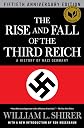
“One of the most important works of history of our time.” — The New York Times A modern classic and the definitive study of Adolf Hitler, the rise of Nazi Germany, the Holocaust, and World War II by the foreign correspondent who saw firsthand how the Nazi movement swept Europe. William B. Shirer presents nuanced profiles of major and minor figures as well as exacting details of the political movements, wartime strategy, and atrocities of the Third Reich. This epic work is required reading to understand modern history and how fascist dictators can captivate a population to wicked ends. No other powerful empire ever bequeathed such mountains of evidence about its birth and destruction as the Third Reich. When the bitter war was over, and before the Nazis could destroy their files, the Allied demand for unconditional surrender produced an almost hour-by-hour record of the nightmare empire built by Adolph Hitler. This record included the testimony of Nazi leaders and of concentration camp inmates, the diaries of officials, transcripts of secret conferences, army orders, private letters—all the vast paperwork behind Hitler's drive to conquer the world. The famed foreign correspondent and historian William L. Shirer, who had watched and reported on the Nazis since 1925, spent five and a half years sifting through this massive documentation. The result is a monumental study that has been widely acclaimed as the definitive record of one of the most frightening chapters in the history of mankind. Here is the complete story of Hitler's empire, one of the most important stories ever told, written by one of the men best equipped to write it. This worldwide bestseller has been acclaimed as the definitive book on Nazi Germany; it is a classic work. Review: Must Read for WW2 enthusiasts - I’ve always wanted to get to this book in my studies on WW2. I mainly read about the American Civil War and the Roman Empire, but about a 3 years ago I decided to focus more on biographies. Discovered the Amazing Allison Weir, and Margaret George. Special shout to Margaret who’s Memoirs of Cleopatra had me read 4 straight books on Women of the Roman world. Sorry I digress, but the point was after all that I was wanting to get back to my typical type of historic read and felt it was time for Mr. Shirers detailed history of Nazi Germany. My one knock against this book is the Swastikas on cover and spine. I’m not offended by it because I look at it from the historical nature, plus know my book is in no way pro third Reich, but I got some looks on a few flights I took while reading this book. In this day and age I think it’s best to keep that symbol off reading material regardless of historical importance it’s not needed, and gives people the wrong impression. Outside of that this is truly the best book on the Third Reich I have ever read. Not only the amazing detail and information, but William Shrirer has the personal experience and journalistic background that make his take perfect for the source material. He covers the various takes on controversial military decisions made by Hitler. He knows when to display the atrocities and evil of the Nazi Regime, and when to tell the objective viewpoint. You can tell this man spent a lot of time and chose his words carefully to limit his personal bias when it was important to be objective. A true masterpiece of history, and amazing post war study combined with his own first hand accounts. Structured masterfully, told truthfully, and brings a lunchbox style work ethic to explain a dense two decades of history. Review: Simply a masterpiece of history about one of the darkest times in man's life on this planet. - This is an incredible book. I have not ready any other histories of Nazi Germany, but I can't imagine another more comprehensive account of the horror that was the Third Reich. This was not an easy read. I started this early in my life and, for reasons I don't recollect, never got into it. That was a long time ago. I finally decided that I must read this, if only for the fact that my family went through this and beloved members of my family lost their lives to this. I can't say this was a totally enjoyable read, but that was not the purpose. In reading this book I began to get a clearer understanding of how such an atrocity could have come to exist. There are many ironies in the book. If Hitler's grandfather had not belatedly married his grandmother, he would have remained Adolf Schicklgruber and certainly would not have achieved any of the power that he did. And the plots to overthrow him, from within his own ranks, time and again failed, once only by the fact of a detonator failing to go off. There are so many fascinating things to learn in this book. You do not have to be a history buff, only to have the need to understand how such an abomination could happen. There are many names, too many for me to keep track of. And I finally stopped reading every footnote. If I was given a test on this material, I probably would flunk it. But reading it, not as an obligation, but for an understanding of this bleak moment in our world's history, it is a masterpiece. Taken from the actual written diaries and source material from the Nazis, themselves, this is the ultimate book on Hitler, the Nazis and the Third Reich. If you choose to read this book, be prepared for an extremely detailed account of every correspondence, letter, speech, meeting that went on with each move and conjecture in this almost chess game of a war. It can get tedious. This is not an action novel. Sometimes you want to yell out, "Come on! Get on with the action!" But this is a history, not a novel. You have to understand that and go with it. Also, I started to get annoyed that there was so much on the war and nothing about the concentration camp atrocities and the genocide that was taking place. Mr. Shirer decided to put that all in one chapter about three quarters of the way through the book. So, it is not left out. Just put in its own special chapter. One glaring omission, which I cannot understand is that there is not one mention of Dr. Mengele, the most infamous doctor of the Third Reich, although there is a sub-chapter on the doctors and their cruel medical experiments. Maybe someone can explain this to me. All in all, this is a masterpiece and a must-read for anyone who wants to know about this event in history!
| Best Sellers Rank | #26,421 in Books ( See Top 100 in Books ) #3 in German History (Books) #16 in World War II History (Books) #29 in Jewish Holocaust History |
| Customer Reviews | 4.7 out of 5 stars 11,383 Reviews |
B**R
Must Read for WW2 enthusiasts
I’ve always wanted to get to this book in my studies on WW2. I mainly read about the American Civil War and the Roman Empire, but about a 3 years ago I decided to focus more on biographies. Discovered the Amazing Allison Weir, and Margaret George. Special shout to Margaret who’s Memoirs of Cleopatra had me read 4 straight books on Women of the Roman world. Sorry I digress, but the point was after all that I was wanting to get back to my typical type of historic read and felt it was time for Mr. Shirers detailed history of Nazi Germany. My one knock against this book is the Swastikas on cover and spine. I’m not offended by it because I look at it from the historical nature, plus know my book is in no way pro third Reich, but I got some looks on a few flights I took while reading this book. In this day and age I think it’s best to keep that symbol off reading material regardless of historical importance it’s not needed, and gives people the wrong impression. Outside of that this is truly the best book on the Third Reich I have ever read. Not only the amazing detail and information, but William Shrirer has the personal experience and journalistic background that make his take perfect for the source material. He covers the various takes on controversial military decisions made by Hitler. He knows when to display the atrocities and evil of the Nazi Regime, and when to tell the objective viewpoint. You can tell this man spent a lot of time and chose his words carefully to limit his personal bias when it was important to be objective. A true masterpiece of history, and amazing post war study combined with his own first hand accounts. Structured masterfully, told truthfully, and brings a lunchbox style work ethic to explain a dense two decades of history.
D**R
Simply a masterpiece of history about one of the darkest times in man's life on this planet.
This is an incredible book. I have not ready any other histories of Nazi Germany, but I can't imagine another more comprehensive account of the horror that was the Third Reich. This was not an easy read. I started this early in my life and, for reasons I don't recollect, never got into it. That was a long time ago. I finally decided that I must read this, if only for the fact that my family went through this and beloved members of my family lost their lives to this. I can't say this was a totally enjoyable read, but that was not the purpose. In reading this book I began to get a clearer understanding of how such an atrocity could have come to exist. There are many ironies in the book. If Hitler's grandfather had not belatedly married his grandmother, he would have remained Adolf Schicklgruber and certainly would not have achieved any of the power that he did. And the plots to overthrow him, from within his own ranks, time and again failed, once only by the fact of a detonator failing to go off. There are so many fascinating things to learn in this book. You do not have to be a history buff, only to have the need to understand how such an abomination could happen. There are many names, too many for me to keep track of. And I finally stopped reading every footnote. If I was given a test on this material, I probably would flunk it. But reading it, not as an obligation, but for an understanding of this bleak moment in our world's history, it is a masterpiece. Taken from the actual written diaries and source material from the Nazis, themselves, this is the ultimate book on Hitler, the Nazis and the Third Reich. If you choose to read this book, be prepared for an extremely detailed account of every correspondence, letter, speech, meeting that went on with each move and conjecture in this almost chess game of a war. It can get tedious. This is not an action novel. Sometimes you want to yell out, "Come on! Get on with the action!" But this is a history, not a novel. You have to understand that and go with it. Also, I started to get annoyed that there was so much on the war and nothing about the concentration camp atrocities and the genocide that was taking place. Mr. Shirer decided to put that all in one chapter about three quarters of the way through the book. So, it is not left out. Just put in its own special chapter. One glaring omission, which I cannot understand is that there is not one mention of Dr. Mengele, the most infamous doctor of the Third Reich, although there is a sub-chapter on the doctors and their cruel medical experiments. Maybe someone can explain this to me. All in all, this is a masterpiece and a must-read for anyone who wants to know about this event in history!
G**A
The Monumental History of Nazi Germany
This is a brilliant book - tremendously well researched, incredibly well written, and packed full of unparalleled insights. It is highly recommended for anyone interested in Adolph Hitler, the Weimar Republic and Nazi Germany, and the Third Reich at war. Written soon after the end of the Second World War and first published in 1959, William L. Shirer's "The Rise and Fall of the Third Reich" remains the monumental history of Adolph Hitler and the Germany he created. The author, William L. Shirer, served as a newspaper correspondent and CBS radio reporter in Europe and Nazi Germany during the war and witnessed first-hand many of the events that led to the beginning of the Second World War in Europe. More importantly, Shirer, the correspondent turned historian, was among the first individuals to avail himself of the confidential archives of the Third Reich and all its branches seized and held by the U.S. government after the war in Alexandria, Virginia. These documents included the official diaries of the German Armed Forces High Command, the German Navy High Command, the Chief of the German General Staff (General Franz Halder), and those of the Minister of Propaganda (Dr. Joseph Goebbels). Shirer also made good use of the stenographic records of Hitler's conferences on the daily military situation, as seen and discussed at the Fuehrer's headquarters, and the texts of the Nazi leader's table talk. The result is an extremely well documented and detailed history of every aspect of Hitler's Germany. Shirer makes it clear early in his book that although he detested Adolph Hitler and the Nazis, he sought to write an objective history of events. Certainly his observations on the leader of the Third Reich are of special interest to readers and historians alike. Shirer calls Hitler: "The man with the Charlie Chaplin mustache, who had been a down-and-out tramp in Vienna in his youth, an unknown soldier of World War I, a derelict in Munich in the first grim postwar days, the somewhat comical leader of the Beer Hall Putsch, this spellbinder who was not even German but Austrian..." Writing about the rise of the Third Reich, Shirer shows conclusively that many of Hitler's beliefs as well as the basic tenets of the Nazi Party, including its' highly centralized, authoritarian and violently anti-Semitic nature, were deeply embedded in German history. It is for this reason that most of the German population and military so willingly followed their Fuehrer into another destructive two-front world war and continued to believe in him and victory until the very end. There is very little about the German leader and the Third Reich that is not in this book. Shirer was able to detect early on, for example, the Nazi program to murder its own citizens, who were mentally retarded or otherwise physically incapacitated, and the resistance by the German population and the Catholic Church to that program. He also shows that, contrary to the view still held by some historians to this day, the vast bulk of Hitler's generals fully supported the German leader and his Nazi party. At the same time, Shirer was among the first historians who attempted to record the civilian and military resistance to the Fuehrer. All of this makes Shirer's "The Rise and Fall of the Third Reich" wonderful and compelling reading. It remains the monumental history of Hitler's Germany and one of the most important historial works of our time.
M**.
Sixty Years Later, This Book Remains Chilling and Foreboding
After visiting a reunified Germany, I began to wonder how such intelligent, organized, proper people could have fallen for the myth of Hitler. So I decided to read this book. And although the book doesn't specifically address this issue, even sixty years later, it provides insights into the ways a population (and the world) can be hoodwinked. As such, it also provides a stark warning to the 21st century about leadership, charisma, propaganda (the control of the media), courage, and critical thinking. Shirer, unlike so many of today's "journalistic" books, provides a narrative that is probably 90 percent objective. Throughout the book, Shirer bases his reporting on sources captured after the Nazi defeat. These include memoranda, entries from personal diaries, and even some one-on-one interviews with former Nazis. You can see the era's bias such as those against homosexuals (often referred to as "perverts") come into play, but given WHEN the book was written, this is not unexpected nor does it diminish the significance of the report. When Shirer expressed a personal opinion, like those from his diary, he made it blatantly clear that these were his impressions. So what I appreciated most about this book is that Shirer cited almost everything he wrote about (I wish they had used letters or numbers for the chapter endnotes instead of asterisks in the Kindle edition) and often included exact verbiage (translated from German, of course) from the documents he reviewed. While his coverage of the Fuhrer and his growing megalomania is frightening enough, I found that his reporting on Joseph Goebbels' role in creating an atmosphere of belief in the Nazis in Germany the most frightening--and foreboding--of all. Goebbels understood from the getgo that people believe what they want to believe, and he used this understanding effectively. Goebbels controlled ALL media, all messaging, all symbolism for the Reich. As a media professional myself, I was stunned at his ability, as early as the 1930s, to understand the power of popular media. Not only did he use thuggery to silence opposing views, but his media savvy in movie-making, radio broadcasts, timing, event-staging, and even bunting were used to inspire a demoralized population into believing or at least not contradicting the unthinkable. He successfully usurped music, philosophy, and even religion to create a mass delusion among the German people. In my opinion, this may have been one of the main reasons a decent population eventually was caught up in the whole hegemony of Hitler. Certainly, there are other important contributing factors--the economy, a weak government, the depression, etc.--but Goebbels leveraged all of this things to create the big lie that others, particularly the Jews and the Slavs--were responsible for the fate of Germany. To me, this insight has the most relevance for today when Hollywood creates its own version of history, where "journalists" have no problem slanting news (on both sides of the aisle) to their point of view, where politicians have no problems with telling people what they want to hear, and where both political parties have stooped to a level of name-calling and dehumanization of the other. These were tactics that were found in the political milieu of Nazi Germany. While we have not reached that level, it is important to understand just exactly what and how Goebbels created a societal belief that supported the war machine and extermination of so many innocent people. And part of that media message was always terror and intimidation. Besides this insight, Shirer provides us with personal glimpses into some of the key players of the Reich. He documents how "fateful" incidents impacted the decisions of the combatants' strategic decisions and the outcome of the war. The book is long and detailed but provides a good look at this unfortunate time in history. While most of the "greatest generation" have long since left this world, this book reminds us of the circumstances that created the twelve horrific years of the Third Reich. It is vital that we remember those years and the lessons learned from World War II. Unfortunately, I think many people will think the sheer volume of this book is overwhelming. But once into the book, I think readers will find it hard to put down. I know I did.
S**9
The Rise and the Fall of the Third Reich by William Shirer
Shirer's world-famous book is nothing less than a complete history of Nazi Germany. It begins with a summary of Hitler's childhood, and gathers steam as Hitler becomes more involved with what begins as a rag-tag group of misfits in a Vienna basement. From there Shirer details the countless strategies done, lies told, and careers ruined in the creation of such an incredibly powerful new era in European politics and world history. A mere book review can never adequately convey the scope of the work, so I can at best describe how well Shirer achieves his aims in writing the book. The book throughout is fascinatingly told, even when its voice dryly accounts confusing maneuvers Hitler made in rising within the ranks of the Wehrmact government in the first part of the book. It obviously gains steam as Hitler begins to formulate his plans against France, Poland and the Soviet Union, and by the time the defeat at Stalingrad comes around it is consistently absorbing. What also differentiates this from the standard work of history is the emotion that Shirer puts into it (the war could not have been over for very long before he began the writing of the book, as it was published in the early '60's), his expansive access to German documents (secret or otherwise), and his physical presence in the actual places where some incredibly important WWII events occurred. In describing a scene between Chamberlain and Hitler in Munich in 1939, the writer recounts watching the two men actually leaving their meeting place, chatting, and walking past him. This detail wouldn't necessarily heighten or decrease the quality of the overall work, but it does give it a freshness and immediacy that both helps the reader be more than just a casual observer and gives it a street cred that other works written long after the fact may lack. It is this closeness to the subject matter that you continually feel throughout the book, which combined with the painstaking detail and concentrated scope of the book make it vital reading for anyone with any interest in the subject matter. From the early victories to the quick and stunning defeat, there is also a high level of tension and excitement in the book that really sets it apart. My only real issue with the book would be its occasional pacing; some of the events in the book are mysteriously given more detail than others (the Valkyrie assassination attempt section is much longer than the section on the entire Holocaust, for example). Read it a little bit at a time- it will go by faster than you'd think. One of the century's most important books.
K**R
The Go-To Book I Would Recommend on WW2
The first quarter of this book is EXTREMELY informative and important. However, it leaves out some crucial precedent information (for that I recommend reading Richard J Evans' book the Coming of the Third Reich) like details on what Bismark did, on Social Darwinism, the real every day aspects of anti-Semitism. Shirer lays out the major political events brilliantly, with supporting evidence and personal accounts, with quotes in the right places. I felt like the mistreatment of the Jews and what daily life was like for the German citizens was understated, so again I'd read a different book for that. The last third of the book detailing the treatment of the Jews, concentration camps, and the military happenings (the first 2/3s of the book were set up, at the 2/3 mark the war starts in '39) was a real slog. It took me about three months to read, it is heavy stuff so the reading is slow going, maybe 15 pages in an hour is a manageable pace. The parts about Hitler's interaction with Hacha and the Czech government, and Daladier & Chamberlain's appeasement by just giving him the Czechs and Austria, and the interactions between Mussolini and Stalin were brilliant. Although again, it is a massive compendium with tons of information but it paints Mussolini as a buffoon and second fiddle, as though he likes Hitler, and as a wavering, finicky man, it leaves out the part about him being well read and speaking 5 languages. The dealings with the communiques and how they were sent between Von Ribbentrop and the impacts he had on foreign policy, also great. This is a phenomenal book for looking into the Nazi political machine, and if you want to know how decisions were made on the highest level during WW2, this is a great place to look. It is FANTASTICALLY well written by a man who CLEARLY has practiced the art of writing and is not some stuffy historian academic puritan, he was there, he went through the source material and he seems to be presenting it as objectively as possible.
J**R
Rise and Fall
I finally finished my 2 year project of reading this book. Not because it was a bad book to read, on the contrary it was brilliant. It just takes me longer to read non fiction books. So glad I stuck with it and finished this timeless book which has so many lessons about human nature and history.
J**A
Important Reading, but some tips I think will help.
A friend suggested that I read this, because of the similarities to what is currently going on in our political system today. I found the similarities frightening. But regardless of your views, I think that it is an important part of history that everyone should be reminded of. One thing that struck me was mention of the author's take on the subject. That of a historian, who is reporting on events. While there are times where the author interject his viewpoints, he clearly indicates such in those passages. I highly recommend having a dictionary handy. Often, there are words that I am unfamiliar with that I had to look up. Words that, for literary people might understand; but not for the average person. In the beginning the author provides full names and descriptions of who people are and why they are important to the events. However, once introduced, only names are provided. After reading Part 1, I found that, at times, the author would mention a name, and I couldn't remember who they were and why they were important to the events. This led me to lose understanding, and interest, and I debated moving forward. What I ended up doing was creating a file that contained pictures of the person and a description of who they are and what importance they had. Once I created the picture/description file, I ended up going back and starting from the beginning. I found it very helpful and made things much easier to understand and made the reading much easier. All-in-all, while lengthy, an important read!
I**H
still a must read
still a must read
M**L
The ultimate book on this dark pages of history.
If you want to know the whole story of Nazi Germany from the beginning to its downfall at the en d of WW2, you don't need to search any longer for a good book on the subject. This is the book you need written by someone who has lived in Germany during this era, someone who has been a witness of many of Hitler's speeches as well as being in contact with many party's officials. This book offers you a view from the inside of the Third Reich, its regime of terror and its might, how it comes into life, how France and England could have destroyed it at one point before the start of WW2 but choose to talk instead of to act unaware that they were in presence of a master of deceit and treachery in Hitler. All you want to know about the Third Reich is in this book and everything is backed up by references from first-hand witnesses as well as all the data that has been found by the Allied forces at the end of WW2. A must-read for anyone who wants to know more about this dark period of modern history, the evil genius of Hitler and his closest collaborators, the terror brought by the Nazi party upon German people and all the circumstances that helped to create the Third Reich under the iron fist of Hitler, the Nazi party, the SS and the Gestapo. A fascinating story to read despite all the evil it brought to the world in its destructive path.
K**.
Muy buen libro
Llego en muy buen estado y muy rápido. Es un libro que contiene datos muy interesantes sobre cómo se inicia y termina el Tercer Reich. Un libro que vale la pena para las personas que somos muy estudiosas del tema.
J**E
Definitive.
If you want to learn about the history of Nazi Germany and buy only one book, this is the one to get. It's a long (1,142 page) slog, but it's riveting. And no matter how bad you thought the Nazis were, this book will convince you they were even worse than you thought.
M**H
Fascinating, yet deeply disturbing
To be frank, I bought this book (a) because I knew it to be a classic I'd somehow never gotten around to reading, and (b) it was on special at the time. Its massive size means I'm only about 30% through it thus far, yet already I'm rating it as one of the best books I've read — ever. I expected it to be ponderously detailed and perhaps even boring, yet I've been both fascinated and horrified that such a no-account loser like Hitler could achieve what he did, while so many people who could have stopped him at so many junctures just stood by and effectively allowed it to happen. The outcome for the world at large, of course, was tragic beyond words. Shirer's style is incredibly thorough, yet surprisingly readable. Yes, there's a plethora of personalities and names that sometimes are a challenge to keep track of but, overall, the scholarship and research is breathtaking in its scope. While I said I bought this one when it was on special, I would now happily pay full price (and more) for this monumental masterpiece — it simply is that good!
Trustpilot
2 weeks ago
2 months ago