
Desertcart purchases this item on your behalf and handles shipping, customs, and support to Seychelles.
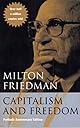
Selected by the Times Literary Supplement as one of the "hundred most influential books since the war" How can we benefit from the promise of government while avoiding the threat it poses to individual freedom? In this classic book, Milton Friedman provides the definitive statement of his immensely influential economic philosophy—one in which competitive capitalism serves as both a device for achieving economic freedom and a necessary condition for political freedom. The result is an accessible text that has sold well over half a million copies in English, has been translated into eighteen languages, and shows every sign of becoming more and more influential as time goes on.
| Dimensions | 20.07 x 13.21 x 1.52 cm |
| Edition | Anniversary |
| Isbn 10 | 0226264211 |
| Isbn 13 | 978-0226264219 |
| Item Weight | 227 g |
| Language | English |
| Print Length | 230 pages |
| Publication Date | 15 Nov. 2002 |
| Publisher | University of Chicago Press |
User
Liberty, Equality, Fraternity - Incompatible Ideals?
I became vaguely aware of Milton Friedman in the 1980s, when he was often referred to as the favourite economic guru of Thatcher and Reagan, the founder of "monetarism" as a new school of economics. He was disliked by the left, and there were dark mutterings about his involvement with some of the less pleasant South American regimes of the period.More recently I was referred to some excellent video clips of Milton Friedman on YouTube, and became interested in how his views fitted into economic thinking as a whole. I also became aware of economic libertarianism, expounded by such organisations as The Cato Institute (publishers of some of the sceptical volumes on man-made global warming theory, but with a much wider range of interests than that) and The Von Mises Institute, that seems to have quite an extreme view as to how limited the role of the state should be. Private justice, anyone?Capital and Freedom was Friedman's seminal popular work, published in 1962 and based on a series of lectures that Friedman had delivered in the mid to late 1950s. Other popular works include Free to Choose, written jointly with his wife and published in 1980. He doubtless wrote scores of more technical papers in between. Friedman's economic hypothesis is that free market capitalism is the most effective mechanism for organising economic activity and growth, and that it thrives best when the government intervenes in it as little as possible. This economic hypothesis is allied to a strong personal conviction for individual liberty, that men should as far as possible be left to do as they choose so long as their actions to not have injurious effects on others - a philosophy stated emphatically by the founding fathers of the United States.Milton Friedman argues his case clearly and effectively, and most of it is as apposite today as it was in 1955. Often it is only when he refers to numbers of dollars that one remembers that this book is nearly 50 years old - there always seems to be one or two noughts missing from the end of average salaries. There is quite a lot of historical detail - he devotes a chapter to the Great Depression, and his hypothesis that it was caused not by a failure of the market but by incompetent government intervention. Friedman believed that the market would have suffered less badly, and recovered more quickly, if the government had left well alone. As the Federal Reserve and the Bank of England intervene to deal with the current "credit crunch" banking crisis we have to hope that they will get it right - Friedman seemed to believe that by concentrating the power - and the responsibility - for managing the market even into highly intelligent and well-intentioned hands, you created the conditions for a major upset that the market, left to its own devices, would have avoided by the separate actions of thousands of individual participants acting in their own interests. We shall see!The problem with Friedman's brand of economic liberalism (and he deliberately stuck to the word "liberal" in an attempt to win it back from left of centre state-interventionists - later he gave up and accepted the description "libertarian") - and with the Thatcherism and Reaganomics that it spawned - was that it can seem harsh and uncaring. Friedman argues passionately against the public provisions of housing, minimum wages, agricultural support, state provided old age pensions and much compulsory attempts to redistribute wealth. He does so on the basis that they interfere with individuals' freedom, concentrate power in government (which often operates inefficiently, and that most such schemes are ultimately counterproductive. He does also argue against the abuse of power by big corporations, through cartels and government lobbying, and expresses concern that the tax laws that allow corporations' retained profit to suffer a lower rate of taxation than income a disadvantages small companies against big ones, and that this, even in the early 1960s, had artificially supported the development of massive corporations. Friedman was, it seems, a small company man, a believer in enterprise on a human scale.Friedman believed above all in Liberty. His belief in equality - egalitarianism - was more qualified. He believed in equality of rights under the law and of opportunity, but not that the state should attempt to achieve "equality of outcome" - i.e. equality of material wealth. That should be left to individuals to resolve through interaction with others and in accordance with their talents and inclinations. Equality of opportunity, of course, is easily said, and not an issue that Friedman resolves. For example, in arguing for a limited role for government in education, (though a much greater one that some present day libertarians might argue) opportunity for a high quality education would at the least be much easier for those born of rich parents than poor - one point at which I find myself unconvinced by him. In short, though, Friedman thought that men should be free to be unequal.Whether or not you subscribe to Friedman's ideas, this book represented a major reassertion of the principles of classic, free market economics in the face of progressively more state-directed economies not just in the Eastern-bloc but in the US and Western Europe too. That school of thought had been dominated by John Maynard Keynes, and the latter's "General Theory" shall be my next project. This is an excellent, thought provoking and easily absorbed book.
User
Terriffic intro to free-market thinking...
Reading Milton Friedman for the first time can be an overwhelming experience. The wealth of ideas coupled with the wry delivery and almost John the Baptist like certitude with which he preaches his version of the economic gospel all make for a challenging, if not occasionally infuriating read.The central pillars of Friedman's thinking are deceptively simple but the consequences should they ever be fully enacted by any government would be profound. Friedman feels that government is `guilty' until proved `innocent'. Government equals power over individuals, waste, inappropriate resource distribution and the indulgence of what economists call `rent seeking' special interest groups. Governments want to tax, regulate, control and disperse revenues and favours to suit their own particular agendas. Even when they are trying to act in the public interest, governments frequently make matters worse. Extra taxes lead to disincentive effects, extra spending leads to inflation and interventions like minimum wage legislation lead to increased unemployment. The list of potential and actual government failings are lovingly documented by the author. The relish with which he grinds out his dismal litany of state mismanagement and corruption is almost disconcerting, but it is entertaining.So what are governments for? Well in time honoured Libertarian fashion, as little as possible.Government should be about up -holding the rights of citizens and business to operate in accordance with their own best interests. So the protection of property rights, the proper fulfilment of contracts and basic civil liberties. Just about everything else can be resolved by the market. This is where Friedman gets serious. He takes on issues that softy `mixed- market' types think of as sacred and untouchable. Discrimination, inequality, education, protection of farm incomes, industrial competition and licensing of occupations, all come under the Friedman hammer. His argument is that government by `featherbedding' unions, producer groups or favourite causes at high costs and nearly always to the disadvantage of citizens and not infrequently the particular groups themselves do more harm than good. He backs up his position with some pretty convincing arguments and reference to data (sadly getting a little out¬¬-dated and relates only the USA) or particular case studies.If you give markets the chance he argues, they will supply the answer. Discriminating employers for instance will be landed with higher costs and lower profits as they hire the more expensive labour that suits their particular tastes. One of the great advantages he posits is that like love, capitalism is blind. It only seeks the most efficient use of resources and the lowest costs. Your religion, gender, colour or cultural background is simply irrelevant in the market place, just as long as you are competitive. So what need for government if the market as an unintended consequence promotes higher incomes, employment and civil rights?So where is the flaw in all this free market evangelism? Friedman is rather too keen to down play the virtue of good governance. At least governments are elected and at play lip service to the idea of improving the lot of citizens. Governments are accountable in a way that big business can never be if left to themselves. Monopoly capitalism may confer benefits but competition and choice are not necessarily at the top of the list, viz the 'Robber Barons of late Nineteenth century American industry and finance. Likewise businesses need regulating - why should citizens be left at the mercy of the unscrupulous or the incompetent? Not forgetting of course markets have innate instability built in- inflation, unemployment and issues of social provision cannot or will not always be addressed by the market. When the economy is growing, Friedman wants government to take its foot off the brake, but when there are problems such as the 1929 `Great Crash', he wants to blame government for the `high spirits' of the market. Come on Milton, you can't have it both ways!!`Capitalism and Freedom' provides great insight into Libertarian economics. It entertains, engages (and enrages on occasion) but is very clear in its line of argument. As a book it is aging gracefully. The data is rather old and very selectively used but the ideas still have much relevance for us all today. Recommended.
User
Worthwhile Read
A true liberal view on modern day economy, pointing out the harm of excessive government interventions, topics which are still relevant until today.
User
A manifesto for liberty.
This is the work of classical liberal considering how a free society should operate and what role the state has in a free society. To do this he considers some of the cases where the automatic assumption among many is that the government has to regulate, ban or provide services and argues, usually persuasively, that government intervention causes more problems than it can hope to solve.There are instances where he proposes an idea that seems so extraordinary that it appears that only a madman, an ideologue or someone living in a fantasy world could even consider it, such as the case that abolishing medical licences for doctors would improve patient care, but then after examining the case it great detail the underlying assumptions believing in a need for licensing are demonstrated to be much weaker than initially believed.The fact that it was written in a time when the intellectual climate was very hostile to classical liberal ideals is reflected in the manner in which he writes to persuade those who disagree with him rather than simply to preach to the converted, as so many current authors do.As the title suggests capitalism is inextricably intertwined with democracy and that despite the sincere desires of those who wish otherwise, political freedom cannot survive withoutThis edition of Milton Friedman's seminal advocacy of classical liberalism includes two additional prefaces, one from 1982 and from 2002, in which Friedman discusses how his ideas have developed over the course of the previous 30 and 50 years. When the book was first published the ideas had no takers on the political stage, the age of free markets had died after the Great Depression. Yet by 1982 a few countries had elected government's sympathetic to his ideas and by 2002 some of his policies had been implemented with great success throughout the world. Whilst Friedman credits most of that to the experience of thestatist experiment rather than his advocacy of freedom he is being modest.
User
One Of The Best Books Ever Written - And Still Applicable Today
Honestly one of my favourite books ever. By today’s standards, much of what Friedman has to say would be considered as being very extreme. But Friedman’s coherent style of writing, combined with his well thought out arguments, create ideas that are honestly undeniable. Friedman argues his points very well, and I often found it hard to disagree. What surprised me the most was the fact that much of Freidman’s arguments are extremely easy to understand (excluding, perhaps, the chapter on monetary policy) - his principles are fairly basic, although this shouldn’t be interpreted negatively.This book truly changed by perspective on a lot of issues that I thought were rather obvious. Very well written, and I’d encourage people from both sides of the political aisle to read. Truly eye-opening, and a book that I will never forget.
User
More relevant than ever
The financial crises has given me a great interest in economics and Milton Friedman here, spells out his ideas. I found it deaply interesting and very radical. I agree with his point in that government has become too overbearing and that the individual can best make his own decisions. When governement interferes, it leads to waste due to the bureaucracy and indeed it is goverment who have fostered big business - the current "big interests" who many blame for the financial crises. Redistubutative measures, condemn people to a life of servitude to the state. Like adam smith before he argues that it is individuals trying to better their own interest is the most fundamental concept and when someone intereferes with this though redistributative measures, tariffs, minumim wages, the results to not always follow the intentions. I think it is a great read and when you look at the overindebted western ecomonies with thier huge state/public sectors I believe some of this type of radical thinking is needed.
User
A great classic - sadly forgotten.
A great book, which does not just focus on his economic theories but presents a good intro into liberalism itself and the advantages / disadvantages of a market economy compared to other systems in the light of liberalism.Milton is often misquoted, misunderstood, and his reasoning contorted - it is a pleasure to read this book and follow his train of thought across various political, economic, and social subject areas.Even if you disagree with his economic theory, you will be delighted by his style of writing and clear deduction.A book that goes against blind conformity - what a pleasure to read and I hope there are more critical thinkers out there.
User
This looks a good book!
I'm pleased with this purchase. Thanks.
User
Una pietra miliare
Un libro obbligatorio per capire il mondo.
User
Excelente livro para se entender liberdade
Milton Friedman foi um dos grandes defensores da liberdade individual. Mostrando a forma liberal de ser ver o mundo com diversos exemplos da vida real, Friedman consegue ilustrar que poder, por que se tenham boas intenções, acabam gerando consequências não intencionais de privilégios que acabam por reduzir a liberdade individual em prol do coletivismo.
User
Insight for those who wish to be free
Nobel laureate Milton Friedman is quite possibly the most brilliant economist in the world today and a man on the cutting edge of libertarian (classical liberal) thought. And in "Capitalism and Freedom" he lays out a basic political philosophy in the classical liberal tradition in the first two chapters of the book and alternately defends and expands upon that premise for the remainder of the work. In much the same way that F. A. Hayek - an ideological predecessor - spelled out his basic thesis in one concise book and then fleshed it out in another, Friedman provides the basics here and fleshes them out in the larger (and somewhat better written) "Free to Choose". In addition, while not wishing to rehash some of the detailed support for his assertions, he does - through footnotes - provide the reader with opportunity to delve deeper.Given the nature of the subject matter and the expertise of the author, the writing can be dry and may appear difficult to approach, particularly in the initial chapters, but the reader who sticks with it will be well rewarded. Subsequent chapters, largely adapted from lectures by the author, are easier reads. And Friedman avoids, for the most part, the economic jargon that can make works such as this hopelessly confusing to the layman.Friedman is often tagged with the "monetarist" or "supply-side" labels (if you don't believe me, read some of the other reviews), largely because he believes that these methods of economic manipulation are infinitely preferable to the fiscal manipulation that has been the norm in this country. Those who actually READ this book will find that he advocates intervention by neither means, preferring instead stable monetary growth removed from the hands of either fiscal or monetary interventionists.He provides one of the most succinct explanations of the monetary actions (of the Fed) that created and worsened the Great Depression that I have ever come across, though mentioning only briefly the fiscal policies that subsequently lengthened it considerably: the New Deal and, to a much lesser extent, Smoot-Hawley. This alone makes the work valuable.He goes on to examine a number of things that are now taken for granted in this country (the Welfare State, Social Security, public education, licensing requirements) and asks the question, "Have these government actions made things better or worse?" The record is less than stellar (especially in the subsequent 40 years since this was written). And he proposes some alternatives such as the negative income tax and other alternative roles for government that are, arguably, less intrusive on the liberty of the citizenry.And he uses examples that are easy to follow and understand including one about men stranded on desert isles that is NOT as presented in another review.As an economist, I would say that this work has aged remarkably well. The analysis has clearly not become dated as have those of Galbraith and, to a certain extent Keynes. [Keynes WAS a genius, providing the mathematical and econometric bases for much of current economic thought, but, contrary to the assertion by another reviewer, much of what he proposed should be done by the state has been discredited.] Friedman, for example, was one of the first to advocate a school voucher system, which is only now receiving serious attention.It is noteworthy that a number of economists from the left have criticized Friedman in general and this work in particular. But those attacks (by Krugman, Herman and Diesing, among others) have proven to be, for the most part, without merit.If you accept the basic premise that freedom is vitally important and that the actions of the state should be viewed from that point of view, you will find this work to be invaluable. If not, you will certainly not be pleased. And if you believe the utter nonsense that capitalism is in any way "oppressive", well, if you can't see reality...
User
Excellent book, little outdated
For its times it was excellent. Nowadays free market economics in both the Austrian and Chicago School have evolved and improved past what is exposed in the this book. Never the less it was one of best books I read early in my search for understanding economics and a springboard into other books on radical capitalism
User
Four Stars
Good
Trustpilot
1 month ago
2 weeks ago
5 days ago
4 days ago