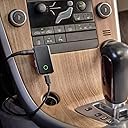
🎶 Elevate your wired headphones to wireless audiophile status — don’t just listen, experience!
The EarStudio ES100 MK2 is a compact, 24-bit portable Bluetooth receiver and USB DAC with dual Asahi Kasei AK4375a DACs, delivering studio-grade sound through wired headphones or speakers. Featuring Bluetooth 5.0 with LDAC, aptX HD, aptX, and AAC support, it offers 14 hours of playback, customizable 10-band EQ via app, analog volume control, and a built-in microphone for calls, all housed in a sleek metal enclosure.


| ASIN | B078H4YD2L |
| Additional Features | Noise Cancellation |
| Age Range Description | Adult |
| Antenna Location | Music |
| Audio Driver Type | Dynamic Driver |
| Battery Average Life | 14 hours |
| Battery Charge Time | 2 hours |
| Bluetooth Range | 10 meters |
| Bluetooth Version | 5 |
| Brand | EarStudio |
| Brand Name | EarStudio |
| Built-In Media | User Manual |
| Cable Features | Without Cable |
| Carrying Case Color | black |
| Carrying Case Weight | 50 g |
| Color | Black |
| Compatible Devices | Bluetooth-enabled devices, wired headphones, earphones, and speakers |
| Connectivity Technology | Bluetooth |
| Control Method | App |
| Control Type | Button Control |
| Customer Package Type | FFP |
| Customer Reviews | 4.4 out of 5 stars 1,939 Reviews |
| Ear Placement | In Ear |
| Earpiece Shape | Rounded Tip |
| Form Factor | In Ear |
| Frequency Response | 40 KHz |
| Headphone Folding Features | In Ear |
| Headphone Jack | 2.5 mm Jack |
| Headphones Ear Placement | In Ear |
| Impedance | 1 ohm |
| Item Weight | 0.02 kg |
| Manufacturer | RADSONE |
| Model Name | ES100 MK2 |
| Model Number | ES100 MK2 |
| Noise Control | None |
| Number of Items | 1 |
| Series Number | 1 |
| Specific Uses For Product | Music |
| Style Name | Black |
| Theme | Music |
| Unit Count | 1 Count |
| Water Resistance Level | Not Water Resistant |
| Wireless Technology | Bluetooth |
I**F
So Far So Great!
Updates on the Bottom I just wanted to add a quick review for now because I think this little device is fantastic and it’s a shame that more people don’t know about it. I will give it 5 stars for my first impression but will continue to update this review as I spend more time testing it. I have been looking for a Bluetooth solution like this for a while now and I had never heard of this company or this product before. Even after finding it on Amazon and seeing the impressive spec sheet, I was very skeptical that it was legitimate. What finally convinced me to give it a try was finding forums on it and seeing people’s experiences with it as well as seeing a strong presence from the company in the form of a representative from the company thoroughly answering questions. Although I’ve seen many pictures and the promotional video about this I wasn’t prepared for how small and lightweight this would be. The device looks very nice and has a simple but functional layout. One button to power on, power off, put into pairing, play, and pause. It also has a volume rocker and a back/next track rocker that is also used to turn on ambient mode. It was very easy to connect to my iPhone and get it up and running straight out of the box in a minute. I don’t want to get too much into sound, battery life, or the app because I haven’t had enough time to test any of them very much. I will say that it does sound great using the 3.5mm jack and AAC codec and I threw a wide variety of music at it. Previously the V-Moda Bluetooth was some of the best I’ve ever heard but I would say so far that this is noticeably better for me. The unit had 75% battery and while I haven’t tested to see if any firmware updates fix a battery issue, the app seems to show the battery life while the battery notification on my iPhone always shows 100%. I used it for an hour on 3.5mm high performance and it took me to 70%. I don’t think this is any real indication of battery life but will try to test it going forward in an update to this review. The app so far is fully featured and I added pictures of the app in this review. With only limited time in the app I will say that I really like the equalizer and the fact that it has a healthy amount of presets as well as what looks like customizable and savable presets but I will test this out more soon. I also briefly tried out the ambient mode and thought it was a very neat feature with a surprising amount of features. I don’t know how much I would personally use it but enjoyed playing with it and found the implementation well done. So far I have only tried it on two of my many headphones but it was a pretty wide range with the IE80S and the HD800S. While I expected it to drive the IE80S without a problem I didn’t expect it to drive the HD800S so well. To think I got that sound quality out of Bluetooth from my iPhone is just amazing and I do see a lot of potential to use my headphones with the ES100. It is a little too early to give any recommendation other than people should take notice of this little device because so far it is very impressive. I will continue to test the ES100 and update my review after a lot more use but if it holds up, I can definitely say it will be a deal at $100. [UPDATE] I’ve still only used this for a couple of days but I am very impressed with the sound this puts out. I’m using the balanced output now and it is hard to believe that this is Bluetooth. I’ve also tried to test the battery and although the battery indicator seems to be buggy, if it is anywhere near accurate the 14 hour estimation of battery life could be very accurate and that is with EQ on, volume at 50%, and using the 2.5 balanced output. [UPDATE 2} There has been a firmware update that seems to have addressed the battery life indicator issue. The ES100 has been working amazingly and it is still impressive how good the quality of the audio is. If I had to change anything about the ES100 it would be with the placement and style of the controls. They do work well but they could be a little better and easier to locate and press without looking. Overall this is a great device and is a must have for people looking for something like this.
B**N
This tiny gadget is amazing!
Update 2/23/19 No issues to report since my original review. The unit is working great and now has even more features. For example, they released a firmware update so now it has Bluetooth 5. They also improved the EQ engine and made the firmware update proccess simpler and easier. It used to be a clunky process. Still my favorite gadget I've purchased in the last year. Original review: If you're a sound quality nerd and want to have the best possible bluetooth music listening experience, buy the ES 100 right now. It's amazing. I use mine primarily in the car, since it can turn itself on and off with the car. It also automatically pairs with my phone the second I start the car, which makes everything seamless. I've also used it with my Sennheiser HD 380 Pro headphones. These are studio monitoring headphones that have a super wide frequency range and flat, accurate response. When connected to the ES 100 and the EasStudio app, it allows me to tweak the sound to exactly how I like it with the built in EQ. The EQ is very powerful and works really well. The app as a whole is well designed and has lots of options for tweaking the sound as well as changing various settings for the unit. They are also adding new features regularly, which involve updating the device firmware to enable. I have yet to do this as I am still happy with it the way it is. I'll get around to it at some point :-) Out of the box, my unit had firmware 1.3.0 preinstalled, which allows for streaming via LDAC. I paired it with my Note 9, opened Tidal (HiFi, of course), and played my first song. I got goosebumps. The sound was crystal clear and noticeably better than any other bluetooth music I've heard before. It was loud, detailed, and had no distortions whatsoever. I wanted to find out if a balanced cable would work with my headphones, so I reached out to Radsone from their website. I was surprised to get an email response not 30 minutes later. And their answer was honest and helpful. So I give their customer service an A+. (BTW, if any of you have HD 380 Pros, a balanced cable won't add any benefit as the socket on the headphone cup is not balanced.) To sum up, I would say that this tiny little gadget needs to be in your life if you care about sound quality and want to give bluetooth to something that doesn't have it (or if you want to use wired headphones with a phone that doesn't have a headphone jack). I'm glad I found it! Protip for Note 9 users: you can use an app called BxActions to remap the Bixby button so that it opens the EarStudio app. You're welcome :-) Cheers!
S**L
Amazing isn't quite good enough to describe this do-all device. Amazing!!
I wasn't sure what to expect from this Bluetooth receiver/DAC when I ordered it but the word on the Internet was that I woudn't be disappointed. Man, that's an understatement. This thing makes .flac files and anything else you listen to on your phone (iPhone 8 here) sound as close to a cable as I think we're ever going to get. It would probably be easier to list what it doesn't do than all the things it does but here we go... It's a Bluetooth receiver with support for all the current codecs and Bluetooth V5.0 You'll never connect your phone to your headphones again unless you're one of those more money than brains headphone amp types. Want options? How about a Balanced 2.5mm jack on one side and an Unbalanced 3.5mm on the other? You got it. Like to tweak setting you don't know anything about? Roger that. The EarStudio app lets you set any parameter you can think of and some you might not know about. Output voltage, Output Level Estimation with three different parameters. User configurable EQ with four presets that you can save yourself and, this is really cool, the EQ settings apply to any audio source run through the ES100, not just music. In fact any setting once saved is stored on the ES100 itself so you don't need the app running in the background to get the benefit of how you configure your unit. Set and forget! Wait, that's not all.... Need a hard wired DAC for your PC or Mac? Got you covered there with up to 48KHz/24-bit resolution on Mac OS. I've had issues getting it to work at all on Windows 10 but I'm blaming Windows because it's Windows. Need a Bluetooth receiver for the car that powers on and off with the ignition? Done. Four different charging behaviours let you customize what happens when you plug in the Micro USB connector. Ya, it isn't USB-C but that's hardly a deal breaker. I've probably missed something as this little thing does so much and so well that it's hard to remember all the features. Oh ya, it drives almost any headphone. Full sized, old school cans? You bet. I doubt it'll handle Electrostatics but if you're playing in that patch you aren't reading this review. Finally, it feels a little cheap when you first take it out of the box as it's all plastic, but after using it for a few weeks that's a good thing because it's incredibly light and once clipped to your shirt or pocket it disappears. I'm awaiting a custom made 2.5mm balanced short cable so that I can clip it to my collar without having to tuck a few feet of cable inside my shirt. Ok, last thing.... Call quality is superb. The mic is excellent and callers can't believe it's a Bluetooth connection. Best $100 I've ever spent on an audio accessory. Ever.
M**.
4.5 stars; good reviews not fake
I will first say that I was suspicious of this item because the many gushing reviews seemed to describe the impossible: a near high-fidelity experience over Bluetooth. Still, I was looking for a solution to the problems I had due to a poor OEM DAC and lack of Bluetooth media in my car, which has a reasonably good amp and high-end after-market speakers. I was even more suspicious because of the "F" grade the product reviews received on a popular and generally pretty reliable website that assists in spotting fake Amazon reviews. It came up as a daily deal for twenty bucks off, so I went ahead and bought it anyway because I was out of options with my car stereo The short version is that the reviews are not fake. It really does sound fantastic -- way beyond my expectation. In terms of performance, this has completely changed my listening in the car and saved me the expense and bother of trying to upgrade (or purchase a different car, as I was close to doing). Part of the magic for this is the options for AptX and for LDAC. The short explanation is that these two options allow for much, much better fidelity over Bluetooth than with past standards. My Galaxy S8 is capable of transmitting both, so I am able to take advantage of it, so check and see if your phone is capable. The DAC on this seemingly impossibly small piece of gear is a marvel to hear. No exaggeration -- it's just fantastic. (I would most certainly be happy using it on my hi-fi in the house, but I don't have a need for it there). The accompanying app that you download adds very useful options to equalize the sound and make adjustments to the DAC that are probably way beyond the interest of the average user, but are of interest to me. I have it set to come on automatically when the USG outlet it's plugged into in my center console comes on, which is a simple but great idea. That is, you don't need to turn it on or off each time you use it because it powers on only when the car is on. Connections to my phone is automatic. From there, I usually play through the Spotify app with downloads at the highest possible quality. I also have used it for playing my classical FLAC files (through LDAC), including 24 bit files. LDAC is a very clever bit of code, and I like having the album art, etc. Performance is very good, although I generally find the CD a better option in terms of dynamic range and soundstage. Still, if you are looking for this as a way to play FLAC files, you will be pleased. It simply is capable of dynamic range and fidelity I never thought possible through Bluetooth, coming very to what you would get from CD or if your system has the ability to play FLAC natively. The fact that you can adjust the sound through the app might make it a better option for you in fact. Just up to taste, really. Now the not-so-great and why I cannot give it five stars. I hesitated to even give it the "4.5" in the headline of this review. Mine came with an older and apparently inferior, early version of the firmware. I was eager to update based on what I read. The process for updating the firmware is atrocious and nearly had me packing it up to send back. You will be required to download a zip package of instruction and executable files. The instructions gloss over many important but minor details that I guess they assume you know. The English version of the instructions lacks the necessary precision in description of steps to do this by simply following the instructions, requiring a certain level of experience on running command through a command line prompt. I tried on both Windows and Mac and could never get the Windows file to run. I switch to Mac and finally got it to run correctly after a few tries. (If you've never used "Terminal" program on your Mac, read up a bit ahead of time for general instructions.) The problem wasn't entirely due to the clumsy software interface, but the fact that you have to place the device itself in a certain state by holding a combination of buttons to run the update on it. The instructions do not offer a clear enough description of the combination of sequences of green, red, and blue led flashes to really understand what state it's in. I ended up doing a factory reset several times (both intentionally and accidentally) before I stumbled on the right way to do it. I still cannot tell you what that combination of steps were. The accompanying app is now prompting for another update of the firmware, which I would like to have, but can't get myself to a state of mind to try. My message to EarStudio is that you need to get this fixed. There's no reason to make this so difficult and cumbersome. Why can't we update through the app or through a piece of software for your computer? I understand that this is a product that just came to market, but it requires updates just to get it to perform optimally, so you're doing your brand and your customers a real disservice by putting this down the priority list. It should have been done prior to it market. I assume an easier update will someday be an option, but I don't actually know. Your milage may vary, but I'm a reasonably experienced computer operator, so it's not just me. OK, that's my rant on the firmware update process. What I want to leave you with is that this little item (once up and running) performs far beyond my expectations and is a real gem. It's just amazing sounding and has completely reinvigorated my music listening while in the car. Hope this is helpful.
J**R
This DAC / AMP will revise your perception of what is possible in a mobile setup!
I want to break this review into sections, in order to give perspective buyers a balanced assessment regarding the ES100. BLUF: Definitely worth the cost of admission. Fantastic performance in a mobile platform. Amazing synergy with specific headphones. The right pairing will leave you gobsmacked at the quality available in a cheap mobile setup. Specifics: I won't go into specifics on specs or functionality, as those are readily available at the Radsone website and other reviews. Instead I want to focus on two aspects of the unit that IMO are the most relevant WRT a purchase decision: construction and sound properties. First: The build quality is less than impressive. This has been mentioned numerous times before, and needs be taken into consideration. The casing, clip, buttons, jacks, etc., just feel cheap cheap cheap. At no point does the overall fit and finish of this device match its performance. I can only imagine this was a deliberate design choice implemented to bring this product to market within a specific price point. Because of this, and for better or worse, I treat this little guy as a disposable component. I fully expect some weak point to break in the future. I hope Radsone will address this overarching weakness in the V2 version of this product....even if it means a higher price point for the consumer. Second: Despite the build issues outlined above, the sound is sublime. Radsone should be commended because they truly understand how to balance design choices in order to eek out the best performance possible. I have directly compared the ES100 with a much more expensive desktop unit, and to my ears it sounds better in soundstage presentation, imaging, frequency extension, slam, resolution....just every category really. Additionally, there is little to no degradation of performance between direct and Bluetooth connections. Quite an accomplishment! Another consideration.....Synergy: So far my favorite pairing with this unit is the Massdrop Hifiman HE 4XX. If you are reading this and are unfamiliar with this headphone, please input a Google search and browse the numerous reviews available. What makes this choice particularly interesting is the HE 4XX, despite having a relatively low impedance, is IMO somewhat challenging to drive in comparison to traditional dynamic headphones. This is not unique to the HE 4XX, but is a general characteristic of planar magnetic systems. Despite the fact the ES100 is pushed to the very limit of what its amplifier can output in order to drive these headphones, the resulting pairing between the ES 100 and the HE 4XX offers a truly luscious listening experience. One is presented with a clear and crisp delivery comprised of an amazing and wide soundstage, punchy bass, balanced tonal spectrum, and a the kind of micro / macro detail that serves as the perfect introduction to the "audiophile experience". The irony of this relationship is discovered when one realizes the HE 4XX is not really suited as a mobile headphone. It is somewhat bulky, utilizes an open-backed design, and particularly excels in a dedicated listening environment. What you get by adding the ES 100 is a pairing that could easily qualify as the best “around the house doing chores” package imaginable. The appearance of the tiny ES 100 connected to the bulky HE 4XX brings to mind a somewhat laughable David and Goliath experiment...but don't let that dissuade you. This powerful combination has to rank as one of the best low cost systems still able to maintain categorization as 'Audiophile'. Conclusion: If you are stuck in paralysis over whether or not to purchase the ES 100...now is the time to hop down from the fence. This is truly a home run first offering from Radsone, and I think anyone who gives the unit a listen will ultimately become an enduring customer. TL / DR / I skipped to the end: Build is cheap cheap cheap. Sound is great great great! Amazing pairing with Massdrop Hifiman HE 4XX. Easy to recommend as a must buy.
A**E
Tiny But Fierce!
First, a brief background. I am a musician and an audiophile; so I am used to wearing and using high-end in-ear monitors for stage reference sound as well as hi-fi studio headphones for music production. I don't claim to be an expert on sound frequency, as I will leave that to the audio engineering professionals. However, I am quite familiar with mixing live sound on a large digital soundboard in a church worship band setting. Alright, enough of that. Now, to the meat and potatoes. Any pair of headphones or IEM's are only as good as their source; especially if you are using Bluetooth. You can spend $300-500 on the best "Truly" Wireless Bluetooth Earbuds, and they still will never sound like good high resolution, hi-fi audio. There is one main factor which greatly effects audio quality. It all comes down to a term called "impedance" measured in "Ohms". In a nutshell, this is the amount of audio frequency or "power" that can be carried or delivered at any given time by a carrier wave. Both your headphones will have an impedance for the amount they can handle coming in, and the source such as your iPhone, for example, will have an impedance for the amount going out. Most studio quality headphones have an impedance of 30 ohms. This allows the sound frequency to spread out and sound "fuller" and "richer." High-end IEM's and earbuds ($300+) will have an impedance around 25 ohms. The average "truly" wireless Bluetooth earbuds will be around 15-20 ohms. The Bluetooth function will then cut that number in half, and even further if it is the older pre-5.0 bluetooth standard. Your iPhone can only put out about 2-4 ohms of impedance power; so you can see that it really doesn't matter how good your headphones are at separating audio frequency. The impedance coming in is already "bottle-necked." That brings us to the EarStudio DAC/Amp Bluetooth module. This is an amazing device! I was skeptical, at first. However, now, I am a believer. Here's my breakdown. It is small and well built with a solid metal clip to attach to your clothes. It accepts either a balance input jack or an unbalanced input jack with both a 2.5 mm and a 3.5 mm on the other side. It has s mic for iPhone use, and the buttons are tactile and solid. The controls are simple and intuitive. It uses the latest BT 5.0 standard with a descent range and connectivity. I was able to play music from my iPhone from 30 feet away in another room before I started to lose signal. Now, for the real selling point which puts this above other competitors in this category of Bluetooth DAC/Amps. The audio quality, audio conversion and audio levels are some of the best I ahve heard from a Bluetooth unit, and that includes the Truly Wireless Earbuds out there. I know it is a bit more expensive than other units out there, but the thing that makes it stand out from it's nearest and best competitor, the Fiio BTR3, is the fact that you have a companion app for iOS and Android which allows you to fine-tune and tweak EVERY aspect of your audio experience so that you are assured the best latency'free boosted listening quality. The app goes way beyond just being an EQ. You can control everything from the type of DAC conversion format you want, to latency settings, stutter and jitter bluetooth settings, fine-tuned battery consumption and many more. I tested this unit with a few pairs of headphones and IEM's. They can make thw worst sounding pair of headphones sound great! This is no lie. I tested with a pair of Sennheiser Momentum Studio headphones, Shure SE425 IEM's, Shure SE215 IEM's and some cheap Skull Candy earbuds--just to name a few. My recommendation is to buy this unit and pair it with some inexpensive IEM's like the Shure SE215 or the Westone W20; instead of buying a piar of "Truly" Wireless Earbuds with the very limited Bluetooth capabilities and sound quality. If you are going to spend $200-300 on Wireless earbuds, anyway, it would be better to buy some descent IEM's and pair it with the ES100 BT module. I promise you, it is worth it. It takes a lot to blow me away with something as an audiophile, and this little gem does the trick!
T**E
Fantastic product... when it works.
My earlier review still reflects my feelings on the ES100's sound and convenience: the sound is phenomenal for a portable DAC/Amp (with a chip more often seen in ~$3k desktop DACs), and it's tiny, lightweight, and easy to use. The only problem is, after about six months, I'm again having the same problem I had with my previous device, where it will restart seemingly at random. On good days this only happens once or twice, but I've had it happen multiple times in 15 minutes. I'm the kind of person who listens to music more or less constantly and does *not* appreciate having songs interrupted, so that issue alone is kind of a dealbreaker—as I'd imagine it would be for much of the ES100's target audience. I have done a factory reset a couple of times and upgraded the firmware, but the problem has persisted. I haven't tried to do anything clever with it, and while I have used my current ES100 daily for the past six months, I've only ever run it in the recommended mode for my headphones, which is 2x current mode locked to the 3.5mm jack in order to avoid damage if the cable gets unplugged accidentally. Overall, this issue has been a huge bummer for me, as I really do love this little thing; it's been my constant companion for a year now and has rarely left my pocket. I will say, though, that I'm glad that others with this problem have mentioned it here as well, as hopefully that might help RADSONE improve their product. On that note, if you're reading this at RADSONE, I would be more than happy to ship both my old and current unit to you if that would help debug whatever issue it's having. For now, I've switched to using a slightly inferior product from another manufacturer, but if and when RADSONE definitively fixes this problem, I will gladly buy a new ES100. ----- Previous review: I bought my ES100 about six months ago, and it has quickly become indispensable as my main audio device; the USB support means that I can plug it into my laptop and seamlessly transition from phone audio to laptop audio, and the sound is noticeably better than either the default Pixel 2 USB-C dongle or even the fairly decent DAC in my Macbook. The unit itself is super compact and the buttons are small as a result, but the controls are intuitive and easy to use, and the buttons have "rollover protection," which means that accidentally hitting multiple buttons at once won't cause annoying or weird behavior. The mobile app is also fantastic, though YMMV as the options it has are definitely geared toward audio nerds; most people probably won't need to bother with most of them. I started experiencing issues with mine recently, but I contacted Radsone support, and after the usual back and forth to make sure it wasn't something software-related (factory reset, firmware update, etc.), they gave me a code for a replacement unit. Overall a great support experience.
I**R
Staggeringly Good! Worth. EVERY. Penny.
Would rate 6-Stars if I could. If you're here because you REALLY love your wired headphones and don't want any of the current BT garbage, you're not alone and you've found your solution. If you want to get right to the advice, buy this BT-DAC right now and start enjoying full, beautiful sound, no artifacts, and a truly usable GEq and DSP. If you want more of the review, read on: First, I'm a...erm..."intermediate" audiophile. I'd never pay $100k for a pair of speakers nor $1k for interconnects, but my listening system is expensive and high-resolution and I know what that sounds like. In the past, I've used Shure IEMs exclusively. Apple decided to turn off ("it's a hardware issue" - is the BS line to get me to "upgrade") audio transmission to my lightning port, so I've been hunting for something satisfying for the better part of 6 months. I have AirPods - they're utter garbage if you like hearing the music you're playing. I have Bose 35s and they're passable, especially in the isolation department on aircraft or noisy locations, but the low and punchy-bass extension is anemic and if pushed, they distort (more on one ear cup, making it intensely annoying). The Bose 35s also lose effectiveness the moment you wear a baseball cap, sunglasses, or eyeglasses (an issue that IEMs don't summer in any way), they're clunky, and they're decidedly not sweat or water-resistant. Enter the EarStudio ES-100 to literally put my world back to normal. THE BAD: Me, personally: I can't find any major detractors currently - it's flawless so far as I can tell. The build materials might not be the very best, but it's $99, so I wasn't expecting aircraft aluminum. Others: The BT calling is not the best, but this thing isn't designed for that - it's for music and it's completely usable and clear - just some little artifacts on certain calls. THE GOOD: [Everything] Sound Quality = Excellent. It's probably not the most transparent device available, but it is damn good, rivaling my DragonFly Red with far more to offer in terms of control (see below) Power = Excellent. The amplifier(s) are powerful and offer punch that the iPhone simply doesn't have. DSP = Amazing. Companion App = Amazing. Control = Amazing. There's control over nearly everything, with clear explanations below the controls as to how they work and why. GEq = Amazing. The GEq allows you to save [at least 4] preset curves to match your different headphones or different musical genres. It's artifact-free so far as I can tell, and I've not gotten any clipping at all. This is HUGE, as different headsets have different sound signatures, even from the same manufacturer, and this is a one-touch solution to those differences, once configured (which is very easy). Bonus 1: The biggest issue with the iPhone is that you cannot apply an equalizer curve across all of your music services - it works for Apple Music, but not, for example, Pandora. The EarStudio's GEq completely fixes this issue, applying your chosen curve(s) across all outputs. Truly amazing the difference it makes. Bonus 2: The one detractor to IEMs and closed-back circumaurals (big "can" headphones) is that the isolation from the outside sounds might not be ideal due to safety reasons (work environment or driving in a car) or concern for children (whose voices you might need to hear). The DSP engine allows you to pull as much or as little ambient sound and integrate it to your sound stream! What does this mean? It means you can enjoy all of the isolation features of IEMs or closed-back headphones whenever you want but then make it so traffic noise, kids, or other environmental sounds come through - only when you want and only to the extent you want. Even better? There's a hot-button for this, allowing you to turn it on and off instantly. Imagine this: You're on an airplane enjoying music without engine whine. Someone taps you to talk, but your isolation is so good, you can't hear them. With the hot button (both a physical one on the body of the EarStudio and a virtual on on the companion app), you can instantly mix in the outside sound (one-touch) to hear it and then re-isolate again with another touch. You need not have less-isolating headphones or IEMs in order to safely or effectively (or selectively) hear outside sounds. Even on my Bose 35s you have to tap the isolation button twice to get this. In short, the sound is awesome, the controls amazing, and the thinking about usability and functionality are amazing. I thought I was going to get a bunch of chopped up Chinglish and a passable device, but...man, they got it so right. Bravo to the people at Radsone - this is one of the very best audio products I own.
O**T
Une merveille
Alors c'est petit mais pour excellent. Impossible de ne pas être satisfait du produit tellement il est complet et bien pensé. Une merveille pour les personnes pointilleuses qui aiment avoir accès à une multitude de réglages. Le produit a été créé par des amoureux du son, tout est possible et dans le détail. Je l'utilise en 2,5mm TRSS et en double voltage avec l'excellent intra AKG N5005 et c'est un régale, tout y est. Puissant, détail, equaliser de qualité, réglage des filtres numériques..... Gestion du comportement de l'alimentation... Un excellent produit inscrit dans la durée c'est d'ailleurs le seul de la marque et compte tenu du nombre de mise à jour logiciel du produit pour les nouvelles fonctions, il est évident que les personnes derrière s'inscrivent dans la durée et ne se contente pas de sortir le produit et au suivant. Sans aucun regret il vaut bien ces 100 euros. Depuis la version 2 il est en bluetooth 5 et le LDAC excellent avec tous les téléphones Android à partir de 8.0 Foncez vous ne regretterez pas 😋😉
K**R
Hervorragender, symmetrischer aptX-HD+LDAC Bluetoothempfänger & USB DAC mit genialer Software
UPDATE (08.11.2018): Ich habe heute das Update mit der Version 2.0.1 installiert. Ein großer Versionssprung, der aber eher interne/technische Gründe hat. Näheres wieder ganz unten. UPDATE (13.09.2018): Es gibt wieder ein größeres Update der Firmware (Version 1.4.0) und der zugehörigen App mit ein paar neuen Features. Näheres dazu habe ich unten angefügt. UPDATE (06.07.2018): In einem head-fi Forum hat der Entwickler der Firma erklärt, dass sie den LDAC Bluetooth-Codec von Sony in die Firmware einbauen konnten. Vor der Veröffentlichung muss aber noch auf eine Zertifizierung durch Sony gewartet werden. LDAC liefert zumindest auf dem Papier eine noch höhere Bandbreite als aptX-HD und wird von einigen neueren Android-Geräten (Version >8 und natürlich die von Sony) unterstützt. Also ein weiterer Qualitätssprung ist zu erwarten ... Freu mich übrigens immer, wenn mal einer auf "hilfreich" klickt, dann weiss ich wenigstens, ob es sich lohnt hier noch Updates reinzuschreiben. - UPDATE ... zum Update (09.07.2018). Das ging sehr schnell: Die neue Firmware 1.3.0 ist heute erschienen und bringt tatsächlich schneller als erwartet den LDAC Codec mit (in 44.1/48/88.2/96 kHz bei 24-bit)! Bei meinem LG V30 kann man dafür in den Entwickleroptionen den Codec aktivieren/konfigurieren und kann dort auch Bitrate usw. einstellen (Default ist 96kHz). Das sollte bei vielen Android 8.x Geräten ähnlich sein. Dazu kommen in der Firmware noch Power On/Off Varianten und Einstellungen zum Schonen des Akkus. Ich schreibe nach etwas Probehören gerne etwas genauer über die Erfahrung mit dem Codec aber der erste Eindruck ist schon mal sehr gut. **Habe ich jetzt unten angefügt** ----------- Der Radsone EarStudio ES100 ist zwar erst kurz auf dem europäischen Markt, ich habe aber bereits etwas länger ein Exemplar aus den USA und mir jetzt auch direkt ein zweites Gerät hier geholt, weil ich so begeistert von der Vielseitigkeit und der Klangqualität bin. Ich gebe zu, unbedingt nötig habe ich einen solchen Bluetooth-Empfänger natürlich nicht (erst recht nicht den zweiten, denn ich im Büro lassen will), u.a. weil ich schon sehr gute, aptX-HD-fähige Bluetooth-Kopfhörer habe (z.B. den ATH DSR7BT und den Beyerdynamic Aventho wireless) und für die anderen, kabelgebundenen KH besitze auch schon einen hochwertigen Astell&Kern ak xb10 Bluetooth-Empfänger mit aptX-HD und symmetrischem 2.5mm-Anschluss. AptX-HD Bluetooth ist mir bei beiden besonders wichtig - als Quelle habe ich da ein LG V30 - denn damit höre ich kaum noch einen Unterschied zu guten kabelgebundenen DAC/AMPs. AptX-LL unterstützt der ES100 nicht, aber einen Audio/Video-Versatz habe ich bei den aptX-HD oder aptX-Verbindungen nicht feststellen können. Die technischen Details zu den Innereien kann man oben nachlesen und in den Foren erklären die Ingenieure von Radsone gerne die Vorteile und sogar die Kompromisse bei ihrer Umsetzung. Der ES100 hat neben der reinen Audio-Technik aber noch einige weitere Vorteile: - sehr gute Bluetooth-Reichweite und Stabilität. Auch in aptX-HD (jedenfalls mit meinem LG V30). - eine ausgezeichnete Android (und iOS) App (siehe Foto), mit der man im Zusammenspiel mit der Firmware wirklich viele Einstellmöglichkeiten hat. Das ist schon fast ein wenig Bastelei, aber man kann den ES100 über die Bluetoothverbindung mit der App in vielen Aspekten so konfigurieren wie es einem am besten zusagt (z.B. Wahl des Ausgangs, Verstärkung, Ausgangs-Voltage, Equalizer, Ambient-Mode auf Knopfdruck (mithören über Mikrofon was um einen herum gesagt wird) und noch einiges mehr). - die Firmware und App wird alle paar Wochen aktualisiert (derzeit ist Version 1.2.1 aktuell), aber nicht weil es so viele Bugs o.ä. gäbe, sondern weil Entwickler hinter dem ES100 in den HiFi/Audio-Foren aktiv sind und oft Nutzer-Vorschläge dort aufgreifen und in einem wirklich beeindruckendem Tempo umsetzten (so fragte einmal einer nach der Möglichkeit, Cross-Feed einzustellen und kurze Zeit später war das in der nächsten Firmware realisiert). - Der ES100 ist eben nicht nur ein BT-Empfänger, sondern auch ein USB-DAC(!). Er unterstützt allerdings nur eine einzige Samplingrate und Bittiefe (USB-Audio 1 PCM mit 48kHz und 16bit). Die Beschränkung beim USB-Betrieb auf 16bit ist etwas verwunderlich, da aptX-HD selbst ja ja 24bittig ist und der Ausgang auch als 24bit angesteuert wird, aber andererseits ist für mich gerade besonders praktisch, denn damit ist er zu fast allen Rechnersystemen (bei mir win7/10, Linux, ChomeOS), Tablets und (Android-)Smartphones kompatibel. Für HiRes-Audio-Ansprüche habe ich andere USB-DAC/AMPs oder DAPs wie den Fiio X5iii+Chord Mojo. Ich habe einen kleinen micro-USB-Magnetsteckeranschluss an dem ES100 und die entsprechenden USB-Kabel an diversen Geräten, so dass ich ihn einfach "andocke" um schnell mal etwas von den Rechnern zu hören (zB. youtube usw. - Foto habe ich angehängt). - Grosser Pluspunkt: Auch als USB-DAC am Rechner bleibt gleichzeitig die Bluetooth-Verbindung zum Handy bestehen. So ist er dann weiterhin über die App konfigurierbar und kann auch den BT-Stream direkt weiterspielen wenn kein USB-Datenstrom anliegt bzw. auf das Telefon umschalten bei Anrufen. Den xb10 (und jetzt den ES100) benutz(t)e ich vorrangig unterwegs für IEMs (z.B. Fiio F9) bzw. mobile Magnetostaten wie Audeze iSine10 - oder deren "Billig"-Kopie von Monoprice namens M300 - die ich mit symmetrischen Kabeln versehen habe. Daheim nutze ich die BT-Empfänger gelegentlich auch zum frei rumlaufen mit KHs wie dem Sennheiser HD660s (etwas hochohmiger aber immer noch OK für ES100 und xb10), Beyerdynamic T5p2 (leicht zu treiben) oder den Magnetostaten Monolith M1060 (etwas modifiziert) - alle auch mit symmetrischen Kabeln versehen. Man kann natürlich über den Nutzen/Qualität von symmetrischen KH-Anschlüssen streiten, aber sie bieten definitiv einfach mehr Leistung für schwerer zu treibenden KHs. Ich bin zwar kein audiophiles Goldöhrchen, kann aber mittlerweile ganz gut verschieden DAC/AMPs an meinen gewohnten KHs unterscheiden und der ES100 ist sicher einer der besseren. Der AK xb10 besetzt eine ähnliche Nische der "audiophilen" Bluetooth-Receiver wie der ES100, hat (subjektiv empfunden) einen (noch) besseren Klang - speziell im Bassbereich, ist aber auch deutlich teurer (zumindest hierzulande) und hat auch ein paar Nachteile; so ist die Bedienung des xb10 unterirdisch schlecht gelöst mit verwechselbaren Kipp- und fummeligen Schiebeschaltern und die Batterielaufzeit ist auch deutlich(!) kürzer als beim ES100. Das heisst nicht, dass der ES10 nicht gut klingt - im Gegenteil; er ist unter den sonst so verfügbaren Bluetooth-Empfängern mit dieser Klangqualität / Ausstattung sicher der beste in dem 100 EUR Preissegment. Der ES100 hat aber auch ein paar kleine(!) Nachteile: - der Clip ist nicht sehr fest/griffig (ich habe einen Schrumpfschlauch drum gelegt, dann greift er etwas besser). Das Gehäuse hat einen einfachen Plastikcharakter (ist nicht unbedingt schlecht, aber hochwertig wirkt es nicht). - wenn man ihn per USB lädt/verbindet geht er auch automatisch an und verbindet sich per Bluetooth mit dem Handy - das ist natürlich nicht immer gewollt, speziell wenn man gar keine KH dran hat und Anrufe usw. gar nicht mitbekommt (kann man aber seit der letzten Firmware ausschalten - allerdings für mich eher unpraktisch, da er ja als DAC anspringen soll *Korrektur: seit der letzten FW wird zuverlässig erkannt, ob für USB-Audio oder nur Charging verbunden wird und nur bei Charging wird er ausgeschaltet (wenn man das will); das hier ist also gar kein Nachteil mehr*). - richtig gross und leicht zugänglich sind die Bedienungstasten nicht, aber das ganze Gerät ist nun mal winzig und leicht (was ein wirklich grosser Vorteil ist). - das Mikrofon ist nicht sehr gut (aber OK für Telefonate). Der "Ambient-Mode" ist daher nicht so nützlich wie erhofft - man hört zB von Bahndurchsagen eher Rauschen als die Stimme. Unsymmetrische 3.5mm 4-polige Kabel mit eingebautem Mikrofon/Fernbedienung werden NICHT unterstützt - man kann das eingebaute Mikrofon also nicht ersetzen. - die Firmware-Updates sind etwas altmodisch per Windows-PC und exe/batch Datein zu machen - na ja... Man muss nach den FW-Updates das Gerät und die App jedesmal wieder miteinander neu koppeln und einige Settings gehen verloren - nicht ideal gelöst aber auch nicht dramatisch. Aus meiner Erfahrung mit dem Gerät kann ich den ES100 für jeden empfehlen, der einen im besten Sinne preiswerten (nicht unbedingt billigen), sehr vielseitigen und klanglich sowie technisch hochwertigen aptX-HD Bluetooth-Empfänger für gute Kopfhörer und evtl. auch symmetrische Kabelverbindungen sucht. Die Konfigurierbarkeit und die Funktionalität als USB-DAC sind noch zusätzliche (für mich wichtige - aber für die meisten wohl eher nicht so entscheidende) Pluspunkte. ** UPDATE ** Ich habe jetzt ein paar Stunden mit der neuen Firmware 1.3.0 und aktiviertem LDAC Bluetooth-Codec v.a. mit dem Beyerdynamic T5p2 am "balanced" Ausgang "kritisch" einige HiRes-FLACs und auch Streams oder Youtube probegehört und bin (weiterhin) begeistert vom Klang und der Funktionalität ... auch wenn der AK xb10 m.M.n. besser im Bassbereich auflöst (das hat mit dem Codec ja auch eher wenig zu tun). Bei meinem LG V30 ist jetzt LDAC die Standard-Verbindung für den ES100. Es wird immer automatisch 96kHz/24bit als Samplingrate und Bittiefe gewählt, was ich eigentlich für übertrieben halte (aber die - für meine Ohren gleich gut klingende - 48kHz/24bit Einstellung wird immer mit der nächsten Verbindung vom LG V30 zurückgesetzt). Die Bandbreite wird adaptiv geregelt (es gibt in LDAC 3 Stufen 330/660/990 kBit/s) und hält so die Verbindung sehr stabil auch bei einigen Metern Entfernung und hinter (dünnen) Wänden. Wenn man das in den Geräteeinstellungen auf 990 kbps fixiert, bricht halt die Verbindung "schon" nach wenigen Metern zusammen aber das ist völlig unproblematisch. In der Standardeinstellung ist LDAC offenbar stabiler als aptX-HD. Ich konnte auch mit LDAC keinen Bild/Ton-Versatz bei Videos feststellen. Kleiner Nachtrag: Bei LDAC-Verbindungen sind die Optionen zu Cross-Feed und spezielle Digital-Filter-Settings in der App und auf dem ES100 inaktiv - offenbar weil die Hardware des ES100 mit dem LDAC-Decoding schon voll ausgelastet ist. Vermiss ich aber auch nicht. Ich bin mit dieser "kostenlosen" (die Sony-Lizenzkosten tragen natürlich indirekt die Kunden) Funktionserweiterung jedenfalls sehr zufrieden und kann den ES100 nur noch wärmer empfehlen. ** UPDATE** Firmware 1.4.0 bringt eine Neuerung für den USB-DAC Modus mit sich; der ES100 unterstützt jetzt USB-Audio-Input in 48kHz und in 44.1kHz in 16bit und für Nutzer von MacOS-Geräten gibt es exklusiv auch 48kHz in 24bit Tiefe (kann man in der App auswählen). Die Samplingrate wird automatisch gewählt ... Bin mir nicht ganz sicher, ob ich das so gut finde, da mit solchen automatischen Detektionen öfters auch Kompatibilitätsprobleme einhergehen. Aber bisher scheint der ES100 an den Geräten, an den ich in angeschlossen hatte, ganz zuverlässig umgeschaltet zu haben; unter ChromeOS ist Spotify z.B. in 44.1kHz und Youtube in 48kHz. Es gibt auch Verbesserungen im Multi-Point Pairing mit zwei Bluetooth-Quellen gleichzeitig. Insbesondere kann man wählen, ob das zweite Gerät auch automatisch wieder verbunden werden soll. Dazu kommen noch Einstellungen zu Lautstärken-Limitern und zum EQ, die ich aber (noch) nicht ausprobiert habe. Es ist schön zu sehen, dass die Hersteller das Entwicklungspotential immer weiter ausreizen (natürlich auch wegen der neuen Konkurrenz z.B. durch den Fiio BTR3). Nachtrag: Ich habe jetzt noch mehr mit dem ES100 und seiner neuen Firmware "rumgespielt" und würde von einem Update momentan eher abraten(!) Ich habe ja einen zweiten ES100 noch unter Firmware 1.3.2 und kann so direkt vergleichen. Mit FW 1.4.0 scheint es in aptX-Verbindungen kurze Ausfälle zu geben (LDAC ist stabil) und ein weiterer Bug hat sich in dem Szenario beim Anschluss des ES100 als USB-DAC an ein iPhone (über ein Apple-Camera-Connection-Kit) ergeben. Der ES100 mit FW 1.4.0 stockt und hat Aussetzer, FW 1.3.2 läuft dagegen stabil. Das ist zugegebenermaßen sehr exotisch, aber zeigt, dass da etwas nicht ganz sauber umgesetzt wurde. Ich lasse einen der beiden unter der alten FW und beobachte mit dem anderen, ob es bald einen FW-Fix gibt (und schreibe das dann auch :) ). (14.09.2018): Tja, hat genau einen Tag gedauert und eine neue FW Version 1.4.1 ist schon verfügbar, die zumindest die Aussetzer mit aptX(HD) beseitigt. Funktioniert stabil und den Update kann ich damit auch empfehlen... ** UPDATE (2.0.1) ** Die Firmware-Version ist von 1.4.2 auf 2.0.1 gesprungen ohne besondere neue Features oder große Bugfixes für den Nutzer mitzubringen. Das hängt offenbar im Wesentlichen davon ab, dass ab dieser Version der Bluetooth-Standard 5.0 genutzt wird. Das klingt wichtig und mit BT 5.0 wird oft auch geworben, der Unterschied von BT 4.2 zu 5.0 ist aber gar nicht relevant für die Audio-Qualität o.ä. In erster Linie ist das eine Frage des Verbindungsprotokolls zwischen zwei Geräten (Kopplungsanfragen usw.) und auch der Stabilität der Bluetooth-Verbindung. Das sagt selbst Radsone im Change-Log. Wichtiger ist aber, dass man von einer 2.x Firmware-Version keinesfalls auf eine 1.x Version "downgraden" kann. Ich nehme an, dass die FW des BT-Chips selbst hier upgedatet wurde und somit inkompatibel mit den alten Firmwares wird. Ich habe wieder einen meiner ES100 aufdatiert und lasse den anderen erstmal in Ruhe. Es scheint einige kleiner Fixes und Verbesserungen beim Equalizer (nutze ich kaum) und in der Angleichung der Ausgangsleistung von Balanced und Normal-Betrieb zu geben. Kann nicht behaupten, dass mir das aufgefallen wäre - auch nicht im direkten Vergleich der zwei ES100. Ich kann aber auch kein neues Problem feststellen. Die BT-Verbindung klappt genau so gut wie vorher und auch der USB-DAC-Betrieb scheint unverändert. Also wer eine (theoretisch) bessere BT-Konnektivität braucht, kann wohl recht "gefahrlos" den Update machen und Radsone kann nun mit BT 5.0 werben (wohl weil der Fiio BTR3 "nur" 4.2 hat :-) ).
G**N
The best customization and sound quality for mobile audiophiles. But fragile build casing
Enjoy your headphones to their full glory with this amazing DAC. Near perfection for wireless high-end HiFi. Powerful amplifier let's you wireless enjoy your studio headphones anywhere, all day. Bought this DAC especially for testing various modified Koss KSC75's and Koss HP30's that require that extra dB output this EarStudio hides under the hood. Priced at around $100, this gem turns the $20 Koss KSC75 into the league of audiophile headphones of $ 500 plus. But no USB C, so charging and operating as USB DAC is like Russian Roulette. ( As goes with mobile equipment with USB connection ) . After three weeks of daily usage, the USB connector was moved a few millimeters and the case surrounding the USB connector shows damage and reveals the white plastic of the case. The case is painted in aluminium look with very thick layer of paint. This makes the icons on the buttons hard to see and caused the track selection button to stay pressed inwards. I returned mine and wait for new one, falling back to my second choice, the comparable FIIO BTR3K that lacks the extra stamina and output power of the EarStudio but is build around the same chipsets in a very durable casing. For my new EarStudio i will only use a decent USB cable (from my Jabra Evolve 40 headset) and have to handle it with some extra care when on the move as I am hooked to the vast customization options that give me the most deep felt music experience outside a studio.
E**E
Small and nifty device; great value
Great value item with good sound quality. Companion app has a lot of useful features and allows for high degree of customization.
P**3
Un piccolo gioiellino
Prima recensione su Amazon ma per questo gioiellino ne vale proprio la pena.. Niente foto perchè il prodotto è esattamente quello che vedete in foto non c'è altro (App a parte) Partiamo dalle dimensioni: discreto, piccolo, leggero e se non ci fosse il cavo delle cuffie te lo dimentichi una volta agganciato attraverso la comoda clip Hanno risolto i problemi della versione MK1 ovvero: - I tasti adesso sporgono quindi sono immediati da riconoscere anche al buio (da un lato vol up e vol down a bilanciere e dall'altro tasto play e tasto next/preview a bilanciere) - I led adesso sono molto visibili, anzi di notte fanno pure troppa luce - La clip è potente non mi ha mai dato problemi di sgancio anche muovendomi all'aperto Per le prove audio ho usato delle IEM CCA ca16 da 16 drive totali (7 bilanciati per medi e alti e uno dinamico da 7 mm per i bassi per parte) e delle Sennheiser HD 660S; i primi in Singol Ended sfruttando il jack 3,5 le seconde in bilanciato col jack da 2,5 (24 ohm e 102 db per IEM e 150 ohm con 104 db per le 660S). Le sorgenti sono state un Ipod touch e un Samsung S10 plus (il primo per gli mp3 il secondo per i flac sfruttando i driver aptX e LDAC). Prima di dirvi il mio parere sulla qualità del suono, è giusto segnalare che al di là dell'hardware che funziona molto bene, il valore aggiunto di questa scatoletta sta tutta nella sua applicazione dedicata che permette di modellare il suono in funzione dei vostri gusti e del tipo di cuffia che utilizzate, Purtroppo non è possibile elencarvi tutte le opzioni di questa app.. ma fidatevi riuscirete a trovare la caratterizzazione di suono che per voi è ideale. Vi segnalo solo il microfono (funziona alla grande nelle chiamate col cellulare dal suono quasi professionale) che ha la possibilità quando siete in giro, attraverso la pressione di un tasto, di carpire i suoni circostanti e riprodurli amplificati all'interno delle cuffie; sì la riduzione del rumore va a farsi benedire ma la sicurezza ne guadagna. Per quanto riguarda invece il suono la parola che viene in mente è fedele, nel senso che lascia inalterata la caratteristica musicale delle cuffie che state usando ne amplifica solo la potenza (ed è quello che deve fare). Così lasciando tutto flat e adeguando solo amperaggi e voltaggi per le due uscite (per la Sennheiser ci vuole un voltaggio doppio) vi troverete con la potenza giusta per pilotarle entrambe anche ai massimi volumi senza distorsione (le IEM sono quasi al limite del dolore al massimo volume) ritrovando le caratteristiche di ognuna inalterate (660S molto dettagliata ed equilibrata in ogni frequenza le Ca16 con un suono più caratterizzato e piacione e la classica forma a V di risposta in frequenza). Chiaramente il DAC integrato da il meglio di sè con i file ad alta definizione magari inviati via BT da driver di qualità (S10+) in cui però nel mio caso in cui avevo due cuffie molto precise è spietato: se la registrazione non è di qualità ve la sbatte in faccia senza complimenti.. Sulle 660S il volume è inferiore ma più che sufficiente anche per me che arrivo spesso a fine corsa del volume. Anche gli MP3 si ascoltano meglio rispetto che al collegare le IEM direttamente al player dato che la nostra scatoletta magica ne fa un upscaling a 24 bit prima di farceli ascoltare.. certo è che dettaglio e distorsione non sono paragonabili ad un file flac (magie sì, miracoli non ancora)... qui però entra in gioco l'equalizzatore a 10 vie che vi può aiutare molto a tagliare le frequenze troppo scorbutiche.. Il BT si collega in un lampo e non mi ha mai perso il segnale a meno di non andare fuori lasciando il telefono a casa. La batteria dura effettivamente 7/8 ore di ascolto ad alto volume e per il momento regge bene e si carica abbastanza velocemente.. Avrete compreso come sia davvero contento del mio acquisto, che assolutamente consiglio per coloro che amano l'ascolto in cuffia e che vogliono aggiungere al proprio DAC da tavolo una soluzione piccola, pratica ed efficace per ascoltare con qualità la musica con le proprie cuffie preferite anche in vacanza o durante un viaggio ... Attenzione però se a casa ascoltate in valvolare non aspettatevi la stessa dinamica o finezza soprattutto in gamma media.. anche qui miracoli non ne fa.. se avesse anche due valvole integrate sarebbe non solo un best buy ma sarebbe il prodotto definitivo ;-))) Insomma un vero piccolo gioiello che ritengo abbia un rapporto qualità prezzo difficilmente riscontrabile sul mercato, unito ad una comodità d'uso incredibile ed ad un'App che ne moltiplica l'efficacia... vi serve altro?
Trustpilot
1 month ago
4 days ago