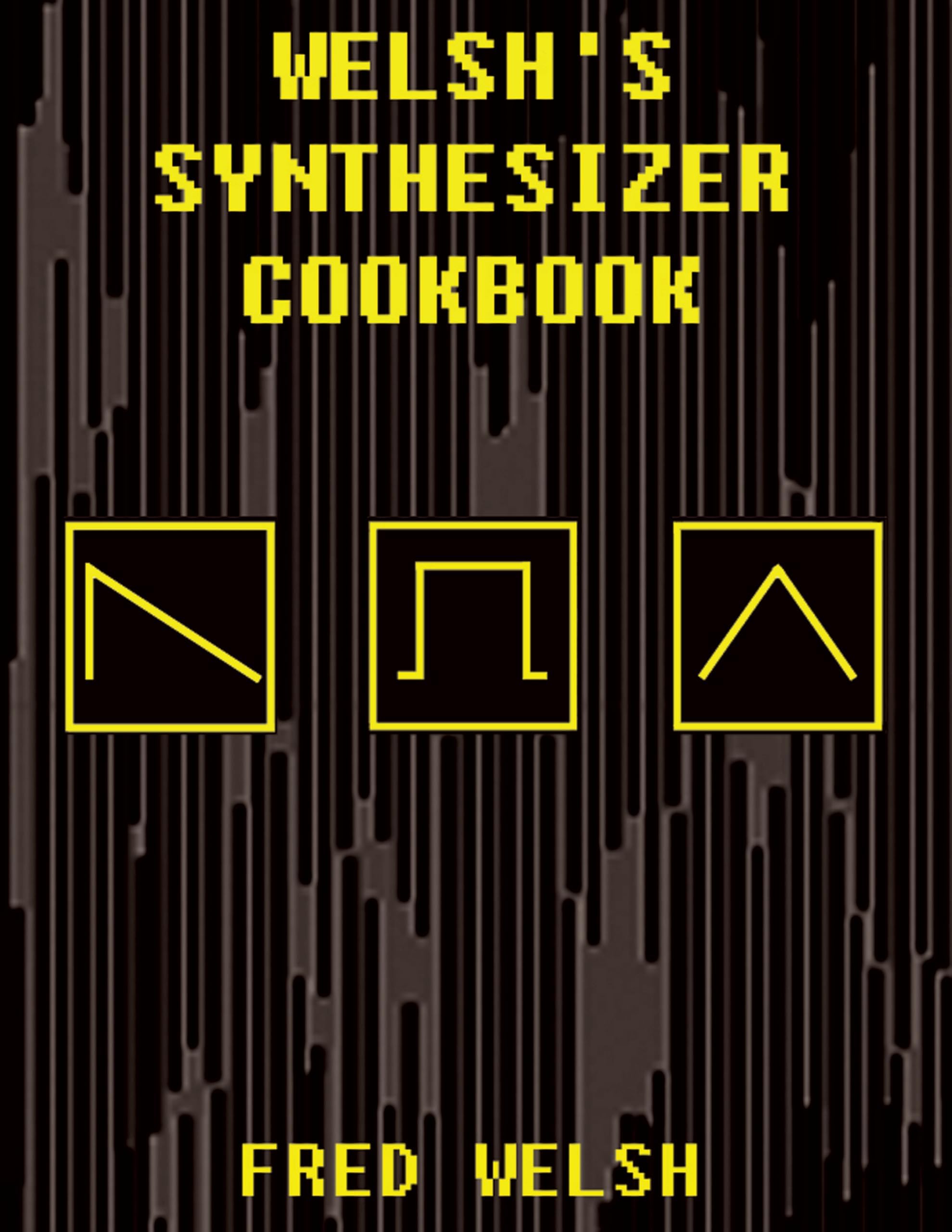

Welsh's Synthesizer Cookbook: Synthesizer Programming, Sound Analysis, and Universal Patch Book [Fred Welsh] on desertcart.com. *FREE* shipping on qualifying offers. Welsh's Synthesizer Cookbook: Synthesizer Programming, Sound Analysis, and Universal Patch Book Review: A necessary extension of the product manual - Young musicians have benefited greatly by the addition of affordable, small, digital "analog modeling" synthesizers, such as the MicroKORG or Alesis Micron. For those of us old enough to remember patch cords, this also has been a huge boon as it provides a lot of parameters in a portable package. These products of course come with pre-sets, but also provide extremely informative product manuals (the MicroKORG, in particular) that can guide the amateur into deliberate sound sculpting. If you imagine that you are going to explore sound design with your DSP analog modeling synths, please buy this book. The price is a bit steep for 124 (large format) pages, BUT, as the other reviewers have attested, a better course and instruction book for analog sound design would be hard to imagine. Fred Welsh knows his stuff cold, and is a fabulously clear and engaging writer. Fascinating bits of synthesizer trivia pop up from time to time (like the patch for Dalek voices in Dr. Who!), but this book is first and foremost a teaching manual for the hands-on auto-didactic creative musician. (Most musicians I deal with are both hands-on and self-teachers!) The first 30 pages take you through all the tools--oscillators, filters, envelopes, LFOs, etc.--and this is the best survey of all these features I've seen. The second major section might at first seem a bit arcane--"Synthesis through harmonic analysis and reverse engineering"--but it is chock full of specific remarks on how certain visually detectable sound characteristics can be generated by your "weapon of choice." More than half of the book is dedicated to "recipes," "Cookbook patches" as Mr. Welsh calls them. A reader more or less on top of the tools section will have no problem recreating these tasty acoustic treats. There are even alternate patches for those who have machines that may not have "pulse width," or simply have a hankering for a different patch. What Mr. Welsh ultimately achieves (especially in the second section) is whetting the musician's appetite for harmonic composition of timbres. Something like Arthur H. Benade's "Horns, Strings, and Harmony" may well be a decent companion book here, as all those lovely harmonic diagrams included in the cookbook will come to life with Benade's careful explanations of the harmonic properties of acoustic instruments. Review: Must-Have For Any Synth Player - Having played exclusively acoustic instruments my whole life, I needed a guide into understanding sound synthesis. This could not have been a better introduction to this world. The invaluable first section explains, succintly but in detail, the basics of sound waves and synth parameters. I loved learning how pipe organs were the first synthesizers. I thought the included graphs were very helpful in visualizing. I just bought my first synth, an analog dual-oscillator subtractive synth (Korg Minilogue). Having this book made me pay close attention to exactly what was being produced. It allowed me to intelligently adjust parameters and gave me the tools to craft my own tones and textures. Perhaps the best thing about this book is that it is geared towards active experimentation on your synth. Despite being technically-minded, it does not read like a dry textbook. It reads like an adventure. Learning that my new instrument can, in theory, reproduce any sound has felt like anagnorisis. I only have two small criticisms— the first is that, while the author structures the information in a comprehensive and meditated way, he seems to despise commas. This makes the content much harder to digest quickly, as much of the punctuation used or ommitted render the sentences ambiguous or awkward. The second is that the extra content is provided on a CD. This wasn’t a large issue for me, as I bought the product for the book, but I don’t have any way of accessing the extras, as my computer no longer has a disk drive. My suggestion would be to store the extras on a cloud service and include a download link with the book. To be clear, I HIGHLY recommend this book. My complaints are minuscule relative to how much I’ve learned from the author. THANK YOU FRED WELSH! I have already ‘sold’ this book to my musician friends.
| ASIN | B000ERHA4S |
| Best Sellers Rank | #673,152 in Books ( See Top 100 in Books ) #1,979 in Piano & Keyboards |
| Customer Reviews | 4.6 4.6 out of 5 stars (282) |
| Dimensions | 11 x 10 x 0.5 inches |
| Edition | 3d |
| Item Weight | 13.6 ounces |
| Language | English |
| Print length | 128 pages |
| Publication date | January 1, 2006 |
| Publisher | Fred Welsh |
M**P
A necessary extension of the product manual
Young musicians have benefited greatly by the addition of affordable, small, digital "analog modeling" synthesizers, such as the MicroKORG or Alesis Micron. For those of us old enough to remember patch cords, this also has been a huge boon as it provides a lot of parameters in a portable package. These products of course come with pre-sets, but also provide extremely informative product manuals (the MicroKORG, in particular) that can guide the amateur into deliberate sound sculpting. If you imagine that you are going to explore sound design with your DSP analog modeling synths, please buy this book. The price is a bit steep for 124 (large format) pages, BUT, as the other reviewers have attested, a better course and instruction book for analog sound design would be hard to imagine. Fred Welsh knows his stuff cold, and is a fabulously clear and engaging writer. Fascinating bits of synthesizer trivia pop up from time to time (like the patch for Dalek voices in Dr. Who!), but this book is first and foremost a teaching manual for the hands-on auto-didactic creative musician. (Most musicians I deal with are both hands-on and self-teachers!) The first 30 pages take you through all the tools--oscillators, filters, envelopes, LFOs, etc.--and this is the best survey of all these features I've seen. The second major section might at first seem a bit arcane--"Synthesis through harmonic analysis and reverse engineering"--but it is chock full of specific remarks on how certain visually detectable sound characteristics can be generated by your "weapon of choice." More than half of the book is dedicated to "recipes," "Cookbook patches" as Mr. Welsh calls them. A reader more or less on top of the tools section will have no problem recreating these tasty acoustic treats. There are even alternate patches for those who have machines that may not have "pulse width," or simply have a hankering for a different patch. What Mr. Welsh ultimately achieves (especially in the second section) is whetting the musician's appetite for harmonic composition of timbres. Something like Arthur H. Benade's "Horns, Strings, and Harmony" may well be a decent companion book here, as all those lovely harmonic diagrams included in the cookbook will come to life with Benade's careful explanations of the harmonic properties of acoustic instruments.
S**W
Must-Have For Any Synth Player
Having played exclusively acoustic instruments my whole life, I needed a guide into understanding sound synthesis. This could not have been a better introduction to this world. The invaluable first section explains, succintly but in detail, the basics of sound waves and synth parameters. I loved learning how pipe organs were the first synthesizers. I thought the included graphs were very helpful in visualizing. I just bought my first synth, an analog dual-oscillator subtractive synth (Korg Minilogue). Having this book made me pay close attention to exactly what was being produced. It allowed me to intelligently adjust parameters and gave me the tools to craft my own tones and textures. Perhaps the best thing about this book is that it is geared towards active experimentation on your synth. Despite being technically-minded, it does not read like a dry textbook. It reads like an adventure. Learning that my new instrument can, in theory, reproduce any sound has felt like anagnorisis. I only have two small criticisms— the first is that, while the author structures the information in a comprehensive and meditated way, he seems to despise commas. This makes the content much harder to digest quickly, as much of the punctuation used or ommitted render the sentences ambiguous or awkward. The second is that the extra content is provided on a CD. This wasn’t a large issue for me, as I bought the product for the book, but I don’t have any way of accessing the extras, as my computer no longer has a disk drive. My suggestion would be to store the extras on a cloud service and include a download link with the book. To be clear, I HIGHLY recommend this book. My complaints are minuscule relative to how much I’ve learned from the author. THANK YOU FRED WELSH! I have already ‘sold’ this book to my musician friends.
J**0
Excellent guide to subtractive synthesis
If you are looking for a basic, well written introduction to subtractive synthesis and concise descriptions of the functions of its various components, I don't think you can do better than this book. This was not the first book I read to describe these topics, but I think the author gets to the core of what you need to know for practical usage better than any other source I have read. Also, the section about how the "basic" square, triangle, and sawtooth waves can all be recreated using sine waves is something that I also rarely see. If you are looking for a list of patches that you can use to get cool sounds out of your synthesizer, this is also the book for you. I don't know of any other book that has this info. Basically the whole back half of the book has programming settings for a variety of different sounds, most of which I thought were very usable. Even though most software synths these days have huge numbers of presets, I find that the exercise of inputting the patches really improves my understanding of my particular synthesizer, and if you listen to how things change as you build them up you will have a much more thorough understanding of how to make the sounds that you want. And all this is without even touching on the real treasure of the book, which is about using frequency analysis software to recreate synth patches from recorded material. It makes a ton of sense and isn't a terribly difficult concept if you take the time to understand it, but kudos to the author for discovering (?) this technique. If I had one criticism, it is that the book definitely has a "self-publishing" feel to it, but it definitely doesn't get in the way of the material. The book is also a bit short, with the patches taking up fully half of the book. And I'm not sure the font size on the patches needs to be as large as it is. However, the quality of the content more than makes up for these minor shortcomings, I would highly recommend this book to beginners or advanced synth programmers who haven't been exposed to the concept of frequency analysis.
L**A
I have been a musician/synth nerd for more years than I care to count. While this book is geared more toward the analogue synths, with adaption of thinking it can be used with any digital synth. For anyone wanting to understand the basics of making any sounds on a synth this shows you hands on. what each parameter does when you tweak the controls is heard and you learn the cause and effect. Also a great stepping stone to create your own custom patches.
Trustpilot
1 month ago
2 weeks ago