Desertcart purchases this item on your behalf and handles shipping, customs, and support to Seychelles.
🚀 Elevate your storage game with WD Red Plus — where capacity meets reliability!
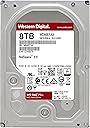
The Western Digital 8TB WD Red Plus NAS Internal Hard Drive is a 3.5-inch SATA 6 Gb/s HDD designed for small to medium business NAS environments. Featuring 5400 RPM speed, 256MB cache, and CMR technology, it delivers reliable, energy-efficient performance optimized for RAID arrays and continuous 24/7 operation. Backed by NASware firmware and a 3-year warranty, it’s built to handle up to 180TB/year workload, making it ideal for professional-grade data storage and sharing.


| ASIN | B07D3MWMNZ |
| Additional Features | Shock Resistant |
| Best Sellers Rank | #19 in Internal Hard Drives |
| Brand | Western Digital |
| Built-In Media | Hard Drive |
| Cache Memory Installed Size | 256 |
| Color | Red |
| Compatible Devices | Desktop |
| Connectivity Technology | SATA |
| Customer Package Type | Standard Packaging |
| Customer Reviews | 4.5 out of 5 stars 24,346 Reviews |
| Data Transfer Rate | 6 gigabits_per_second |
| Digital Storage Capacity | 8 TB |
| Enclosure Material | Aluminum |
| Form Factor | 3.5-inch |
| Global Trade Identification Number | 00718037854694 |
| Hard Disk Description | Mechanical Hard Disk |
| Hard Disk Form Factor | 3.5 inches |
| Hard Disk Interface | Serial ATA-600 |
| Hard Disk Rotational Speed | 5400 rpm |
| Hard-Drive Size | 8000 |
| Hardware Connectivity | SATA 6.0 Gb/s |
| Installation Type | Internal Hard Drive |
| Item Type Name | WD Red 8TB NAS Hard Disk Drive - 5400 RPM Class SATA 6 GB/S 256 MB Cache 3.5-Inch - WD80EFAX (packaging may vary) |
| Item Weight | 1.6 pounds |
| Manufacturer | Western Digital Bare Drives |
| Media Speed | 54 megabytes_per_second |
| Mfr Part Number | WD80EFAX |
| Model Name | WD80EFAX-68LHPN0 |
| Model Number | WD80EFAX |
| Number of Items | 1 |
| Read Speed | 540 megabytes_per_second |
| Special Feature | Shock Resistant |
| Specific Uses For Product | business, personal |
| UPC | 718037854694 |
| Unit Count | 1 Count |
| Warranty Description | Western Digital ("WD") values your business and always attempts to provide you the very best of service. No limited warranty is provided by WD unless your WD Product ("Product") was purchased from an authorized distributor or authorized reseller. Distributors may sell Products to resellers who then sell Products to end users. Please see below for warranty information or obtaining service. No warra… |
D**E
Great drives
Let's get this out of the way first, I'm kind of a WD fanboy but with good reason I think. I've been using them for as long as I can remember, and maybe it's just my personal luck but I think they've been better to me than any other brand. The only ones I don't really like are the Green drives, and I'm willing to accept that they are perfectly fine as external drives that aren't being constantly accessed. The Green is in mega power saving mode and loves to spin down, which means you're looking at longer access times and more wear and tear if you leave it plugged in and access it frequently. I wanted to punch my monitor every time I waited the magical 5 minutes (or whatever it is) before clicking on what I needed, just to wait several seconds on the drive to spin back up. I don't currently use NAS or RAID but considering my options this seemed like my best bet for frequently accessed mass storage, and I was at one point considering RAID (still am kind of). Black is "better," faster, and as such costs more, but I couldn't justify it since I have an SSD for things that need to be fast. I bought this 4TB Red to put in my computer and replace a 3TB Green external drive I was using. I've had it since August of 2014 which isn't that long at this point but it's given me zero reason to complain, same as the 3TB Red I bought in October to replace a 1TB Blue. The only thing I've noticed that was cause for concern at first is these things seem to be a little louder than your standard WD Blue or Green drive on read and write operations, and I thought I may have gotten one with a defect. I'm not sure why that is, but I was much less concerned about it when I got the second drive and it sounded about the same. They seem to have quietened down some with use, and again they have given me no issues whatsoever. I'll definitely be buying more of these when the time comes. UPDATE 6/30/2015 Just wanted to say I am still running a 4tb and a 3tb WD Red in my computer and they've been absolutely trouble free. One of them seems to make a short quiet buzzing noise every now and then that sounds out of place if you're used to diagnosing bad drives by sound like I've had to do on many occasions, but every test I've run comes up clean and I've had no issues whatsoever out of either drive. Chkdsk, SMART, and benchmarks are clean and consistent and I use these daily as "secondary" drives for all my storage and most of my games. I really can't recommend these highly enough. That being said, I always feel the need to tell people KEEP BACKUPS. Any drive can fail and it's always painful when it happens if you don't have regular backups. It's not cheap to match storage space for backups but trust me... That one day you need it -- and you will one day or one year unless you replace your drives regularly -- it's money well spent.
J**S
Best storage drive , NAS not required + professional Q & A podcast addressing RED drives | a great youtube video |
I have been a long term western digital customer for over 10yrs. This drive is aimed and marketed at NAS type devices however also very good in a regular desktop computer system as a storage drive, which is how I am currently using it for my personal desktop system . I have owned this red drive for approx. 10 days now. The sustained transfer speed is very good. the lower / variable spindle speed compared to normal 7200RPM drives doesn't impact its performance for my use . It performs better then my 4TB WD green drive. My Red drive was installed in a computer with many hard drives and it runs at a cool 84F (29 C ) at idle, the lowest temp. drive in the computer. Also according to the Red drive spec sheet uses the least amount of power as well. Time limited error recovery (TLER) is one of the benefits for the Red drives , outlined in the youtube video podcast below. A popular weekly hardware video podcast with storage editor at PC Perspective ( pcper) Allyn Malventano addressing uses of red model drives: https://youtu.be/WjjCMWZ0aDU?t=51m I included a start time for later in the podcast @ 51 minutes, the start of discussion of WD red drives and its use in NAS and non NAS systems Some valuable info on NAS / RAID design can be found in this video as well. plus other general server hardware info is addressed. At time 55:40 in the the video more info and insight regarding DIY home NAS and RAID stability, reliability and design is discussed as well. Potentially saving a DIY person some pretty decent cash and at least some calories reading conflicting information online. All of which for some buyers reading reviews on amazon for this product would find useful or at least interesting. For me, my drives in my personal computer for this review are used for pure storage via Linux based operating systems. In some computer systems i've built are media servers, again using linux with LVM and sometimes MDADM , other times using RAID cards such as IBM M1015 , a cheaper version, of more expensive promise model cards with SAS. HGST is another maker of hard drives with good reputation and within the same general price range for some of their models, however western digital now owns them, formally Hitachi Global Storage Technologies . I've not taken the time while writing this to check if HGST drives feature some of the features the Red model line up offers. If you are going for a gaming system drive or require heavy I/O for a operating system drive, the red of course wouldn't be your best option. I use a WD Black drive, # WD3003FZEX for this . Steam games fill a drive quickly. With my budget and limited sata ports it makes a SSD fairly useless for storing games , or a media server gaming rig combo. Most of the time, once game is loaded , its mostly done , leaving the CPU and GPU left doing the work... . so for my needs esp dual booting , gaming on linux and windows using a Black model drive is my best option for my hardware , storage and requirements to have one type of operating system running most of the time. I do sometimes run Linux on a stand alone 120GB SSD , if I disconnect my optical drive , smaller ssd drives are quite inexpensive now and do make life a bit easier esp on aging desktop hardware. The cost per TB in a black model is still quite low for the performance level and the only high performance drive to offer a 5 year warranty standard. Especially when compared to a hybrid model drives cost and other drive makers of fast mechanical and hybrid solutions. Heavy gaming via steam would make a hybrid drives nand cache not very effective , fairly quickly iirc . Hopefully some of this info will prove useful , or at least give some starting ground to look into , research options deeper that may not have been considered before.
G**N
Regular consumer drives in RAID are accident waiting to happen
Here is a quote from a review at pcper.com I'm going to let the cat out of the bag right here and now. Everyone's home RAID is likely an accident waiting to happen. If you're using regular consumer drives in a large array, there are some very simple (and likely) scenarios that can cause it to completely fail. I'm guilty of operating under this same false hope - I have an 8-drive array of 3TB WD Caviar Greens in a RAID-5. For those uninitiated, RAID-5 is where one drive worth of capacity is volunteered for use as parity data, which is distributed amongst all drives in the array. This trick allows for no data loss in the case where a single drive fails. The RAID controller can simply figure out the missing data by running the extra parity through the same formula that created it. This is called redundancy, but I propose that it's not. Since I'm also guilty here with my huge array of Caviar Greens, let me also say that every few weeks I have a batch job that reads *all* data from that array. Why on earth would I need to occasionally and repeatedly read 21TB of data from something that should already be super reliable? Here's the failure scenario for what might happen to me if I didn't: * Array starts off operating as normal, but drive 3 has a bad sector that cropped up a few months back. This has gone unnoticed because the bad sector was part of a rarely accessed file. * During operation, drive 1 encounters a new bad sector. * Since drive 1 is a consumer drive it goes into a retry loop, repeatedly attempting to read and correct the bad sector. * The RAID controller exceeds its timeout threshold waiting on drive 1 and marks it offline. * Array is now in degraded status with drive 1 marked as failed. * User replaces drive 1. RAID controller initiates rebuild using parity data from the other drives. * During rebuild, RAID controller encounters the bad sector on drive 3. * Since drive 3 is a consumer drive it goes into a retry loop, repeatedly attempting to read and correct the bad sector. * The RAID controller exceeds its timeout threshold waiting on drive 3 and marks it offline. * Rebuild fails. At this point the way forward varies from controller to controller, but the long and short of it is that the data is at extreme risk of loss. There are ways to get it all back (most likely without that one bad sector on drive 3), but none of them are particularly easy. Now you may be asking yourself how enterprises run huge RAIDs and don't see this sort of problem? The answer is Time Limited Error Recovery - where the hard drive assumes it is part of an array, assumes there is redundancy, and is not afraid to quickly tell the host controller that it just can't complete the current I/O request. Here's how that scenario would have played out if the drives implemented some form of TLER: * Array starts off operating as normal, but drive 3 has developed a bad sector several weeks ago. This went unnoticed because the bad sector was part of a rarely accessed file. * During operation, drive 1 encounters a new bad sector. * Drive 1 makes a few read attempts and then reports a CRC error to the RAID controller. * The RAID controller maps out the bad sector, locating it elsewhere on the drive. The missing sector is rebuilt using parity data from the other drives in the array. *Array continues normal operation, with the error added to its event log. The above scenario is what would play out with an Areca RAID controller (I've verified this personally). Other controllers may behave differently. A controller unable to do a bad sector remap might have just marked drive 1 as bad, but the key is that the rebuild would be much less likely to fail as drive 3 would not drop completely offline once the controller ran into the additional bad sector. The moral of this story is that typical consumer grade drives have data error timeouts that are far longer than the drive offline timeout of typical RAID controllers, and without some form of TLER, two bad sectors (totaling 1024 bytes) is all that's required to put multiple terabytes of data in grave danger. The Solution: The solution should be simple - just get some drives with TLER. The problem is that until now those were prohibitively expensive. Enterprise drives have all sorts of added features like accelerometers and pressure sensors to compensate for sliding in and out of a server rack while operating, as well as dealing with rapid pressure changes that take place when the server room door opens and the forced air circulation takes a quick detour. Those features just aren't needed in that home NAS sitting on your bookshelf. What *is* needed is a WD Caviar Green that has TLER, and Western Digital delivers that in their new Red drives. End quote and back to reviewer. I've got 5 of these in a Synology DiskStation 5-Bay (Diskless) Network Attached Storage (DS1512+) . It is really a sweet setup. The Synology software has a S.M.A.R.T. test that can do surface scans to detect bad sectors. I have their Quick Test check every disk daily and the Extended Test set to automatically run on each of the 5 disks every weekend. (The Extended Test takes about 5 hours per disk so I separate the tests by 12 hours.)
B**.
Parking was factory set to 300 seconds on my drives and they are working well.
I purchased two of the 3TB drives and one of the 2TB drives. When I went into WDIDLE3 the setting for all three drives were set to 300 seconds (5 minutes). Since I was in there I simply disabled it. These drives are working flawlessly thus far as I have the two 3TB drives in a media center running Media Browser 3, PlayOn, and a few other apps. The 2TB drive is hooked up to a Dish Network Hopper as a secondary storage. I have not experienced any issues so far with these drive. I will update as time goes on with more info. *Update 3/27/15: Some drive information obtained from HD Guardian: Drive 01 Serial Number: WD-WCC4N7E***** Firmware: 82.00A82 User Capacity: 3,000,592,982,016 bytes Product Name Status Exp Date (MM/DD/YYYY) 3 TB WD Red Hard Drive In Limited Warranty 1/6/2018 Overall Health: Temperature: 34*C High: 36*C Low: 34*C Last Test: Completed without error. No bad sector detected. No ATA error detected. SMART Attributes Data Structure revision number: 16 Vendor Specific SMART Attributes with Thresholds: ID# ATTRIBUTE_NAME FLAG VALUE WORST THRESH TYPE UPDATED WHEN_FAILED RAW_VALUE 1 Raw_Read_Error_Rate 0x002f 200 200 051 Pre-fail Always - 0 3 Spin_Up_Time 0x0027 185 182 021 Pre-fail Always - 5733 4 Start_Stop_Count 0x0032 100 100 000 Old_age Always - 42 5 Reallocated_Sector_Ct 0x0033 200 200 140 Pre-fail Always - 0 7 Seek_Error_Rate 0x002e 100 253 000 Old_age Always - 0 9 Power_On_Hours 0x0032 100 100 000 Old_age Always - 673 10 Spin_Retry_Count 0x0032 100 253 000 Old_age Always - 0 11 Calibration_Retry_Count 0x0032 100 253 000 Old_age Always - 0 12 Power_Cycle_Count 0x0032 100 100 000 Old_age Always - 5 192 Power-Off_Retract_Count 0x0032 200 200 000 Old_age Always - 1 193 Load_Cycle_Count 0x0032 200 200 000 Old_age Always - 40 194 Temperature_Celsius 0x0022 116 110 000 Old_age Always - 34 196 Reallocated_Event_Count 0x0032 200 200 000 Old_age Always - 0 197 Current_Pending_Sector 0x0032 200 200 000 Old_age Always - 0 198 Offline_Uncorrectable 0x0030 100 253 000 Old_age Offline - 0 199 UDMA_CRC_Error_Count 0x0032 200 200 000 Old_age Always - 0 200 Multi_Zone_Error_Rate 0x0008 100 253 000 Old_age Offline - 0 Working Time: 673 hours (28 days, 1 hours) Last Update Fri Mar 27 01:53:28 2015 CDT Drive 02 Serial Number: WD-WMC4N0F***** Firmware: 82.00A82 User Capacity: 3,000,592,982,016 bytes Product Name Status Exp Date (MM/DD/YYYY) 3 TB WD Red Hard Drive In Limited Warranty 12/11/2017 Overall Health: Temperature: 37*C High: 41*C Low: 35*C Last Test: N/A No bad sector detected. No ATA error detected. SMART Attributes Data Structure revision number: 16 Vendor Specific SMART Attributes with Thresholds: ID# ATTRIBUTE_NAME FLAG VALUE WORST THRESH TYPE UPDATED WHEN_FAILED RAW_VALUE 1 Raw_Read_Error_Rate 0x002f 200 200 051 Pre-fail Always - 0 3 Spin_Up_Time 0x0027 181 179 021 Pre-fail Always - 5950 4 Start_Stop_Count 0x0032 100 100 000 Old_age Always - 50 5 Reallocated_Sector_Ct 0x0033 200 200 140 Pre-fail Always - 0 7 Seek_Error_Rate 0x002e 200 200 000 Old_age Always - 0 9 Power_On_Hours 0x0032 100 100 000 Old_age Always - 672 10 Spin_Retry_Count 0x0032 100 253 000 Old_age Always - 0 11 Calibration_Retry_Count 0x0032 100 253 000 Old_age Always - 0 12 Power_Cycle_Count 0x0032 100 100 000 Old_age Always - 4 192 Power-Off_Retract_Count 0x0032 200 200 000 Old_age Always - 1 193 Load_Cycle_Count 0x0032 200 200 000 Old_age Always - 48 194 Temperature_Celsius 0x0022 113 109 000 Old_age Always - 37 196 Reallocated_Event_Count 0x0032 200 200 000 Old_age Always - 0 197 Current_Pending_Sector 0x0032 200 200 000 Old_age Always - 0 198 Offline_Uncorrectable 0x0030 100 253 000 Old_age Offline - 0 199 UDMA_CRC_Error_Count 0x0032 200 200 000 Old_age Always - 0 200 Multi_Zone_Error_Rate 0x0008 100 253 000 Old_age Offline - 0 Working Time: 672 hours (28 days) Last Update Fri Mar 27 01:53:28 2015 CDT ------------------------------------------- Update 5/14/2015 Some drive information obtained from HD Guardian: Drive 01 Serial Number: WD-WCC4N7E***** Firmware: 82.00A82 User Capacity: 3,000,592,982,016 bytes Product Name Status Exp Date (MM/DD/YYYY) 3 TB WD Red Hard Drive In Limited Warranty 1/6/2018 Overall Health: Temperature: 37*C High: 37*C Low: 34*C Last Test: Completed without error. No bad sector detected. No ATA error detected. SMART Attributes Data Structure revision number: 16 Vendor Specific SMART Attributes with Thresholds: ID# ATTRIBUTE_NAME FLAG VALUE WORST THRESH TYPE UPDATED WHEN_FAILED RAW_VALUE 1 Raw_Read_Error_Rate 0x002f 200 200 051 Pre-fail Always - 0 3 Spin_Up_Time 0x0027 186 182 021 Pre-fail Always - 5700 4 Start_Stop_Count 0x0032 100 100 000 Old_age Always - 193 5 Reallocated_Sector_Ct 0x0033 200 200 140 Pre-fail Always - 0 7 Seek_Error_Rate 0x002e 200 200 000 Old_age Always - 0 9 Power_On_Hours 0x0032 98 98 000 Old_age Always - 1844 10 Spin_Retry_Count 0x0032 100 253 000 Old_age Always - 0 11 Calibration_Retry_Count 0x0032 100 253 000 Old_age Always - 0 12 Power_Cycle_Count 0x0032 100 100 000 Old_age Always - 5 192 Power-Off_Retract_Count 0x0032 200 200 000 Old_age Always - 1 193 Load_Cycle_Count 0x0032 200 200 000 Old_age Always - 190 194 Temperature_Celsius 0x0022 113 108 000 Old_age Always - 37 196 Reallocated_Event_Count 0x0032 200 200 000 Old_age Always - 0 197 Current_Pending_Sector 0x0032 200 200 000 Old_age Always - 0 198 Offline_Uncorrectable 0x0030 100 253 000 Old_age Offline - 0 199 UDMA_CRC_Error_Count 0x0032 200 200 000 Old_age Always - 0 200 Multi_Zone_Error_Rate 0x0008 100 253 000 Old_age Offline - 0 Working Time: 1844 hours (2 months 16 days, 20 hours) Last Update Fri May 14 22:31:35 2015 CDT Drive 02 Serial Number: WD-WMC4N0F***** Firmware: 82.00A82 User Capacity: 3,000,592,982,016 bytes Product Name Status Exp Date (MM/DD/YYYY) 3 TB WD Red Hard Drive In Limited Warranty 12/11/2017 Overall Health: Temperature: 37*C High: 41*C Low: 35*C Last Test: N/A No bad sector detected. No ATA error detected. SMART Attributes Data Structure revision number: 16 Vendor Specific SMART Attributes with Thresholds: ID# ATTRIBUTE_NAME FLAG VALUE WORST THRESH TYPE UPDATED WHEN_FAILED RAW_VALUE 1 Raw_Read_Error_Rate 0x002f 200 200 051 Pre-fail Always - 0 3 Spin_Up_Time 0x0027 181 179 021 Pre-fail Always - 5908 4 Start_Stop_Count 0x0032 100 100 000 Old_age Always - 242 5 Reallocated_Sector_Ct 0x0033 200 200 140 Pre-fail Always - 0 7 Seek_Error_Rate 0x002e 200 200 000 Old_age Always - 0 9 Power_On_Hours 0x0032 98 98 000 Old_age Always - 1836 10 Spin_Retry_Count 0x0032 100 253 000 Old_age Always - 0 11 Calibration_Retry_Count 0x0032 100 253 000 Old_age Always - 0 12 Power_Cycle_Count 0x0032 100 100 000 Old_age Always - 5 192 Power-Off_Retract_Count 0x0032 200 200 000 Old_age Always - 1 193 Load_Cycle_Count 0x0032 200 200 000 Old_age Always - 240 194 Temperature_Celsius 0x0022 110 106 000 Old_age Always - 40 196 Reallocated_Event_Count 0x0032 200 200 000 Old_age Always - 0 197 Current_Pending_Sector 0x0032 200 200 000 Old_age Always - 0 198 Offline_Uncorrectable 0x0030 100 253 000 Old_age Offline - 0 199 UDMA_CRC_Error_Count 0x0032 200 200 000 Old_age Always - 0 200 Multi_Zone_Error_Rate 0x0008 100 253 000 Old_age Offline - 0 Working Time: 1836 hours (2 months, 16 days, 12 hours) Last Update Fri May 14 22:31:35 2015 CDT
J**N
Great drives!
I just got a couple of these 3TB WD Red drives a week ago! If you want some nice drives for your NAS these are it! Recommended for 1 to 5 drive bay systems. My new NAS has 4 bays so I'm using 2 of them right now. Formatted you get 2.7TB from them! You want a HDD that is guaranteed to support a NAS, these WD Red drive are them!!! The are Basically Green drives and yet so much more! They are much faster yet use less Power then other drives and have less heat. They also have a 3 year warranty and their own phone number to call if you have any problems. So the little higher price is worth the longer warranty of these over the other drives. These have software designed to work in a NAS environment that other HDD can have issues with! NAS's are a fast growing market right now I think. Since they need Hard Drives, I'm surprised WD is the only ones out with these RED NAS drives. I'm sure others are working on their own versions for this growing market. If you want to sell HDD's, especially the 3.5" ones, because Laptops and whatnot is the growing market and they take 2.5" drives or going with SSD drives. Both of my drives worked problem free. Just mounted to the frames and popped them into my NAS and the NAS did the rest on it's own. Simple easy!!! Lower power saves you money in electricity over the years using it and less heat means longer lasting drives! How can you go wrong? So how do these really stack up in Comparison to other HDD? Well when it comes to Hardware Reviews everyone knows anandtech.com right! Check it out. [...] Toms Hardware is also another great review site. Check out their review of these Red drives! [...] Update 5-21-2013 I've now had these 2 WD Red 3TB drives for a number of months and so far they've been working out great in my NAS unit. In fact I just ordered a 3rd one just now as I have room for up to 4 drives. If you have a NAS, THESE are the drives to get. Don't even waste your time on the 1 and 2 Gig versions, get these 3 Gig RED's!!! I'll see how it works out with my NAS as it goes from RAID 1 to Raid 5 mode. It'll be nice to have some breathing room again with this 3rd HHD.
C**W
Great NAS drives.
I have been around computers since the mid 80's and remember purchasing my first hard drive. It was for my Apple II in an enclosure about half the size of the computer with a self-contained power supply, fans and all sorts of what were then, "goodies". It was an SCSI drive and it had a whopping 25 megabytes of space at my disposal. The hard drive was a Shugart, named after the fellow that built them and the predecessor of what is today, Seagate. There was a period of time in the 90's where my experiences with what were then the kingpins of hard drives, WD and Seagate simply did not prove reliable in a server or NAS environment which is why I always ended up paying top dollar for SCSI servers and enterprise drives that were significantly more expensive than an equivalent ATAPI desktop drive. When Samsung introduced their line of desktop drives, for the first time I felt comfortable using them in a server environment where they run 24/7. Today, after testing hard drives as they come out in both sizes and formats, I found that by far, WD has the best NAS drives for the money and they are not that much more expensive than a regular desktop drive. In fact, the WD Black line, which is intended for desktops is also a terrific drive and would not hesitate to stick them in a NAS box with one from their Red line. But I say so only from the point of view of reliability. As in the past I often found that anyone selling a non scuzzy drive claimed they were purpose built for a server environment, I questioned it as it seemed that I could not see any tangible evidence of them being anything more than the same drive as any other with a different label and a higher price. I can quantify the difference even between a WD Black drive and the Red NAS line. The transfer speeds are higher and they don't run nearly as hot which explains their great longevity under enterprise environment. There are still good reasons for going with enterprise scuzzy drives if that is what you need and can afford it. But for the everyday person that simply wants to keep their data backed up off site or off their PC, the WD Red line is a terrific drive and deliver a lot of bang for the buck. I presently have a location where I run 10 NAS boxes with two to four hard drives each and over time, the WD Red drives have outlasted Seagate's equivalents -- by a long shot. That is not meant to be a put down of Seagate because I use their hybrid drives on my desktops and they are terrific. I personally prefer them to WD's Black line even though I know they are also great drives. I must admit that I am baffled when I read about someone these days getting, say, 4 new drives and one or two being DOA. Maybe I've been fortunate, but I have purchased hundreds if not thousands of hard drives and I have yet to get one tha was DOA. Some clearly perform better than others and last longer than others, but as a whole, I would say the hard drive market is extremely mature and whether they are made in China or the US, makes no difference. All I can say is that in my experience and for my needs, the WD Red line is an excellent NAS drive and will continue to use them in the foreseeable future. Something else may come out that it is better or not. But when one is dealing with a NAS environment, there isn't much room for testing new equipment if the one I use now meets my needs and has proven itself. As my needs change, I will go through due diligence in determining what will be best. But at least presently, there are alternatives to SCSI if you do not need it and the prices per megabyte are lower than ever. I highly recommend this line of drives from WD for its intended use.
S**N
NAS Best Friend
After about six months of searching for the perfect drive, I finally settled on two of these Western Digital Red 2TB WD20EFRX hard drives. I was ready to purchase HGST enterprise drives, the former Hitachi, but WD came out with these drives just in-time. I wanted to get the 3TB WD30EFRX version for my Synology DS212 NAS , but the price difference didn't make that much of a sense, and 2TB drives are more than enough for a few years of my home office use. I am very happy that these drives MTBFs are rated at 1,000,000 hours, they use less power, and they are cheaper than other enterprise drives. Upon receiving, I immediately installed them in my NAS. It took about 15 minutes to install DSM 4 and begin the inspection process. I neither chose Raid 1, JBOD, or SHR, and I took some online advice and created two separate volumes, one on each disk, to have two independent file systems. In this case, you don't have to worry about rebuilding disk arrays if any drives fail, and you always have a backup present. I was planning on using Folder Sync feature to sync all folders from Disk 1 to Disk 2 every other hour, but I found out this feature only works on two independent Synology Disk Stations; however, you can use automated backup feature to backup data from Disk 1 into Disk 2, and it produces about the same result as Folder Sync does, and it gives you a few more options for backing up system and application files as well. Synology volume creation took about 7 hours for each drive with automatic bad sector reallocation feature. I later tested each drive with S.M.A.R.T extended test--each took about 4 hours--and I am happy to report that I did not have any bad sectors on either of the drives. That is, the "Reallocated Sector Count" reads zero in S.M.A.R.T report. The drives are surprisingly quiet. I had an enterprise RE2 500GB in my NAS, and it was thunderstorm loud compared to these. The temperature is also very reasonable. When the drive is resting it is about 31C/88F, and under heavy usage it rises up to 35C/95F. Although these drives speed are only 5000 rpm, I don't see any difference in file transfer speed. The only downside that I could sense was the startup time from sleep. I feel that compared to my old WD RE2 drive, it takes a good 2 to 5 seconds more for the NAS to come out of sleep each time. Not a deal breaker, but something to consider when you invest in these drives. I think WD has done a good job with these drives, and they are currently the best on the market for home or home office use. That being said, I still think WD RE4 drives are the best enterprise drives and ultimate in performance; however, if you are looking for a good set of drives for your NAS, and the power consumption and noise are important to you, these WD Red drives will work just fine. Compared to desktop drives, these come with a few enterprise features that come in handy and will save you some time and money down the road.
A**C
4x 3TB drives failed in 24 hours
May 2014 - I forgot to update this, so I'm doing it almost a year later. Down graded to one star. TLDR - Amazon was great, however, 4 drives (two sets of two) failed in 24 hours. Extensive conversations with WD second level support resulting in them saying "return the drives", so I bought 3TB green drives again for the external enclosures, and 3TB Toshiba/Hitachi drives for the NAS. Very unimpressed with WD RED drives - all marketing on what are really just average drives. This is to justify continued higher costs after the flood farce perpetrated on the public. Yes, the flood happened, however, the raping of the customers has continued (easily researched what they've done, and prices don't lie). Lets hope SSDs come down in price soon.... ****** Original review ****** I'm leaving a generous, but temporary, 2-star review. My two drives failed within 24 hours and I'm awaiting replacement drives so I'll update this review after I've tested them. First, I want to state that Amazon's shipping was flawless and I don't think it was a problem for these drives. I currently own at least 25 WD drives (as well as many by other vendors) and ordered 2x 3TB Red drives for use first in external enclosures, and later to be put in a Synology NAS. They never made it past the enclosure stage, and were dead in a day. All work, no play, for me at least. 1) Drives were placed in USB 3.0 external enclosures, initialized as GPT under Win7 (x64), and a NTFS "Quick format" was performed. I then ran a SMART "Quick Test" using WD's Data Lifeguard (DLG), which passed fine. Note: DLG quick test only checks the first and last million sectors, leaving most of the drive unchecked. The drives were each loaded with approx 1.5TB of data, and then shutdown properly using "Safely remove hardware" before disconnecting. Note: the 1-year-old enclosures support 3TB drives - verified with the mfg again this morning - and were previously housing WD and Hitachi 2TB drives without issue. 2) Attempted to start the drives the next day, but they weren't identified by Explorer, and when finally found in Disk Management (under Admin -> Computer Management) they were once again showed as "Not initialized". They were in effect, dead to me. 3) I attempted to mount the drives on another, almost new, high-end computer running Win8 Pro. The drives were not seen by Explorer, but could be found under Disk Management, however, they showed with 2TB labeled "MBR protected" and 7xxGB "unallocated". No data could be read. 4) Contacted WD support. After discussing all events and options, their recommendation was "send'em back to us or Amazon, they're dead". 5) I accepted that something had gone wrong, but again using DLG, I tried a low level process called "Write Zeros". The first drive simply failed with bad sectors after running for 5 hours. I tried to "continue" the process by clicking the pop-up error window 50-100x times before finally giving up. I couldn't format it, couldn't write zeros, nothing worked. After several more attempts, I finally got it to finish a windows format (ran for the last 12 hours), but I don't trust it. The second drive did allow me to Write Zeros, but I don't trust it either. They're both going back. Write Zeros may temporarily "fix" drives, but may also just mask the underlying problem(s). (And yes, I understand erasing vs. formatting, the data implications, etc.). WD has a problem, and because of that so do we. I recommend everyone format and test these drives before use. I know drives fail; I've had many drive failures in the last couple of years (3 Seagate, 5 Samsung F4s, etc.) but all before they were mounted in a NAS. Read the reviews, understand that it's a lottery, and though I had hoped for more, I didn't win the first time. You may get lucky.... or.... you may not. I'll update this review after receiving my new drives, and have tested them in brand new enclosures.
B**N
Neue Platte für Synology DS213+
So, der Puls ist wieder unten. Lange habe ich mit mir gerungen, diese Platte anzuschaffen - ich brauchte mehr Platz in meinem NAS. Knapp zwei Jahre (14500 Stunden laut SMART, eine Platte hat EINEN CRC-Fehler gemeldet - das war's an Auffälligkeiten in zwei Jahren) haben zwei WD Red 2TB Western Digital WD20EFRX Red 2TB Interne Festplatte für NAS-Storage (8,9 cm (3,5 Zoll), 5400rpm, SATA III) hier klaglos und unauffällig ihren Dienst im RAID 1 getan, warum also keine neuen aus der Serie... Die bisherigen Rezensionen haben mich allerdings stutzig gemacht, von auffällig vielen Problemen war die Rede, hauptsächlich allerdings in QNAP-Geräten. Also, ich habe ein Synology-NAS Synology DiskStation DS213+ NAS-Server (2x1GHz, 512MB RAM, 2-Bay, SATA II, 2x USB 3.0) und ich bestelle bei Amazon - was soll mir passieren?!? Wenn doch Fehler auftreten sollten, ist Amazon da erfreulich problemlos. Erstmal sollte nur eine Platte her, die soll problemlos laufen, erst dann kaufe ich eine zweite. Die Lieferung mit Amazon Prime hat vier Tage gebraucht - naja. Aber die Platte kam an. Im Karton hat sich allerdings eine Menge bewegt, an Füllmaterial hat der Kollege im Versand nämlich ganz gut gespart! Die Platte kam zusätzlich in der Original-WD-Kunststoffverpackung und darin im Antistatikbeutel eingeschweißt. Nach einer kurzen Akklimatisierungsphase habe ich sie an ein USB-SATA-Adapter gehangen, um einen ersten Test zu machen. Einschalten - nix passiert? Beim Hochheben der Platte habe ich dann wohl gemerkt, dass sie läuft! Sie ist sehr leise, auch beim Anlaufen. Die 2TB-Seagate-Platte in meiner Apple Time Capsule 2TB (drahtloser Netzwerkspeicher und AirPort Extreme Basisstation) genau wie die Seagate Expansion Desktop STBV2000200 Externe Festplatte 2TB (8,9 cm (3,5 Zoll), USB 3.0) "schreien" beim Anlaufen kurz auf (klingt ein bißchen wie Darth Vaders Tie-Fighter). Hier bei der WD-RED: Nix zu hören. Kaum Vibrationen zu spüren. Bei Zugriffen auch keine unangenehmen Geräusche. Also bisher: Daumen hoch! SMART hat über das USB-Adapter-Gedöns nicht funktioniert, also habe ich die Platte mutig ins laufende NAS geworfen. Hot-Plug sollte das Synology ja können. Platte 2 einfach rausziehen, die Platten im Rahmen ummontieren und die neue 6TB reinschieben. Fertig! Keine 5 Minuten für die Hardwaregeschichte. Im Speichermanager des DSM dann die Prüfung und Vorbereitung der Platte und anschließend Reparatur des RAID-Volumens anstoßen. Keine Probleme, alles fluppt. Naja - fluppen ist nicht das richtige Wort - die Reparatur des RAID-Volumens hat acht Stunden gedauert (1,74TB Daten von Platte 1 auf die neue Platte spiegeln). Ein kurzer SMART-Check: alles normal. Den langen SMART-Check wollte ich über Nacht laufen lassen, das habe ich aber unterschätzt: Der lief 16 Stunden!!! Die Platte ist halt recht groß - man muss Geduld mitbringen. Ergebnis: Problemlos. Keine Aussetzer, keine Warnungen. Geil! Die Platte wird ein wenig wärmer als die alte 2TB-Platte, die hat nämlich aktuell 23°C, die neue 6TB meldet 27°C. Immer noch: Cooles Ding. Die Zeiten, wo man sich die Finger an Platten verbrennen konnte, sind definitiv vorbei. Der Lüfter im Synology ist im "Lieber leiser als kälter"-Modus - aber diese Temperaturen sind mehr als in Ordnung. Von der Geschwindigkeit kann ich nichts berichten - intern soll sie laut Datenblatt 175MB/s schaffen, in dem Fall begrenzt das Gigabit-Ethernet des NAS-Systems eher als die Platte, das Synology liefert "nur" knappe 100MB/s. Reicht hierfür also! In einer oder zwei Wochen, wenn nichts Außergewöhnliches auftritt, bekommt die neue Platte dann auch eine passende Schwester, damit ich den Platz, der neu zur Verfügung steht, auch nutzen kann. Ich werde die Rezension erweitern, wenn es Neuigkeiten gibt. Bis dahin das Fazit: keine Probleme aufgetreten, Installation problemlos, Platte leise und kalt und vor allem: riesig viel Platz! Edit: Update nach 300 Stunden: Null Fehler. Die zweite Platte ist inzwischen da. Die war übrigens anders verpackt! Sie war nicht in der durchsichtigen Plastikhülle drin, sondern "nur" in der Antistatiktüte, dafür mit zwei Kunststoff-Formteilen fest im Karton verpackt - da wackelte nichts mehr. Sehr gutes und vertrauenerweckendes System! Ob das aber immer so ist - keine Ahnung. Edit2: Update nach 800 Stunden: Null Fehler. Die zweite Platte ist komischerweise 2°C kälter als die zuerst eingebaute. Was aber merkwürdig ist: Der Load Cycle Counter ist nach 400 Stunden Betrieb auf 332, bei der nunmehr fast 800 Stunden laufenden ersten Platte noch bei 58. Scheinbar sind die beiden Platten trotz identischer Firmware unterschiedlich konfiguriert, am NAS sollte das meiner Meinung nach nicht liegen, dass eine Platte öfter schlafen geht als die andere... Wenn das linear so weitergeht, hält die "neuere" Platte nur hochgerechnet 91 Jahre, bis der Load Cycle Counter auf 600.000 steht - und dann ist laut WD ein Ausfall wahrscheinlich :-/ Also ganz so beunruhigt bin ich nicht, aber dass die beiden sich unterschiedlich verhalten, ist schon ein bißchen komisch. Edit3: Neuestes Update: Der Load-Cycle-Counter der neueren Platte hat sich nicht linear weiter erhöht. Und das ohne weiteres Zutun. Komisch, aber ok. Die 2° Temperaturunterschied zwischen den Platten sind geblieben - Messungenauigkeit oder tatsächliche Differenz? Ich kann's nicht sagen. Ist mir inzwischen auch total peng. Hier mal im Vergleich die aktuellen SMART-Daten (Platte 1 wurde später ersetzt!): Platte 1: Power-On Hours: 744h / Load Cycle: 359 / Start-Stop-Cycle: 69 / Temperatur: 24°C Platte 2: Power-On Hours: 1078h / Load Cycle: 85 / Start-Stop-Cycle: 81 / Temperatur: 26°C Keine weiteren Auffälligkeiten oder Fehler. Feine Platten. Die erste der beiden "alten" Platten wurde nun einer neuen Bestimmung zugeführt, die zweite verbleibt noch mit den "alten" Daten vom NAS als Backup. Die Zeitintervalle des Nachschnüffelns werden nun wohl größer werden. Aber ich behalte das hier mal bei... Edit4: Alles gut. 3 Monate im Betrieb. Fehler: 0,0. Die zweite Backup-Platte ist im externen USB 3.0 Gehäuse eingebaut und wandert jetzt Richtung Backup-Medium für's NAS. Mache mir nun keine großen Sorgen mehr. Hier mal im Vergleich die aktuellen SMART-Daten (Platte 1 wurde später ersetzt!): Platte 1: Power-On Hours: 1364h / Load Cycle: 455 / Start-Stop-Cycle: 164 / Temperatur: 24°C Platte 2: Power-On Hours: 1697h / Load Cycle: 181 / Start-Stop-Cycle: 176 / Temperatur: 27°C Edit5: Halbes Jahr ist um. Läuft. Ich vermute, dass hier eher die Leute schreiben, die Ärger mit der Platte haben als die, deren Geräte klaglos und unauffällig laufen. Ich kann nichts Negatives berichten. Keine Fehler in den SMART-Tests. Täglich wird ein Schnelltest gemacht und monatlich ein erweiterter SMART-Test (ich bekomme dann auch einmal im Monat einen "Gesundheitsbericht" vom NAS per mail - wie nett). Die Temperaturen steigen an - es wird ja auch wärmer in Deutschland. Bin mal auf den Sommer gespannt, aber 30° ist ja noch super. Das NAS steht im Keller, dort sind keine 32° Umgebungstemperatur zu erwarten. 2980 Stunden sind übrigens 124 Tage - die erste Platte ist jedoch schon knappe 160 Tage eingebaut. Die restliche Zeit hat sie also "frei" - wenn die Power-On-Hours von der Platte so korrekt gerechnet werden :-). Rechnerisch 78% an und 22% aus. Über'n Daumen. Dennoch finde ich, dass das relativ wenig Stillstand ist. Aber irgendwer ist hier zu Hause ja ständig online und schaltet einen Rechner oder ein Handy oder was auch immer an und irgendeine App schaut auf dem NAS mal nach dem Rechten oder ein PC macht ein Backup oder ... Hier mal wie immer im Vergleich die aktuellen SMART-Daten (Platte 1 wurde später ersetzt!): Platte 1: Power-On Hours: 2646h / Load Cycle: 556 / Start-Stop-Cycle: 266 / Temperatur: 27°C Platte 2: Power-On Hours: 2980h / Load Cycle: 282 / Start-Stop-Cycle: 278 / Temperatur: 30°C Edit6: (22.02.2016) Über ein Jahr ist vergangen, Platte 1 ist 395 Tage in Betrieb (zumindest Power-on-hours...). Es ändert sich aber nix - die Dinger laufen ohne Probleme. An den Bewertungen bei Amazon sieht man inzwischen auch, dass die Mehrzahl der Käufer glücklich mit der Platte sind. An den unten stehenden Daten sehe ich, dass sich die Laufzeit zwar verdreifacht hat, die Load- und Start-Stop-Cycles aber nicht. Warum nicht? Laufen die Platten inzwischen im Dauerlauf durch? Ist das ein neues Feature im DSM? Oder greift hier 24 Stunden am Tag einer aufs NAS zu? Hm - dann macht sich das sicher auch im Stromverbrauch bemerkbar. :-/ Hier mal wie immer im Vergleich die aktuellen SMART-Daten (Platte 1 wurde später ersetzt!): Platte 1: Power-On Hours: 9151h / Load Cycle: 602 / Start-Stop-Cycle: 296 / Temperatur: 28°C Platte 2: Power-On Hours: 9485h / Load Cycle: 328 / Start-Stop-Cycle: 308 / Temperatur: 30°C Edit7: (10.01.2017) Soll ich wieder schreiben, dass keine Fehler aufgetreten sind? Lass ich mal... Ist wieder ein Jahr vergangen. Läuft einfach. Wenn ich mir die Load-Cycles ansehe, scheint mir allerdings, dass die Platten fast ununterbrochen laufen. Dass sie nachts früher ausgegangen waren, hat sich wohl erledigt, da immer mehr Geräte auf das NAS zugreifen - auch nachts. Und die 6TB sind jetzt fast voll - was soll ich nun kaufen? 10TB von Seagate? Ich denke, ich werde eher ein 4-Bay NAS kaufen und noch eine oder zwei dieser 6TB-Platten. Hier mal wie immer im Vergleich die aktuellen SMART-Daten (Platte 1 wurde später ersetzt!): Platte 1: Power-On Hours: 16866h / Load Cycle: 709 / Start-Stop-Count: 382 / Temperatur: 25°C Platte 2: Power-On Hours: 17200h / Load Cycle: 435 / Start-Stop-Count: 392 / Temperatur: 27°C Edit8: (26.06.2017) Gähn. Keine besonderen Vorkommnisse. Das NAS ärgert mich die letzte Zeit mit ständigem Offline-sein, aber die Platten laufen. Scheint die NAS-Software zu sein. Seit einem Update gestern läuft's wieder. Übrigens: Die Firmware beider Platten ist die 82.00A82 Hier mal wie immer im Vergleich die aktuellen SMART-Daten (Platte 1 wurde später ersetzt!): Platte 1: Power-On Hours: 20850h / Load Cycle: 763 / Start-Stop-Count: 394 / Temperatur: 30°C Platte 2: Power-On Hours: 21184 / Load Cycle: 489 / Start-Stop-Count: 404 / Temperatur: 32°C Edit 9: (01.11.2017) Mein Synology 213+ hat aufgegeben - die Platten nicht. Sind zusammen mit einer 10TB Seagate Iron Wolf in einem neuen Synology DS416 play eingezogen. Der Load-Cycle sowie der Start-Stop-Counter schnellen in die Höhe - das neue NAS scheint wieder regelmäßig schlafen zu gehen. Komisch. Aber für den Stromverbrauch schon ok. Alle anderen kritischen Werte der Platten sind auf Null - null Fehler. Einmal noch für's Protokoll: Platte 1: Power-On Hours: 22918h / Load Cycle: 2980 / Start-Stop-Count: 2619 / Temperatur: 29°C Platte 2: Power-On Hours: 23254 / Load Cycle: 2706 / Start-Stop-Count: 2625 / Temperatur: 28°C Das war's. Mehr werde ich nicht schreiben. Ich kann die Platten wie gesagt absolut empfehlen. Auf Dauer werde ich auf größere umsteigen und da wahrscheinlich die Seagate Iron-Wolf Serie nehmen. Eine habe ich bereits, die läuft. Ist aktuell auch 40€ günstiger als die vergleichbare WD Red, beim Kauf der Platte war aber (noch) keine verfügbar. Ansonsten kein besonderer Grund, auf Seagate umzusteigen. Diese läuft jetzt übrigens seit 1769 Stunden ebenfalls problemlos und kühl (28°C) und ohne Fehler. Hoffentlich bleibt das dabei. Doch noch ein Edit (12/2020): Die beiden WD haben jetzt über 49.000 Power-On Stunden auf der Uhr ohne Fehler. Die Seagate IronWolf sammelt dahingegen defekte Sektoren - wir sind jetzt aktuell bei 16. Finde ich gerade ziemlich doof. Der Health-Status findet das übrigens "normal". Früher war das der entscheidende Trigger für meinen Sofort-neue-Platte-kaufen-Zeigefinger.
N**Y
24x7 quiet, fast and reliable performance for desktops and 1-8 bay NAS
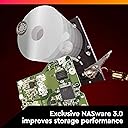
Price purchased £127.07 The drive information on Amazon the drives are described as only tested for NAS with 1-5 drive bays. However, on a support page it clarifies that the Red series are tested for 1-8 bay NAS and there is also a link to a NAS compatibility list [Amazon won't allow this link]. To find it search for "Compatibility list for the WD Red NAS Hard Drive id=9758" in Google without the quote marks. This appears to have been tested for the latest drives with NASWare 3.0 although I have been using 4 mirrored pairs of NASWare 2.0 drives without any issues. In NAS systems with 24x7 operation vibration is a factor in terms of reliability which is why NASWare 2.0 drives were recommended for drive enclosures of no more than 5 drives. NASWare 3.0 drives improved on the ability to manage the effect of vibration on the drives and this is why they increased rated these newer drives for up 8 drives per NAS enclosure. I had the opportunity to purchase the retail drive at the same price as the OEM drive so I was able t compare what you get in comparison to buying the OEM version of the drive. Looking at reviews of the OEM version of this drive there has been some confusion about whether the extra cost is worth it. To clarify what the differences were I rang Western Digital support. They told me that different countries have different warranty periods. Red series drives in the USA have a 12-month warranty and then you pay a little extra to add the extra warranty. I have bought more than 10 of the Red series of various sizes 3TB, 4TB and 6TB OEM. Each of these drives have registered for 3-year warranties. WD support suggested that Amazon sourced their OEM drives from different countries and that about 50% of them would register as OEM and only have 12 month’s warranty. Amazon identifies that the drives only come with a 12-month warranty unless you pay for more, (not an option for the 4TB drive), so if you register one and it only gives you a 12 -month warranty you have no grounds to complain. So in summary spending the extra £14.00 for the retail version gives you the peace of mind of knowing that you definitely have a three-year warranty. It also comes with drive screws and standard retail packaging. The OEM drives generally come with plastic mounts, on either end, to isolate them from damage to the containing boxes. The retail version plastic support mounts are on the side running the full length of the drive see photos. I think whether you purchase this retail version or opt for the OEM version depends on whether you need a set of screws to mount the drive and more importantly whether you are willing to take the risk that you may end up with a drive which only registers a 12-month warranty. I would suggest that buying OEM drives directly from Amazon, as opposed to buying from a Market Place seller, might increase the chance of getting a three-year warranty and a safely packaged drive. In terms of performance these drives run quietly and quickly. They have a variable speed between 5,400-5,900rpm. So these are not the fastest drives, which are the black series, but seem to perform quickly in everyday use for Desktop (Windows 10 & 8.1), and NAS (Network Attached Storage).
C**N
Great NAS drives, ordering one at a time ;-(
Long story short, Amazon for some reason limits the purchases of these drives to 1 per customer, which confuses the hell out of me because NAS drives (the type these are) are designed specifically to be purchased in sets of 2, 4, 5, 8, 10? Why do they have this limit. After talking to customer service about it I was told that I could make additional orders as long as they were outside 7days, so these means to replace my NAS (4 Bay QNAP system) with these drives It will take my 4 weeks to order them. Well at least I can get the drives now, unfortunately the time it took me to work this out caused be to miss a slight reduction (sale $13 ish) on the price. As for the drives, well they are very quiet and replacing the drive (one at a time because of issue above) was a snap. They seem to run substantially cooler than the WD Green drives I was originally using. Many told me not to use them (green) but they've lasted 3 years (3 years UPTIME) with absolutely no issues until a week ago when one of the drives dropped out. Hopefully these new RED drives will give me years of prolonged service. Amazon.ca - please change the maximum order number on these drives.
A**A
Runs a little hotter than desktop grade HDDs
It’s a solid unit, but it needs some extra air flow to keep it cool.
M**O
Excelente para NAS
HD funcionando bem, baixo ruído durante sua operação.
Trustpilot
2 weeks ago
2 days ago