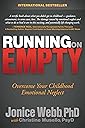
Running on Empty: Overcome Your Childhood Emotional Neglect
Product ID: 8271641
Desertcart purchases this item on your behalf and handles shipping, customs, and support to Seychelles.
This informative guide helps you identify and heal from childhood emotional neglect so you can be more connected and emotionally present in your life. Do you sometimes feel like you’re just going through the motions in life? Do you often act like you’re fine when you secretly feel lonely and disconnected? Perhaps you have a good life and yet somehow it’s not enough to make you happy. Or perhaps you drink too much, eat too much, or risk too much in an attempt to feel something good. If so, you are not alone―and you may be suffering from emotional neglect. A practicing psychologist for more than twenty years, Jonice Webb has successfully treated numerous patients who come to her believing that something is missing inside them. While many self-help books deal with what happened to you as a child, in Running on Empty, Webb addresses the things that may not have happened for you. What goes unsaid―or what cannot be remembered―can have profound consequences that may be affecting you to this day. Running on Empty will help you understand your experiences and give you clear strategies for healing. It also includes a special chapter for mental health professionals. Review: Describes CEN perfectly, but lacks adequate cognitive discussion - This book does an excellent job of describing the adversities, emotions, and common experiences of those who have experienced "childhood emotional neglect" (CEN) or "emotional deprivation." By reading this book you will see what it's like to be someone who has experienced CEN. There is a lot of descriptions of people who have experienced this in their life whom the author has worked with to help them feel better. If you want to understand why you feel so bad about yourself or life, this book will describe the situations you encounter perfectly. If you have a really hard time explaining why you have low self-esteem, depression, feel like a failure, even if you had a good childhood, this will explain your circumstances perfectly. Understand that CEN doesn't mean you were emotionally abused, or verbally berated as a child. It also doesn't mean your need for food, clothing, a warm home, 2 parents loving parents were not met. What CEN is about is people who didn't get the proper emotional guidance and understanding when they were children, therefore they grew up not quite understanding how to deal with their emotions and the adversities in life. The author then explains what I would call a behavioral approach to changing your emotional difficulties. I would recommend buying the ebook and then the audiobook as an add-on. The paper or ebook will have a better description of the charts needed to track your behavior and eventually change it. Finally I'd like to give a critique of how the book and perhaps the method itself leaves out a thorough discussion of what is known in Cognitive Behavior Therapy as "cognitive distortions" or simply negative thinking. I myself, suffer from the symptoms of CEN such as low self-esteem, feelings of emptiness, self directed anger and self-blame, poor self-discipline, difficulty understanding and identifying my own emotions, and even suicidal thoughts. So this book really helped me to articulate many of the feelings and internal experiences that I was having in my adult life, despite being raised in a good family. When I say the book lacks discussion of cognitive distortions, what I mean is that humans all have the ability to think (sometimes neurotically) about our own thinking. I believe many people with CEN may have experienced similar lack of emotional guidance experiences in their life, but that they also lack cognitive guidance and therefore obsess about why they feel bad, with such thoughts as, "I must not be normal because simple situations make me feel so inadequate. If other people have to deal with these feelings and they are ok, then I must be a totally rotten failure. I must be broken in some way and maybe nothing can fix me." We often tremendously blame ourselves for feelings that are actually quite normal given the circumstances. We think of the world as unfair, we put ourselves down as worthless, or think of others as worthless for not helping us or understanding us. We often can't stand the feelings so much that we desperately consider suicide as the only way out. For anyone who reads this book, it will definitely help you identify and articulate some of the feelings and experiences you've had since childhood. But what I think has been very helpful for me in addition to this book, are some of the books by Albert Ellis using Rational Emotive Behavior Therapy. What should be addressed in Dr. Webb's book is how to catch ourselves in distorted thinking patters where we demand that life treat us fair. You don't need more "tough love" from friends or therapists, not that Dr. Webb uses that kind of approach. But what I think all people, but particularly those who can identify with being CEN, should know is that the only thing we can control is our own attitudes and internal philosophy about life. It's important to address this part of your thinking if you have CEN. In conclusion, I really do like this book, and recommend it as it will give you a better understanding of what symptoms you may have previously been unable to explain. Just remember to follow up with addressing your thoughts about those symptoms. Also get the paper or kindle book to go with the audiobook. Review: Changed my life - This book was eye-opening and life changing in terms of recognizing the emotional neglect in several important people around me. It helped make sense of their responses and behaviors that I found troubling or puzzling, and explained how they arrived in their current thought patterns. REALLY boosted my empathy and ability to validate their perceptions now that I understand where they came from. Would 100% recommend everyone read this book. Chances are high there are multiple people around you dying for others to understand them. I've gifted it to several others now. In my opinion, much less critical of parents than "Adult Children of Emotionally Immature Parents" was, which I read after this one. This author does a much better, kinder job explaining what could have happened, and reminds us that we're ALL human and on this spectrum of attachment health/dysfunction somewhere
| Best Sellers Rank | #10,642 in Books ( See Top 100 in Books ) #8 in Abuse Self-Help #51 in Emotional Self Help #176 in Personal Transformation Self-Help |
| Customer Reviews | 4.6 out of 5 stars 5,363 Reviews |
B**L
Describes CEN perfectly, but lacks adequate cognitive discussion
This book does an excellent job of describing the adversities, emotions, and common experiences of those who have experienced "childhood emotional neglect" (CEN) or "emotional deprivation." By reading this book you will see what it's like to be someone who has experienced CEN. There is a lot of descriptions of people who have experienced this in their life whom the author has worked with to help them feel better. If you want to understand why you feel so bad about yourself or life, this book will describe the situations you encounter perfectly. If you have a really hard time explaining why you have low self-esteem, depression, feel like a failure, even if you had a good childhood, this will explain your circumstances perfectly. Understand that CEN doesn't mean you were emotionally abused, or verbally berated as a child. It also doesn't mean your need for food, clothing, a warm home, 2 parents loving parents were not met. What CEN is about is people who didn't get the proper emotional guidance and understanding when they were children, therefore they grew up not quite understanding how to deal with their emotions and the adversities in life. The author then explains what I would call a behavioral approach to changing your emotional difficulties. I would recommend buying the ebook and then the audiobook as an add-on. The paper or ebook will have a better description of the charts needed to track your behavior and eventually change it. Finally I'd like to give a critique of how the book and perhaps the method itself leaves out a thorough discussion of what is known in Cognitive Behavior Therapy as "cognitive distortions" or simply negative thinking. I myself, suffer from the symptoms of CEN such as low self-esteem, feelings of emptiness, self directed anger and self-blame, poor self-discipline, difficulty understanding and identifying my own emotions, and even suicidal thoughts. So this book really helped me to articulate many of the feelings and internal experiences that I was having in my adult life, despite being raised in a good family. When I say the book lacks discussion of cognitive distortions, what I mean is that humans all have the ability to think (sometimes neurotically) about our own thinking. I believe many people with CEN may have experienced similar lack of emotional guidance experiences in their life, but that they also lack cognitive guidance and therefore obsess about why they feel bad, with such thoughts as, "I must not be normal because simple situations make me feel so inadequate. If other people have to deal with these feelings and they are ok, then I must be a totally rotten failure. I must be broken in some way and maybe nothing can fix me." We often tremendously blame ourselves for feelings that are actually quite normal given the circumstances. We think of the world as unfair, we put ourselves down as worthless, or think of others as worthless for not helping us or understanding us. We often can't stand the feelings so much that we desperately consider suicide as the only way out. For anyone who reads this book, it will definitely help you identify and articulate some of the feelings and experiences you've had since childhood. But what I think has been very helpful for me in addition to this book, are some of the books by Albert Ellis using Rational Emotive Behavior Therapy. What should be addressed in Dr. Webb's book is how to catch ourselves in distorted thinking patters where we demand that life treat us fair. You don't need more "tough love" from friends or therapists, not that Dr. Webb uses that kind of approach. But what I think all people, but particularly those who can identify with being CEN, should know is that the only thing we can control is our own attitudes and internal philosophy about life. It's important to address this part of your thinking if you have CEN. In conclusion, I really do like this book, and recommend it as it will give you a better understanding of what symptoms you may have previously been unable to explain. Just remember to follow up with addressing your thoughts about those symptoms. Also get the paper or kindle book to go with the audiobook.
J**E
Changed my life
This book was eye-opening and life changing in terms of recognizing the emotional neglect in several important people around me. It helped make sense of their responses and behaviors that I found troubling or puzzling, and explained how they arrived in their current thought patterns. REALLY boosted my empathy and ability to validate their perceptions now that I understand where they came from. Would 100% recommend everyone read this book. Chances are high there are multiple people around you dying for others to understand them. I've gifted it to several others now. In my opinion, much less critical of parents than "Adult Children of Emotionally Immature Parents" was, which I read after this one. This author does a much better, kinder job explaining what could have happened, and reminds us that we're ALL human and on this spectrum of attachment health/dysfunction somewhere
K**2
A Very Good Tool for Personal Awareness
This is a solid, well researched, and insightful book into the phenomenon of childhood emotional neglect. Although I found it quite useful as a diagnostic tool, I am not sure if it points the way clearly enough to recovery. Yes, there is much discussion of the role of the therapist and tools that can be used, but no actual case history is presented where these tools were shown to be effective, at least not in the detailed way that the presenting problem cases were explored. A “B” from me; well written and engaging, but lacking in spiritual depth and positive stories of recovery.
A**R
Great book
Best self help book I've ever read. Well written and valuable information
L**Y
Couldn’t put it down!
Wow! This book was incredibly eye-opening and provided so much insight into childhood emotional neglect! I always knew I was missing something in my adult life but I could never really put it into words. The author didn’t leave one stone unturned: from the different types of neglectful parenting styles, the long term effects on the emotionally neglected child in their own adult life, the skills to repair the damage and the final pages explaining how to break the cycle to prevent the same from happening to our own children, it was all written so thoroughly in very easy-to-understand dialogue. I truly believe the lessons and tools I’m taking from this book will serve me well moving forward and provide more satisfaction and meaning to my own life. I’m looking forward to reading the author’s follow-up book, “Running on Empty No More” next. Highly, HIGHLY recommend!
S**.
good quality
Great item, just as described. Great transaction!
L**E
Not ADHD friendly
The book has good intentions and I applaud the effort in pinpointing emotional neglect. However, the discussion is very surface level. The best part of the book is the self-check list, the coining of "fatal flaw", and the Robyn story. The Robyn story is heartbreaking but it resonates so much with me. I know that the author did her best but there's no way she could ever truly understand the emptiness we feel inside. She still caters to the parents who insist that they have the best intentions. She never asked the parents to seek inside, how come I never thought to treat my kid like a human being with independent thoughts? The worst part of the book is describing an William with OBVIOUSLY ADHD struggles and contributes them to the parents' failure to teach him "ability to tolerate boredom, to structure himself, and to preserve". If you grow up with an ADHD parent, and you have ADHD genes yourself, this is NOT something you can overcome by your parents "trying harder to parent" although emotional attunement always helps. You need AWARENESS and RECOGNITION to accept that those are SYMPTOMS OF ADHD, and the parents to teach you to ACCEPT and WORK WITH them, instead of trying to force yourself into the social norms. Neurodivergent people are never going to be understood properly if neurotypical mental health specialists keep pushing this idea that ADHD struggles are just parental failure.
N**.
it was like the author knew my family
I read this book 4 days ago and already its completely changed my life. I have been trying to figure out for decades now why, despite success in many areas of my life and seemingly solid family of origin, I have always had anxiety and trouble with relationships and connecting with other people. My kids seem to be inheriting this, and since my older child was diagnosed with depression and anxiety a few years ago, I've always had this suspicion that its at least partly my fault, or that something I was doing was causing this. I've had trouble connecting with my kids and being that loving family everyone else seems to have, but for the life of me i couldn't figure out how to fix it. I read tons of parenting books, all would help a bit, but none really got to the root of the issue. Finally I googled "am I causing child's anxiety" and it led me to an article referencing this book. I downloaded the book and immediately recognized myself and my family of origin in this book...wow. It was intense. But spot on. Page after page after page, it was like the author knew my family, watched my childhood, and now was predicting how I was repeating this pattern with my own kids. I wasn't giving my kids the emotional support they desperately needed because i had not received it myself and had no idea what I didn't know. But all is not lost, as the author provides guidance on fixing this. And it all makes so much sense. I read the book in one night and started implementing the tools right away, and the results were immediate and drastic. My tween daughter and I had a lengthy conversation about what's been going on in her life, and just by doing what the author suggests - identify, accept, attribute, act - she poured her heart out to me for 2 straight hours, at least twice saying "I've never told anybody this..." Wow. Just wow. The next day, I continued to do this. I thought it would be difficult, but its not, its easy, and very quickly started to come naturally. My younger child also started talking more openly to me. We're having great dinner conversation. The kids haven't been fighting, and when they do instead of yelling or getting mad at them for bickering, I'm approaching it from the perspective of IAAA, and the fights have fizzled immediately on their own! Its like magic. I am so thankful to the author. My only regret was not having read this 20 years ago!!!
J**D
Enlightening.
This book truly opened my eyes. I’ve read many books on personal psychology, but this is definitely one of the most essential ones. I’ve already started applying some of the techniques and I can see small but real improvements. I just wish there were more insights on how to continue the journey afterward.
D**Z
Excelente libro
Con un lenguaje fácil de entender y con muchos ejemplos
~**~
and I'm happy that I did
Very quick read that lets you consider many personal scenarios of childhood neglect. I read this in a time of personal crisis, and I'm happy that I did. Firstly, the scenarios in the book helped me validate my own emotions as natural, learned reactant behaviours to my own childhood events. Secondly, the book acted as a source of inspiration towards critically thinking about my day to day wellbeing. I found the exercises contained in the latter half of the book extremely helpful. Print them out and keep them in a personal binder. While I am awful at establishing patterns or routines in my daily life, I found that being able to follow the book's suggested exercises for even a couple of days in a row allowed me to reframe my daily issues and my reactions to them. I'm not saying this book is snake oil; of course it's what you can make of it, and it is by no means an academic text. However, if you do believe that childhood neglect played a crucial role in your current day-to-day wellbeing and you're unable to access dedicated counselling services due to whatever reason, this book is here for you.
E**E
As described
As described
O**Y
This book made so much sense, wish I had found it 20 years ago
For an emotionally neglected person struggling to find place in this world this is a must read. It picked up on so many of my own problematic behaviors which I kinda knew were there but didn't pay attention to, gave me insight on them and simple tools how to try gently correct them. It also made me realize that what I thought had been going on with my parent(s), was wrong and they were in fact described in a whole another section to a T. Just being aware of that, how you neglect yourself cause you never learnt better and how things should have been instead, already has a tremendous effect on how you try to move forward from there. It makes me less guarded and more open to understand, myself and others. It also makes me very aware how emotional neglect shows up in other people close to me, how they shut down, get defensive and don't know how to express themselves properly. Lot of things in the book might be "common sense" to a healthy person, but some of us, who never had that sensible model from the get go, _need_ to hear and learn these like they were a child again; how to be a human. Book is very easy read and has a good suggestion list of books on how to continue on your journey after this and depending your own situation - several which I already ordered.
Trustpilot
3 weeks ago
2 weeks ago