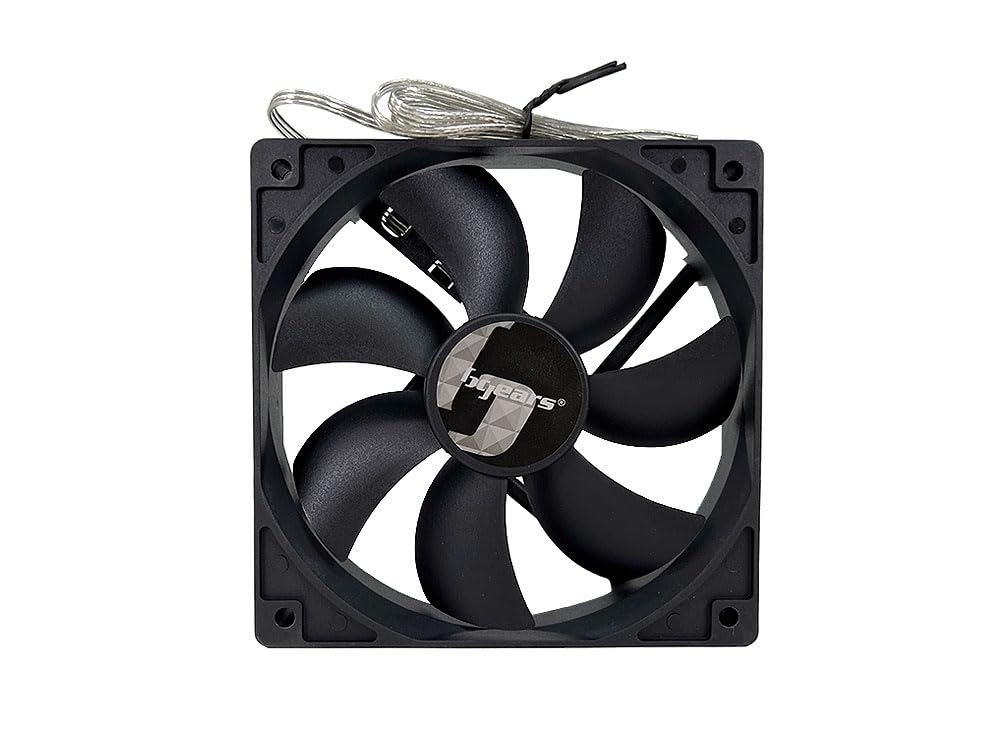
💨 Blast your build with unstoppable airflow!
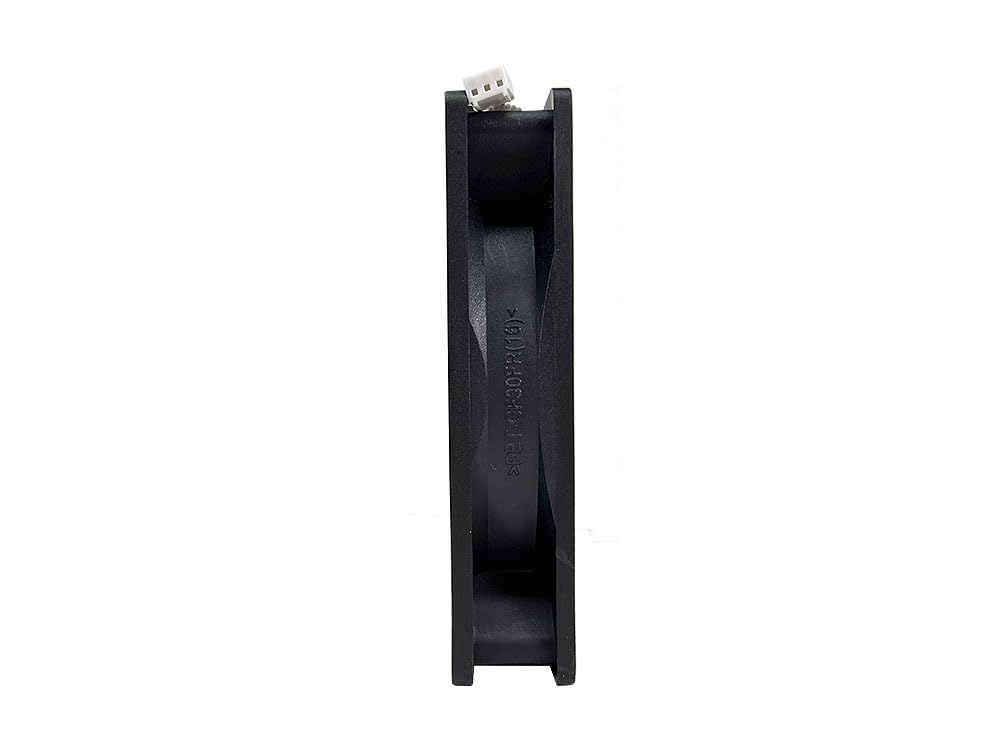
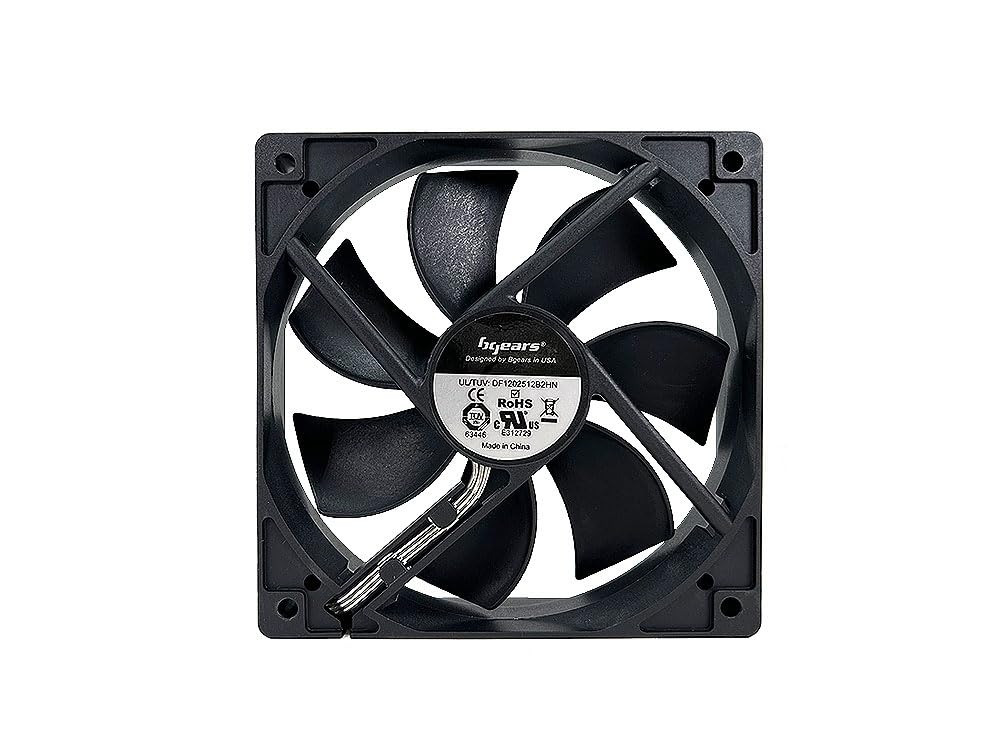
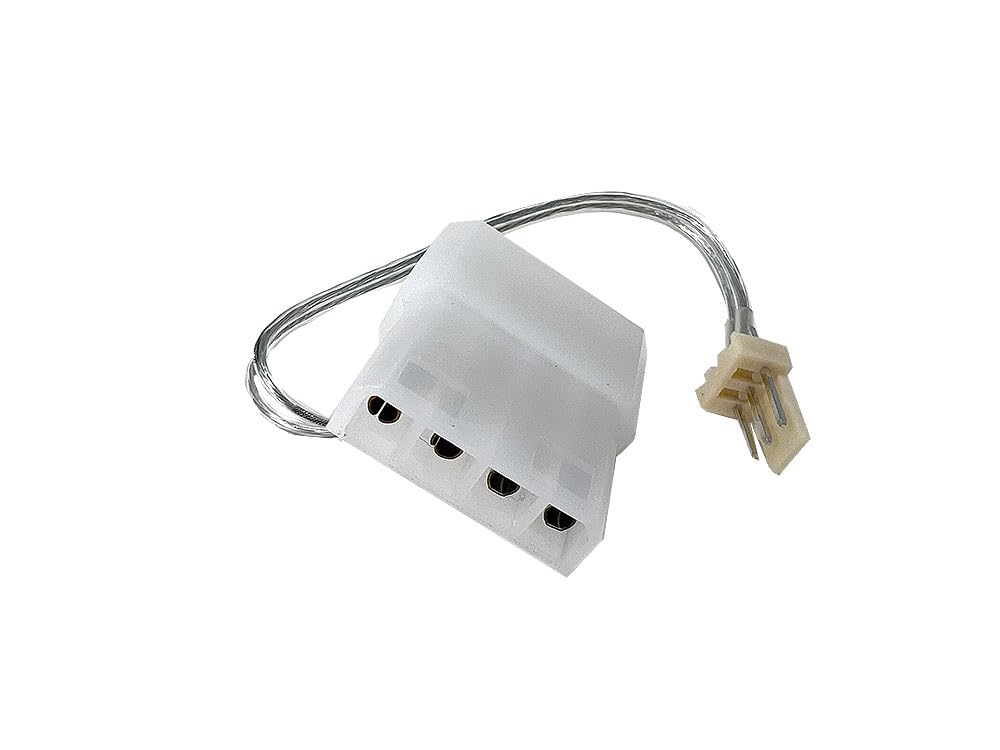
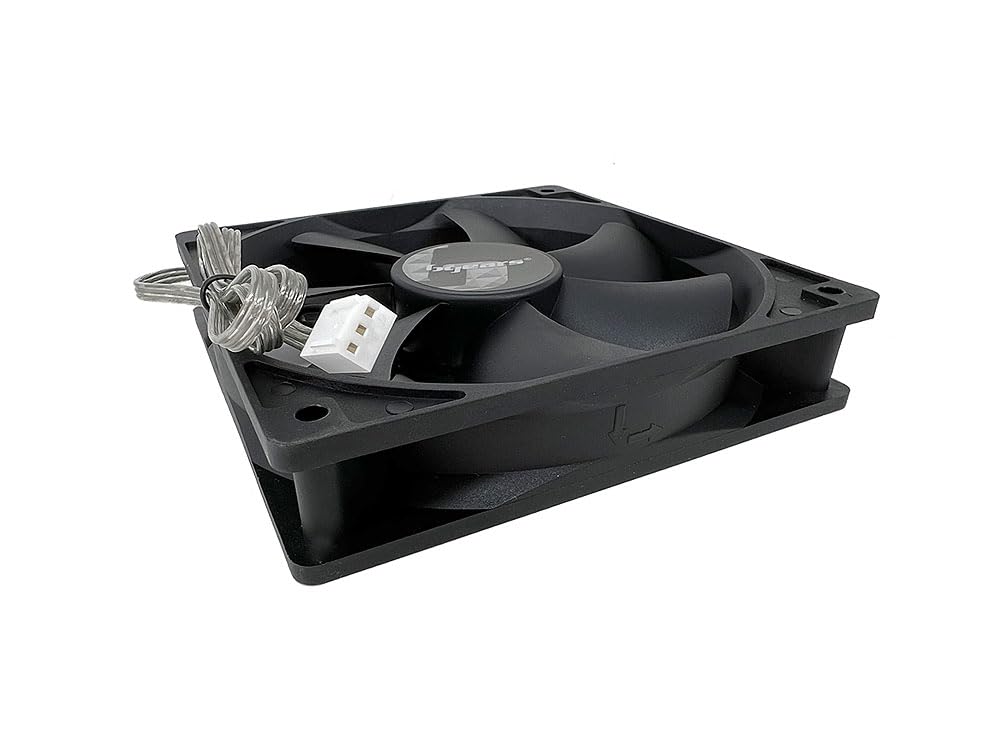
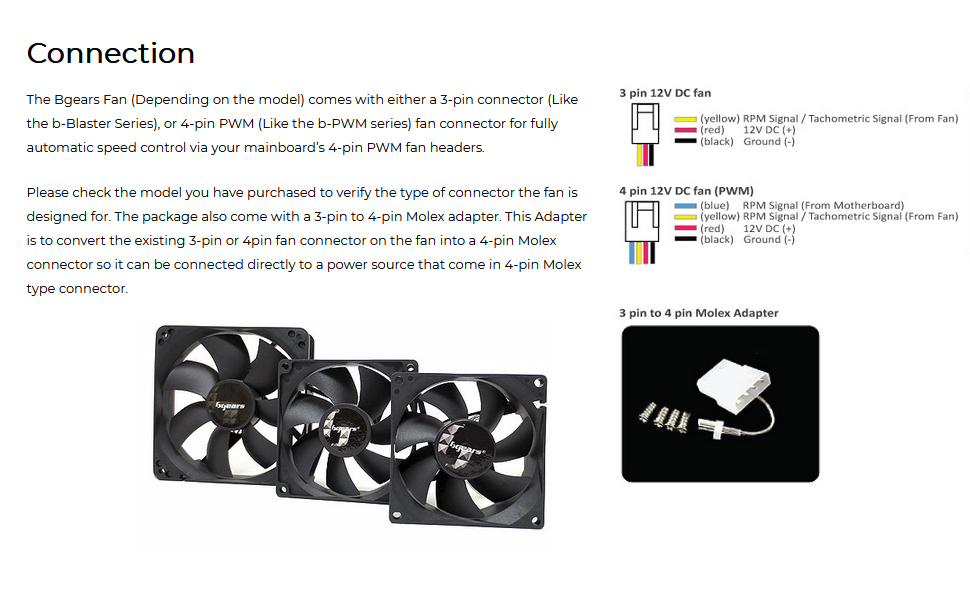
The Bgears b-Blaster 120mm fan combines a high-speed 2000 RPM motor with dual ball bearings for extended durability and quiet operation. Designed for PC cases, power supplies, and CPU heat sinks, it delivers up to 103 CFM of airflow through a 3-pin connector with included Molex adapter, ensuring easy installation and efficient cooling performance.



| Product Dimensions | 4.72"L x 0.98"W x 4.72"H |
| Brand | Bgears |
| Power Connector Type | 3-Pin |
| Voltage | 12 Volts |
| Wattage | 3.84 watts |
| Cooling Method | Fan |
| Compatible Devices | Desktop |
| Noise Level | 35 dB |
| Material | Plastic |
| Maximum Rotational Speed | 2000 RPM |
| Item model number | b-Blaster 120mm 2 ball |
| Item Weight | 0.01 ounces |
| Item Dimensions LxWxH | 8 x 5.75 x 1.5 inches |
| Color | Black |
| Manufacturer | Bgears |
| ASIN | B0043GKY1W |
| Country of Origin | China |
| Is Discontinued By Manufacturer | No |
| Date First Available | September 17, 2010 |
O**M
Bgears Blasts one out of the park with these Fan-tastic Air-Movers!
I have been researching, planning, and buying parts for my new "My Ultimate Machine" since January of this year, about 8 months ago (bought first round of parts at the end of May). I am a student in a field that deals with a well-above-average amount of physics, and I have been involved in modifying and racing/tracking BMW's (autocross and road course) for about 7 years now, which has taught me an IMMENSE amount about cooling systems, efficiency, proper design, and so forth.Anyway, I decided at the last minute to switch from a 3770K + Z77 board (tired of waiting for Maximus V Extreme) to the much more powerful, overclock-friendly 3930K and Rampage IV Extreme X79. This did, however, necessitate finding a different case as the budget for these two parts went up by $400 and thus the CaseLabs TH10 would have to wait. I found the NZXT Switch 810, and fell in love. A big part of this build is the water cooling system (custom, not the sealed unit "liquid coolers" that are nothing more than "high end" air coolers). After seeing the GTX670's performance, I was able to save 25% compared to buying a GTX680 while retaining 93-98% of the 680's performance, and with the EVGA GTX670 FTW I am able to use full-coverage 680 blocks, important to me personally.I did tons of reading on liquid cooling, and even with my background it was pretty much all new to me (cooling a 200F+ car is much different than cooling a computer).I decided that I had to take advantage of the space offered by the Switch 810, which I got in white and is an absolutely incredible computer case BTW. That meant using one of the 3x140 (aka 420) rads up top instead of the far-more-common 3x120 (360) models, as the extra surface area of 3 140mm fans compared to 120mm fans is significant; in fact, a 3x140mm radiator actually has about 5,400sq-mm more surface area than a 4x120mm radiator!The problem was, there was no way I could fit a 60mm thick rad in there with push-pull fans due to the 8+4pin EPS (CPU Power) connections, the VRM/MOSFET heatsink, etc. That meant instead of going with a thick radiator with a medium-low fin count of 9-12 fins per inch, I would need to find a thinner radiator that somehow was able to compete with the thicker models. Typically, how they manage this is by increasing the fin density to around 20fpi but a couple have an insane 30fpi, requiring a tornado of a fan (think 3800-5400rpm 120x38mm industrial fans) setup to reach their potential. As I do not wish to sit next to a VTOL Case, I did some more digging...I found the XSPC EX420 radiator, only 36.5mm thick, and was designed specifically to provide a thin radiator with performance that meets or exceeds thicker radiators at most fan speeds, although below 1000-1200rpm the thicker rads tend to perform a bit better. The reason this rad performs so well is that while it uses a moderate-high fin density of 19fpi, it is unique in that measuring the fins linearly does not provide the whole picture at all... Unlike any other rad that I have ever seen, the EX-series use split-fins, so in the same space that any other rad would have 19 fins, the EX has 38; yet because the way they did this was to add twice as many rows of fins rather than twice as many fins per row, the EX is absolutely the best-scaling radiator I have used in terms of performance:fan speed. Once you get above 1500rpm, the EX pulls away from the pack, and at this point is outperforming almost all thick rads (Alphacool NeXXos UT60 is an exception, as it is tied with the EX for best-radiator IMHO). This performance continues to scale linearly to 3,000rpm and likely well-beyond, although it has not been tested at speeds higher.Also, I got an Alphacool NeXXos UT60 240 (2x120) all-copper radiator for the bottom of the case, which has 4x 120x25mm Koolance 2800rpm fans in push pull.So, after deciding on the radiator (EX420), I had to find some fans that would be able to eek as much performance as possible out of it, as 140mm fans are generally designed to move significant air (~55-75cfm) but do so as quietly as possible; thus, most 140 fans are ~900-1400rpm in speed. Another issue is static pressure, as a strong 120x25mm fan (such as the aforementioned Koolance ones) can push 5.4mmHg pressure, although that is actually extraordinarily high with most "performance fans" being somewhere between 2.2 and 3.7mmHg (120x38mm fans increase static pressure around 40-70% over their 25mm-thick brethren, assuming they are otherwise equivalent).Also, I was faced with the issue of finding a fan that operated, and was reliable, while operating in a position blowing air "upward"; this is a position that sleeve-bearing fans, rifle-bearing fans, Hydrodynamic Bearing fans, and the like all face.THEN I FOUND THE BGEARS BLASTERS 140MM FANS!!!!I am NOT exaggerating when I say that these are by far the most powerful 140mm fans I have ever used (excluding the $75-200 server-grade 140x25/38mm fans).PROS:+ Absolutely the best price:performance ratio I've seen in a LONG TIME!!! Why pay $20-30 for an inferior fan???+ 103 cubic-feet-per-minute of airflow is accurate, and this fan blows significantly more air than any other 140mm fan out there, although the Akasa Viper does come close+ 3.5mmHg Static Pressure is the ABSOLUTE HIGHEST for a consumer 140mm fan, period! If you are using 140mm radiators or heatsinks, these are ideal+ Dual-Ball-Bearing Motor means it functions perfectly in any position, including horizontal mounting+ Used in a push-pull setup on an EX420, they drop the DeltaT of the loop from 6.2C to 4.3C compared to push-pull Cougar fans+ Used in just a "push" setup on the same radiator, they still maintain a better delta t than any setup of Cougar, Noctua, Scythe, Noiseblocker fans+ Incredibly quiet at 80% fan speed, only becomes "loud" above 80-85% but even then, they aren't obnoxiously loud or anything like that, you will simply know they are there+ BALL BEARINGS+ THE BEST 140mm fan you can get for use on ANY 140 rad!!!CONS:- NOT FOR SILENT PC USERS- You really should get a fan controller- Some people have had noise issues- It doesn't make me a sandwich :(Seriously, though, there aren't really any negatives if you know what you're doing. Use a rubber gasket or 7mm Phobya rubber shroud between the fan and rad/case, use rubber washers on the screw to decouple the fan, and USE A FAN CONTROLLER! If I have to tell you these things, you probably aren't ideal for a liquid cooling system...10/10 stars!!!
W**N
Better than "sleeve" bearings, should last much longer without seizing up
I was tired of replacing the case fans in my computer (built in 2014 from parts purchased on Amazon). The last case fans I installed used what was called "Twister bearings" which was one company's take on sleeve bearings (lubricated shaft in a collar with seals to hold the lubricant). Invariably, the sleeve-bearings always dry out over time, causing squealing and eventually reduced RPM and cooling effect. For that reason, I bought these ball-bearing fans as replacements. They do sound a bit like turbo-prop engines but they shouldn't have as big an issue of drying out, since there are ball-bearing units on both ends of the shaft.
G**N
Newer b-Blaster 140mm fans move more air for my powered attic vents.
16 b-Blasters quietly and automatically cool my attic on hot days. I bought 14 of the newer b-Blaster fans and installed them with 2 older versions in squares of 4 fans within 4 12" x 12" x 10" register duct adapters. On the roof are 4 Lowes Weatherwood Aluminum Slant-Back Roof Louver passive vents, which have a 9" round chimney within them. The Home Depot 12 in. x 12 in. to 10 in. Ceiling Register Boxes need a 10" hole in the roof, but that works well with the vents. Be sure to buy 4 of the Coolerguys 3 pin fan (1 to 4) Splitters directly from the Coolerguys website. The 3-conductor fan connectors plug right into the splitters, and the common wire of the splitter has red and black colored wires, making it easy to keep correct polarity. I cut the yellow speed sensing wire short because it was not needed. The white boards are 1/4" PVC "foam board" cut into 12" x 12" squares that I picked up from the ePlastics scrap bin here in San Diego. I bought a $23 1/4" (6mm) router on Amazon.com to cut the 67mm diameter holes. The foam board is easy to work with and is perfect for this application.By the way, b-Blaster fans have a diode built in that blocks any attempt to power the fan in reverse. So if you find that your fan is not turning, try reversing polarity to see if that solves the problem. Amazon sells both an attic fan thermostat, as well as automotive radiator fan thermostats that will automatically turn on the fans when the attic reaches the temperature you set, and then turn off the fans once the attic has cooled below that same temperature.3 of the powered vent fan squares have all new 140mm b-Blaster fans and blow a lot of air. When I tested the last square which has 2 of the older b-Blaster and 2 of the newer ones, it was obvious that the 2 newer fans moved more air and made a little more noise, as a result. However, with all of the fan squares running in the attic, I cannot hear them at all either inside or outside the house. I have to open the attic access to tell if they are running, and even then they are quieter than the other ambient sound level.A 12 volt solar power system with 4 Lifeline AGM batteries powers the fans, and a number of other things in the house, like my Ham radio station and Wifi WAP. With all 16 fans running, the power draw is just over 4 Amps at 12.5 volts, so it would be possible to power them with a 5 Amp 12 VDC power supply, available on Amazon.com.What led me to buy the Bgears b-Blaster 140mm fans was another user's review in which he stated that ball bearings were better than sleeve or hybrid bearings for horizontally-mounted fans, and my fans are mounted in a mostly horizontal attitude under the roof. The 2 original b-Blaster fans have been running for nearly 3 years in the attic as a proof of concept, and they are still running today.
Trustpilot
1 week ago
2 days ago