
DOWNLOAD THE APP


Customer Services
Copyright © 2025 Desertcart Holdings Limited
DOWNLOAD THE APP
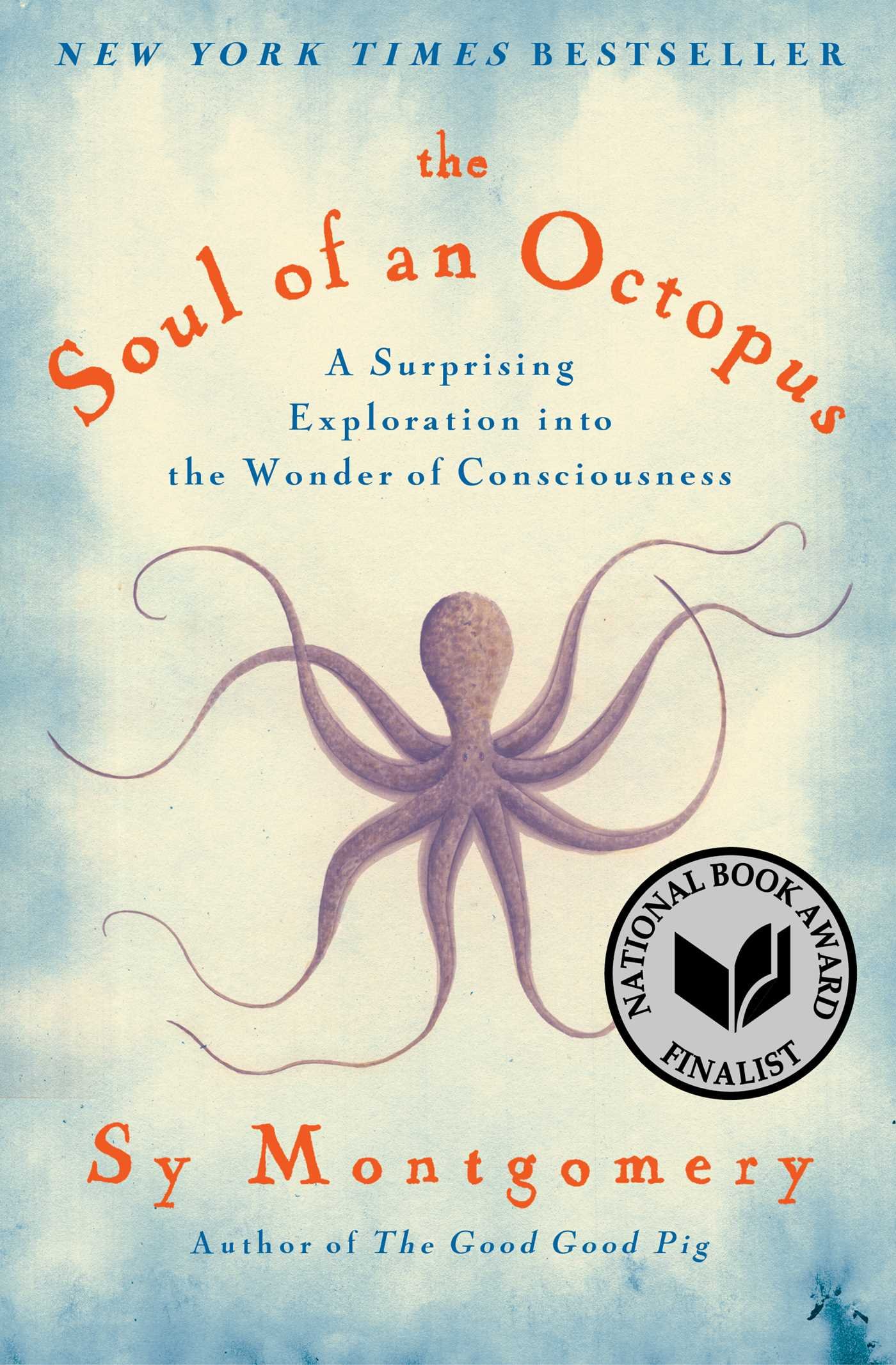
Buy The Soul of an Octopus: A Surprising Exploration into the Wonder of Consciousness on desertcart.com ✓ FREE SHIPPING on qualified orders Review: FASCINATING AND WARM AS WELL AS ENLIGHTENING - MONTGOMERY, Sy. The Soul of an Octopus. Atria. 2015. 261p, illus., bibliog., index. WILLIAMS, Wendy. Kraken: The Curious, Exciting, and Slightly Disturbing Science of Squid. Abrams Image. 2011. 224p, illus., bibliog., index. These two books are about cephalopods –octopuses (not “octopi,” the word comes from Greek, not Latin) and squid. Both books are well written and copiously illustrated (photographs and drawings) but what makes them such fascinating reading is the creatures they are about. Octopuses and squid offer us our only examples of what intelligence and feeling could be like outside of the vertebrate family. University of Chicago neuroscientist Cliff Ragsdale comments: “Short of Martians showing up and offering themselves up to science, cephalopods are the only example outside of vertebrates of how to build a complex, clever brain.” Alexa, who works with octopuses as a volunteer, says: “There’s nothing as peculiar as an octopus.” (Both quoted in Montgomery) There is ample evidence of octopus intelligence. There is general agreement that they are among the smartest animals on earth. But it’s not our kind of intelligence, not even close although there enough points of similarity to convince observers they are reasoning and feeling. To start with, their brains are organized differently, distributed in parts spread across a central brain and eight tentacles rather than consolidated in one central spot like ours is. Furthermore, whatever they think and feel, their actions are so different from ours that in many cases, we don’t have a clue why they react like they do. Octopuses in captivity, even in the wild, respond differently to different people. With some they’re comfortable, even friendly, with others hostile or defensive. We know from this and from their puzzle-solving ability --they are master locksmiths, for instance, who can get though up to three sealed containers to reach the food within-- that they make inferences and remember what they’ve learned. They get bored, need to keep active. Bored octopuses held captive in tanks get in trouble, much like bored Border collies moping around a house get in trouble, but where the collie will likely chew up rugs and furniture, the octopus will try to escape, maybe migrate to a neighboring tank to eat the creatures inside it. Octopuses in captivity beg for food, appearing in the same part of the tank and adopting the same posture whenever food-bearers arrive. We can read their emotions in broad strokes: red, angry or excited: white, calm or indifferent. The books are written by seasoned science reporters. This is Montgomery’s ninth natural science book for adult readers and her twenty-first in all. For Williams, it’s her seventh. Both writers have won awards for science reporting. Montgomery’s is the warmer book, as she details her personal interactions with four octopuses in succession: gentle, friendly Athena; playful, inquiring Octavia; the more fiery Kali; and Karma. These are fascinating and informative books about a creature that’s like us in some respects but alien in most, an animal that sees and weighs us just as do it. Montgomery’s especially is about what it means to respect and love a creature without expecting it to become like us. Review: My friend, the octopus - I have every confidence that author Sy Montgomery will be impressed to see a review of her book, "The Soul of an Octopus," begin with a hockey reference. Yes, hockey. At some point in Detroit's hockey history, someone had the bright idea to throw an octopus on the ice at the start of the Stanley Cup playoffs. Apparently the connection was that it took eight wins to earn the championship at that point in National Hockey League history, and an octopus had eight legs. It takes 16 wins to win the Stanley Cup now, but the tradition continues in Detroit. You can count on the fish stores being raided for octopuses before the game. Before reading this book, I thought of this tradition as something resembling harmless fun - part of Detroit's rich hockey heritage. Now, having read Montgomery's latest effort, I'm much more likely to be upset that such a noble, interesting creature is sacrificed in such a demeaning manner. Such is the effect of "The Soul of an Octopus," a frequently fascinating story about one of our friends from the sea. Most of this book centers on Montgomery's quest to get to know octopuses (and no, it's not octopi) better. Toward that goal, she frequently drove 2.5 hours from central, rural New Hampshire to Boston once a week (and 2.5 hours back) to an aquarium, where the caretakers let her get up close and personal with these creatures best known for having eight arms. After a while, Montgomery finds out just how complex these creatures can be. An octopus, it turns out, can solve simple puzzles. Enthusiastically greet people. Be bored. Love to play. Have a memory. This is one (relatively) smart mollusk. Who knew? And we have no idea just how clever an octopus really is, as we scratch the surface of the subject. The co-stars of the story are those who work at the New England Aquarium in Boston. They come across here as kind and loving individuals when it comes to the facility's 'residents." When something goes wrong for whatever reason, they seem to take it personally. The book has the odd story of someone coming in at 3 in the morning when an overnight staffer notices a problem. The level of dedication is impressive. Speaking of dedication, Montgomery herself went to great lengths in order to gain first-hand knowledge about the subject. This is someone who flew to Seattle, just to watch a couple of octopuses have sex. She also took up scuba diving, just so that she could go underwater in places like the coast of Mexico to take a look at octopuses in their natural habitat. The author did plenty of homework for this book, as the research shows up on every page. Her enthusiasm for the subject certainly comes across as well. The starring octopuses here aren't just creatures of the deep - they became her friends. One other point - there are a few scientific terms thrown about here, if that's a concern. But while you might feel the need once in a while to grab a dictionary, the jargon generally isn't intimidating - even for someone who is more familiar with hockey terms than scientific phrases. (Guilty.) Science can be difficult for many people to grasp, and Montgomery has a nice way of mixing first-person experiences with other information to make her books reader-friendly. "The Soul of an Octopus" follows that tradition well. You'll want to use all of your arms to wrap yourself around it.


| Best Sellers Rank | #9,270 in Books ( See Top 100 in Books ) #1 in Marine Life #1 in Invertebrates Zoology #1 in Marine Biology (Books) |
| Customer Reviews | 4.6 4.6 out of 5 stars (10,761) |
| Dimensions | 5.5 x 0.68 x 8.38 inches |
| Edition | Reprint |
| ISBN-10 | 1451697724 |
| ISBN-13 | 978-1451697728 |
| Item Weight | 8.8 ounces |
| Language | English |
| Print length | 272 pages |
| Publication date | April 5, 2016 |
| Publisher | Washington Square Press |
D**R
FASCINATING AND WARM AS WELL AS ENLIGHTENING
MONTGOMERY, Sy. The Soul of an Octopus. Atria. 2015. 261p, illus., bibliog., index. WILLIAMS, Wendy. Kraken: The Curious, Exciting, and Slightly Disturbing Science of Squid. Abrams Image. 2011. 224p, illus., bibliog., index. These two books are about cephalopods –octopuses (not “octopi,” the word comes from Greek, not Latin) and squid. Both books are well written and copiously illustrated (photographs and drawings) but what makes them such fascinating reading is the creatures they are about. Octopuses and squid offer us our only examples of what intelligence and feeling could be like outside of the vertebrate family. University of Chicago neuroscientist Cliff Ragsdale comments: “Short of Martians showing up and offering themselves up to science, cephalopods are the only example outside of vertebrates of how to build a complex, clever brain.” Alexa, who works with octopuses as a volunteer, says: “There’s nothing as peculiar as an octopus.” (Both quoted in Montgomery) There is ample evidence of octopus intelligence. There is general agreement that they are among the smartest animals on earth. But it’s not our kind of intelligence, not even close although there enough points of similarity to convince observers they are reasoning and feeling. To start with, their brains are organized differently, distributed in parts spread across a central brain and eight tentacles rather than consolidated in one central spot like ours is. Furthermore, whatever they think and feel, their actions are so different from ours that in many cases, we don’t have a clue why they react like they do. Octopuses in captivity, even in the wild, respond differently to different people. With some they’re comfortable, even friendly, with others hostile or defensive. We know from this and from their puzzle-solving ability --they are master locksmiths, for instance, who can get though up to three sealed containers to reach the food within-- that they make inferences and remember what they’ve learned. They get bored, need to keep active. Bored octopuses held captive in tanks get in trouble, much like bored Border collies moping around a house get in trouble, but where the collie will likely chew up rugs and furniture, the octopus will try to escape, maybe migrate to a neighboring tank to eat the creatures inside it. Octopuses in captivity beg for food, appearing in the same part of the tank and adopting the same posture whenever food-bearers arrive. We can read their emotions in broad strokes: red, angry or excited: white, calm or indifferent. The books are written by seasoned science reporters. This is Montgomery’s ninth natural science book for adult readers and her twenty-first in all. For Williams, it’s her seventh. Both writers have won awards for science reporting. Montgomery’s is the warmer book, as she details her personal interactions with four octopuses in succession: gentle, friendly Athena; playful, inquiring Octavia; the more fiery Kali; and Karma. These are fascinating and informative books about a creature that’s like us in some respects but alien in most, an animal that sees and weighs us just as do it. Montgomery’s especially is about what it means to respect and love a creature without expecting it to become like us.
W**B
My friend, the octopus
I have every confidence that author Sy Montgomery will be impressed to see a review of her book, "The Soul of an Octopus," begin with a hockey reference. Yes, hockey. At some point in Detroit's hockey history, someone had the bright idea to throw an octopus on the ice at the start of the Stanley Cup playoffs. Apparently the connection was that it took eight wins to earn the championship at that point in National Hockey League history, and an octopus had eight legs. It takes 16 wins to win the Stanley Cup now, but the tradition continues in Detroit. You can count on the fish stores being raided for octopuses before the game. Before reading this book, I thought of this tradition as something resembling harmless fun - part of Detroit's rich hockey heritage. Now, having read Montgomery's latest effort, I'm much more likely to be upset that such a noble, interesting creature is sacrificed in such a demeaning manner. Such is the effect of "The Soul of an Octopus," a frequently fascinating story about one of our friends from the sea. Most of this book centers on Montgomery's quest to get to know octopuses (and no, it's not octopi) better. Toward that goal, she frequently drove 2.5 hours from central, rural New Hampshire to Boston once a week (and 2.5 hours back) to an aquarium, where the caretakers let her get up close and personal with these creatures best known for having eight arms. After a while, Montgomery finds out just how complex these creatures can be. An octopus, it turns out, can solve simple puzzles. Enthusiastically greet people. Be bored. Love to play. Have a memory. This is one (relatively) smart mollusk. Who knew? And we have no idea just how clever an octopus really is, as we scratch the surface of the subject. The co-stars of the story are those who work at the New England Aquarium in Boston. They come across here as kind and loving individuals when it comes to the facility's 'residents." When something goes wrong for whatever reason, they seem to take it personally. The book has the odd story of someone coming in at 3 in the morning when an overnight staffer notices a problem. The level of dedication is impressive. Speaking of dedication, Montgomery herself went to great lengths in order to gain first-hand knowledge about the subject. This is someone who flew to Seattle, just to watch a couple of octopuses have sex. She also took up scuba diving, just so that she could go underwater in places like the coast of Mexico to take a look at octopuses in their natural habitat. The author did plenty of homework for this book, as the research shows up on every page. Her enthusiasm for the subject certainly comes across as well. The starring octopuses here aren't just creatures of the deep - they became her friends. One other point - there are a few scientific terms thrown about here, if that's a concern. But while you might feel the need once in a while to grab a dictionary, the jargon generally isn't intimidating - even for someone who is more familiar with hockey terms than scientific phrases. (Guilty.) Science can be difficult for many people to grasp, and Montgomery has a nice way of mixing first-person experiences with other information to make her books reader-friendly. "The Soul of an Octopus" follows that tradition well. You'll want to use all of your arms to wrap yourself around it.
G**L
Fascinante!!
J**O
What a charming tale by a sympathetic biologist about wonderful animals with a soul: three hearts, nine brains, and a vocabulary of mood expression through a spectrum of changing colours. You will oookk differently at animals after this: and want to see an octopus at close range, with hands on (Their suckers leave love hickies when pleased by your taste and mood.
B**N
One of my favourite books! To experience the thoughts and life of another. An in-depth look, scientifically & emotionally of what great writing can produce.
B**S
Really enjoyed this read. It was a writer’s recommendation Sheby Van pelt book “Remarkably smart creatures” which was a lovely read & has gives you a wonderful insight to how super clever an octopus 🐙 is. Follow up with the document my octopus teacher all very interesting & funny.
K**.
Fantastic insights and a lovely personal story.
Trustpilot
3 days ago
2 weeks ago