

Desert Online General Trading LLC
Dubai, United Arab Emirates
Desert Online General Trading LLC
Dubai, United Arab Emirates

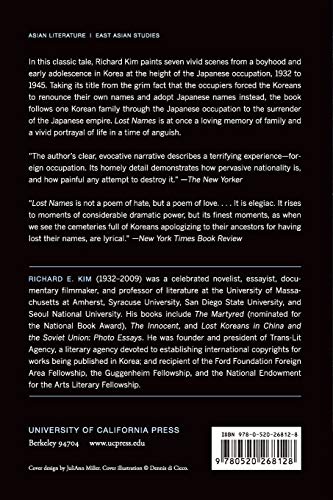
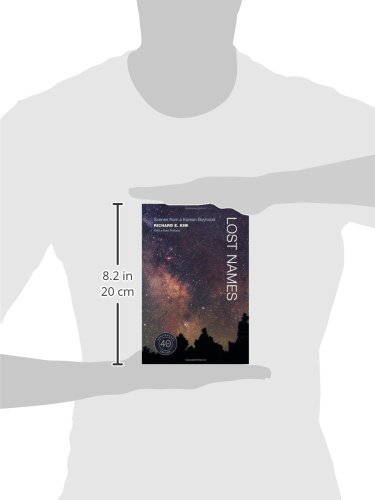
Lost Names: Scenes from a Korean Boyhood
A**S
Moving novel, historically informative
A wonderful coming-of-age story written with a lot of heart. Even though the product description claims it is an autobiography, the author's note itself says it is somewhere between memoir and fiction. Nevertheless, the historical events and context are a huge focus of the narrative, providing a human look at a time in history that I myself new little about. Thoroughly enjoyed.
H**E
Everybody should read this!
Anybody from an immigrant population would recognize themselves in this book. Tragic but well told story that I will read again voluntarily, as this was an assigned book for college.
A**R
A great story. Thought it was autobiographical
A great story. Thought it was autobiographical, but isn't. The author says everyone and all events true but everything else made up. So I think he means theses things happened to someone not just all to the same person. I didn't find that out until end. An interesting read about a part of history that isn't taught in American school systems.
S**E
Painfully good.
Without giving a single name, Kim tells an enriching and personal story of one Korean family during the Japanese occupation to their liberation. One generation’s failure is another generation’s burden. But it is in bearing each other that a generation can reroute the perpetuate cycle of imprisonment.cf. sooholee.wordpress
C**0
Coming of Age in Korea
This was an extremely emotional book. This is a story of a young boy growing up in Korea and having to deal with Japanese influence. Family names are something that are important and this memoir reiterated the harsh realities of oppression. He recalls events from his adolescence. This was an extremely easy read and flowed very smoothly. Though it may be difficult to comprehend this as a historical document, it serves well to underscore the nature of Japanese occupation.
K**G
Courage in the face of adversity
A moving and beautifully descriptive novel of a Korean boy's view of Japanese occupied Korea, the subtleties and nuances of a single gesture and sentence can weigh so much with profound sentiments. It is both of the transformation of a boy to a man in parallel of an occupied Korea to a liberated independent Korea.
A**R
The Japanese considered the Koreans living in Japan as second class citizens and gave them jobs the Japanese did not like to do
Accurately portrayed life in Korea under the Japanese. I was a Navy Pilot stationed in Japan in 1957/59. The Japanese considered the Koreans living in Japan as second class citizens and gave them jobs the Japanese did not like to do such as collecting human feces from the houses every day.
K**.
Good Read
This book was ordered for my daughter's high school AP History class. She found it to be an interesting read overall, and found it easy to follow. Her next step is writing an essay on it.
Trustpilot
4 days ago
2 months ago