
DOWNLOAD THE APP


Customer Services
Copyright © 2025 Desertcart Holdings Limited
DOWNLOAD THE APP

🔧 Seal it. Spot it. Save big. The ultimate leak solution for pros and DIYers alike.
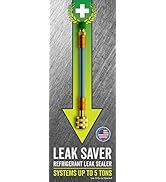
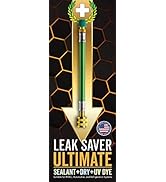
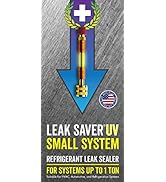
Leak Saver Direct Inject UV is a cutting-edge refrigerant leak sealer with added UV dye for easy detection of large leaks. Compatible with all refrigerants and systems up to 5 tons, it injects directly using standard HVAC tools, permanently sealing small leaks by reacting with air and moisture. With over 3 million units sold since 2015, it’s a trusted, safe, and effective solution for AC, refrigeration, and automotive systems—empowering professionals and DIYers to avoid costly repairs.










| ASIN | B077Y3CNMW |
| Best Sellers Rank | #14,732 in Automotive ( See Top 100 in Automotive ) #6 in Air Conditioning Line Repair Tools #10 in Air Conditioning Leak Detection Tools |
| Brand | Leak Saver |
| Customer Reviews | 4.2 4.2 out of 5 stars (1,738) |
| Date First Available | May 11, 2017 |
| Is Discontinued By Manufacturer | No |
| Item Weight | 3.2 ounces |
| Item model number | LS-05UV |
| Manufacturer | Leake Savers |
| Manufacturer Part Number | LS-05UV |
| Product Dimensions | 6.5 x 9.6 x 0.6 inches |
J**I
Novice Installer
As an HVAC novice but a buildings expert I can Highly recommend this product for its ease of installation and effectiveness. It worked as advertised sealing a small leak in my lineset. Was quoted $8k from a reputable repair company I was able to fix the leak and recharge myself. Ill note the device has a low loss fitting attached making it not only effective but safe to use for even a novice like me. You dont want to get frostbite from the refrigerant. Also the included diagram makes it fool proof.
M**W
Easy to use for DIYer
Easy to use for DIY. Wasn't sure whether I had a leak, but decided to use it in case there was, and if not it is in the system in case a leak were to develop, so it can potentially self heal. Good instructions, just needed a piercing valve and to borrow a vacuum pump and manifold gauge set from my son.
L**S
Less work to fix small Freon leaks than hunting the leak
I'd been trying to locate a small Freon leak with soap sprays, oil residue searches, & Freon sniffers on the 7-year old split unit heat pump in my shop. It would run for 4 to 5 months of cooling & heating, then suddenly shut down with low pressure indicated. It tended to run longer cooling than when heating. I was leary of stop-leak products in general because of bad experiences in car systems; the stuff plugged up everything (like thermostats) as well as the intended target. The R-410A systems run at very high pressures compared to old R-22 systems so I expected to find a fitting not quite tight enough to hold the refrigerant. No luck. I viewed the clear tubing holding the stop leak & UV dye with suspicion--didn't look strong enough to hold the high pressure. The connectors fit perfectly (I already had the adapter on the low-pressure line needed to connect the low-pressure hose); they were just like an extension of the charging hose. I decided to do the injection & recharge in one go. I set up liquid injection into the low-pressure line to make sure the contents were diluted promptly. When I opened the tank charging valve the yellow fluid in the clear tubing vanished immediately followed by boiling R-410A. I watched while the scales moved smoothly up to the 68.8 oz charging spec with the system running on cooling. Everything worked fine for about an hour then the system shut down. Turned out there was more residual R-410A than I expected & the system stopped (high pressure cutoff) when the fluid temperature came up to the 100 deg F outside temperature. I decided to let the system pressure equalize--give the leak a chance to expel some of the stop leak fluid. Air & moisture was suppose to cause it to harden & plug the leak. Sure enough, the next day the AC came on & the air coming out of the evaporator was a chilly 50 deg F. It has worked great both as a heat pump & AC since then. I haven't tried to located my UV light to see if any dye escaped. I expect that will be easier to find if significant R-410A escapes in a few months. Follow the instructions; I recommend this for small leaks--don't waste R-410A (or any other refrigerants) trying to plug large leaks. The dye-only version is probably your best approach in that case.
B**.
Work
Great
L**C
It didn't work for me, even so: 5 stars?
One of my A/C has a very slow leak: It takes months (3 at least) for the pressure to become noticeably low and, even then, it's just below normal operating range, never "empty". I had already tried to find the leak; I have reattached all the couplings 3 times already. I don't think the problem is there. Due to the extremely slow loss, it seemed a perfect candidate for this solution (as it's indicated for leaks of "more than 7 days to empty"), but unfortunately, it didn't work: The time it usually takes for the unit to show signs of low pressure went by, and it did; it started to show symptoms as if I hadn't used any sealer. I haven't been able to find a UV trace either. Why 5 stars then? This company is truly behind its product, and they made it right for me; so much so that I am giving the product a second chance (this time, if it doesn't work, I won't hold it against them: They already took responsibility for the first instance.) The moral of the story is: I recommend this product even if it didn't work for me. It seems it does work for other people, and the company is true to its word.
R**T
Use at your own risk
I tried this on two mini splits that had slow leaks before I found Nylog. The first seems okay. The second one must have had bad product. It was a 2 year old system that was a little low. I shot in this leak saver and it was very slow going in and made a farting sound. Much different than the first one I used. The gas was very slow going in. Unit ran for about a half hour and the compressor started making a loud banging sound every few minutes. The sound kept getting worse. By the next morning it was making a grinding sound and was working poorly. I know when you disconnect service hoses you will get some splash as found on the first unit with UV. The second unit that had the problem showed small bits of solid yellow under UV. Not splash. I disassembled the system and shined UV in the lines. I got NO UV indication in the lines. That means the Dye/ leak saver must have been solid upon install. If it was liquid it should have been distributed through the whole system after a few hours running. The unit is trashed and I had to buy a replacement so now I am out the 30 bucks spent on this product, 600 for a new unit and some expensive R410A. Plus labor and parts to fix the wall. I figure good luck getting anything back from leak saver and am not going to waste my time. STAY AWAY FROM THIS PRODUCT!!!!!
S**N
Didn’t work as we thought
I’m not sure if it is us or the product. But this didn’t seem to work the way we expected. We were initially optimistic but within a few hours, we were back to where we started. My husband is an accomplished household repairman so we don’t think it was him. Not sure if we had unrealistic expectations? Would not buy again.
M**E
great product, great price
great product, great price
E**C
Had a leak last year. Used this after refilling to try to last for another summer and so far it held up a year later! I have stopped using the heating cycle to prevent useless thermal stress and extend it as far as possible. I tried to cheap out buying this and a manual pump and adapters and whatnot. TLDR: Don't cheap out and get the Co2 injector too.
H**N
It does not work
A**.
it didn't worked, I used this product in my Skoda Superb, 1.8 TSI car AC , in which the AC gas leaks in 22 to 24 days , but after using this product nothing changed. now also the gas leaked in 22 days
J**U
Had small leak and this solved the problem
A**A
The product was delivered in a timely manner. I called the technician because I did not how to inject it into the AC. It has been two weeks, and no issues so far. I will have to wait until the end of the season to see if it works.
Trustpilot
2 months ago
2 months ago