We remain fully operational. Our teams are working around the clock to ensure your deliveries continue safely.

DOWNLOAD THE APP


Customer Services
Copyright © 2025 Desertcart Holdings Limited
DOWNLOAD THE APP
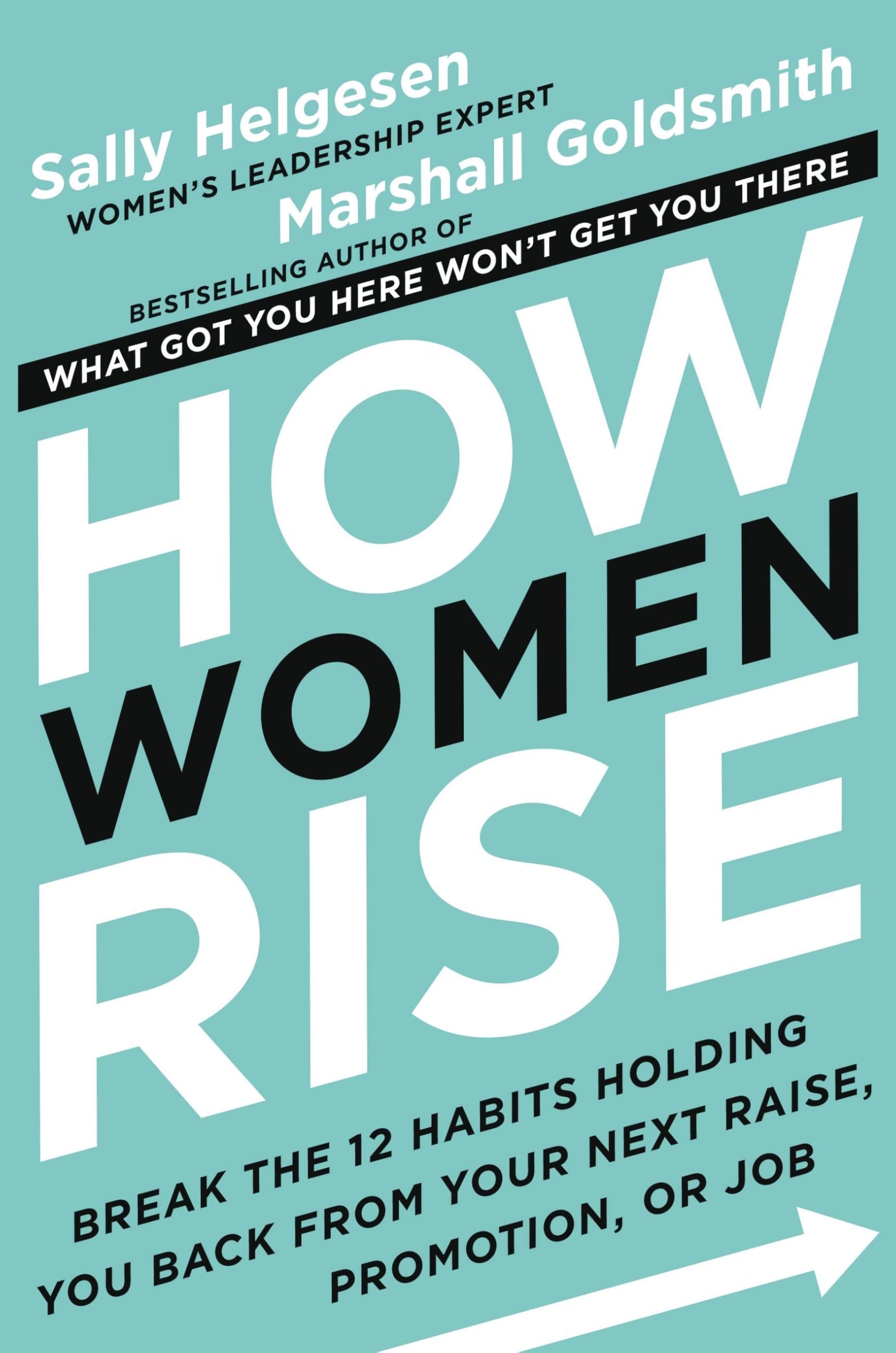
How Women Rise: Break the 12 Habits Holding You Back from Your Next Raise, Promotion, or Job [Helgesen, Sally, Goldsmith, Marshall] on desertcart.com. *FREE* shipping on qualifying offers. How Women Rise: Break the 12 Habits Holding You Back from Your Next Raise, Promotion, or Job Review: Timely Resource for Addressing Default Behaviors That Impact Performance, Effectiveness, and Progress. - OK. I am a guy who bought the book, How Women Rise. Let me share some background, before I attempt to share the immense value of this resource. Sally Helgesen’s book, The Female Advantage, was read in 1996, my first year as an entrepreneurial organizational development specialist. I had not read many, if any leadership books penned by women in the ten years that preceded Sally’s book, and the title intrigued me. I read Marshall’s book, What Got You Here Won’t Get You There, in 2007; it was so good that I purchased Triggers shortly after it was published. That book helped me significantly with changing a number of interpersonal behaviors, which I still have to monitor. Leadership, the development of individuals and teams toward their perpetual effectiveness and performance potentials, is obviously not a one-gender issue. Most large organizations in the 1960s through 1980s thought so, as the management teams were predominantly male-oriented. As a soft-skills, content developer and classroom facilitator/trainer, I wanted to utilize every possible concept, resource, and idea that would resonate with learners and empower them to help their direct reports become confident, self-motivated, task-effective performers. I would say that How Women Rise is a solidly reliable resource for helping others, not just women, identify, then deal with the habits/default behaviors that might currently be holding them back. The book is VERY interesting!! While I chose to read the book sequentially, another reader might choose to review the twelve habits that block effectiveness, then investigate the few habit-chapters that seem to be most like them. The case study examples given in the book are specific, concise, and illustrate how the individuals are initially and negatively impacted by their then current blind spots. The individuals share how their less-than-effective performances impacted their relationships with their bosses and show how they eventually chose to respond more effectively to overcome those situations and significantly improve those relationships, gaining confidence and performance-momentum in the process. Before I typed this line, I went back into the book and read habit 11, Ruminating. Ruminators live in the past, and they are the predominant Kierseyian temperament (SJ) in organizations. They dwell on the past, trying to mentally improve what (or who) went wrong. The authors do an noteworthy job of explaining how rumination is a waste of time and energy, and they offer solid suggestions for helping move beyond it! The same holds true for each of the other eleven habit-chapters. This book would seem appropriate for use in undergraduate programs of all types. Why not identify and address habits that are probably already at work, as one approaches his or her studies, life, etc.? Finally, personality type theory suggests that Thinkers make their decisions objectively, based upon logic, facts, and truth, while Feelers make their decisions subjectively, based upon values and impact upon people. Two-thirds of the men are Thinkers, and one-third are Feelers. Two-thirds of the women are Feelers, and one-third are Thinkers. I am one of those men who makes feelings-base decisions. So, we have women who think like a man, and we have men who feel/make decisions like a woman. This may at least one reason why How Women Rise resonated with me. Kudos to Sally and Marshall for their most productive effort; it certainly fills a void that has been sorely needed! Bill Parker Review: Combined with one other book, BEST CAREER RESOURCE ever for women in male-dominated fields. - I LOVE this book. I bought the hardback AND the audible after listening to a few chapters and realizing I wanted to read this as I'm a visual learner and Audible I tend to use for commute time and don't always pay stringent attention to content like I do when reading. I read Marshall Goldsmith's book: what got you here doesn't get you there. I didn't resonate with most of the obstacles. Now I realize that's because I'm a woman. Sally Helgesen brings so much value to the book I've been looking for for decades to understand why I've always felt like a square peg in a round hold in both male-dominated careers I've had. This book isn't enough on its own for me though. It is written politically correctly and doesn't address male culture as I've experienced it, both in blue collar and white collar careers I've had with mostly men. There's another book I read right before this one that helps more with unvarnished truths about what men think and understanding male culture as if you were an alien landing on planet Earth with men for the first time... (this book focuses mostly on our own challenges). It was written almost 20 years ago and that's why it's still relevant today, it hasn't changed from what he's written: What Men Don't Tell Women - Christopher V. Flett. That second book helps fill out the stark differences while this one gives women's side of things more and some thoughts on how to better control and workaround bad habits in your career. What Men Don't Tell Women focuses on male dominated culture and in my 20 years in male dominated fields, is still completely relevant to my experiences with Type-A Men who are driven and ambitious. Understanding our differences was extremely insightful and as the outsider, allows me to navigate much easier understanding what most men are thinking when we exhibiting our different bad habits. I know all of the content in both books is generalized, but in my experience both are 85% on the money. I have 10 of the 12 bad habits in How Women Rise and I've experienced at least 85% of the descriptions of male culture in What Men Don't Tell Women. Both very helpful together for me.
| Best Sellers Rank | #16,617 in Books ( See Top 100 in Books ) #14 in Women & Business (Books) #18 in Job Hunting & Career Guides #257 in Success Self-Help |
| Customer Reviews | 4.7 out of 5 stars 2,951 Reviews |
W**R
Timely Resource for Addressing Default Behaviors That Impact Performance, Effectiveness, and Progress.
OK. I am a guy who bought the book, How Women Rise. Let me share some background, before I attempt to share the immense value of this resource. Sally Helgesen’s book, The Female Advantage, was read in 1996, my first year as an entrepreneurial organizational development specialist. I had not read many, if any leadership books penned by women in the ten years that preceded Sally’s book, and the title intrigued me. I read Marshall’s book, What Got You Here Won’t Get You There, in 2007; it was so good that I purchased Triggers shortly after it was published. That book helped me significantly with changing a number of interpersonal behaviors, which I still have to monitor. Leadership, the development of individuals and teams toward their perpetual effectiveness and performance potentials, is obviously not a one-gender issue. Most large organizations in the 1960s through 1980s thought so, as the management teams were predominantly male-oriented. As a soft-skills, content developer and classroom facilitator/trainer, I wanted to utilize every possible concept, resource, and idea that would resonate with learners and empower them to help their direct reports become confident, self-motivated, task-effective performers. I would say that How Women Rise is a solidly reliable resource for helping others, not just women, identify, then deal with the habits/default behaviors that might currently be holding them back. The book is VERY interesting!! While I chose to read the book sequentially, another reader might choose to review the twelve habits that block effectiveness, then investigate the few habit-chapters that seem to be most like them. The case study examples given in the book are specific, concise, and illustrate how the individuals are initially and negatively impacted by their then current blind spots. The individuals share how their less-than-effective performances impacted their relationships with their bosses and show how they eventually chose to respond more effectively to overcome those situations and significantly improve those relationships, gaining confidence and performance-momentum in the process. Before I typed this line, I went back into the book and read habit 11, Ruminating. Ruminators live in the past, and they are the predominant Kierseyian temperament (SJ) in organizations. They dwell on the past, trying to mentally improve what (or who) went wrong. The authors do an noteworthy job of explaining how rumination is a waste of time and energy, and they offer solid suggestions for helping move beyond it! The same holds true for each of the other eleven habit-chapters. This book would seem appropriate for use in undergraduate programs of all types. Why not identify and address habits that are probably already at work, as one approaches his or her studies, life, etc.? Finally, personality type theory suggests that Thinkers make their decisions objectively, based upon logic, facts, and truth, while Feelers make their decisions subjectively, based upon values and impact upon people. Two-thirds of the men are Thinkers, and one-third are Feelers. Two-thirds of the women are Feelers, and one-third are Thinkers. I am one of those men who makes feelings-base decisions. So, we have women who think like a man, and we have men who feel/make decisions like a woman. This may at least one reason why How Women Rise resonated with me. Kudos to Sally and Marshall for their most productive effort; it certainly fills a void that has been sorely needed! Bill Parker
J**.
Combined with one other book, BEST CAREER RESOURCE ever for women in male-dominated fields.
I LOVE this book. I bought the hardback AND the audible after listening to a few chapters and realizing I wanted to read this as I'm a visual learner and Audible I tend to use for commute time and don't always pay stringent attention to content like I do when reading. I read Marshall Goldsmith's book: what got you here doesn't get you there. I didn't resonate with most of the obstacles. Now I realize that's because I'm a woman. Sally Helgesen brings so much value to the book I've been looking for for decades to understand why I've always felt like a square peg in a round hold in both male-dominated careers I've had. This book isn't enough on its own for me though. It is written politically correctly and doesn't address male culture as I've experienced it, both in blue collar and white collar careers I've had with mostly men. There's another book I read right before this one that helps more with unvarnished truths about what men think and understanding male culture as if you were an alien landing on planet Earth with men for the first time... (this book focuses mostly on our own challenges). It was written almost 20 years ago and that's why it's still relevant today, it hasn't changed from what he's written: What Men Don't Tell Women - Christopher V. Flett. That second book helps fill out the stark differences while this one gives women's side of things more and some thoughts on how to better control and workaround bad habits in your career. What Men Don't Tell Women focuses on male dominated culture and in my 20 years in male dominated fields, is still completely relevant to my experiences with Type-A Men who are driven and ambitious. Understanding our differences was extremely insightful and as the outsider, allows me to navigate much easier understanding what most men are thinking when we exhibiting our different bad habits. I know all of the content in both books is generalized, but in my experience both are 85% on the money. I have 10 of the 12 bad habits in How Women Rise and I've experienced at least 85% of the descriptions of male culture in What Men Don't Tell Women. Both very helpful together for me.
A**R
Women, this will absolutely change your perspective in a positive way. Read it.
I love this book. I am recommending it to nearly all my clients, and many of my friends and business associates as well. I have specific instances where I did things differently in the weeks since I read this than I would ever have thought to do before. As a former corporate Senior Vice President, now Executive Coach and Leadership Consultant, I admit I picked up this book with kind of a snotty attitude. I was looking for recommendations for my senior - or junior - female clients, and merely hoped this would not be another book of mild interest and slight usefulness. As for me, my success (to my mind) proved I certainly didn't need it. I didn't make those mis-steps. I admit, I had read and liked Marshall Goldsmith's earlier book "What Got You Here Won't Get You There," and was always smug about the fact that so few of the behaviors applied to me. I thought I would find the same with this book. Nope. That was because (as Marshall himself now says), most of those behaviors were about men. This one is absolutely about women, and describes the mis-steps that we take that are very different than men's. Sally Helgesen and Marshall Goldsmith not only "got" most of my clients - female, and some male as well - but they "got" me. I could check every single box, every single habit, at least to some degree, and recognize "here is what held me back," or made things more difficult, despite my success. I wish I'd had this book when I was coming up. And I have immediately changed behaviors because of it. As a plus, it is easy-to-read, practical, straightforward, prescriptive as well as descriptive, interesting, and generous-spirited. I can't remember the last time I was as excited about a behavioral business book. Read it. It WILL change you.
K**S
An essential read
Finally a book that identifies the common pitfalls that hold women back from achieving the level of success they desire. I enjoyed the combination of the author's writing styles and experience to make the points. A tapestry of ideas to consider and act on are threaded throughout. I love the idea of what may be holding me back is also rooted in a strength that served me in one point in time and with a few tweaks may serve me again.
M**D
The Best Book I’ve Read for Women in the Workplace
In Sally Helgesen and Marshall Goldsmith’s new book, "How Women Rise: Break the 12 Habits Holding You Back from Your Next Raise, Promotion, or Job," the authors write: “What exactly in the history of the world, or the history of organizations, supports the idea that powerful leaders are always good-hearted and enlightened persons who routinely treat others with respect and make great decisions?” They go on to recognize that outstanding leaders are rare. It is this truth that makes this book so valuable. In "How Women Rise," Helgesen and Goldsmith provide practical advice to women that is grounded in the way things are rather than the way our conscience tells us they ought to be. For example, the authors point out that many women fail to promote their achievements whereas men are more assertive about self-promotion. In a perfect world, good work would speak for itself. In reality, good work often goes unnoticed. To help women overcome the tendency not to promote their good work, the authors provide helpful advice about how to go about it without becoming a shameless self-promoter. A few of the other counter-productive and frequently unrecognized habits they address include the tendency to ruminate rather than let go and move on, “too much” (words, emotion and disclosure), and failing to enlist allies from day one. Read the book. You’ll be glad you did. I’ve purchased copies for both of my daughters and I’m confident they will be more effective, and more likely to rise in their vocations, after reading it. Michael Lee Stallard, Author of " Connection Culture: The Competitive Advantage of Shared Identity, Empathy, and Understanding at Work " and " Fired Up or Burned Out: How to Reignite Your Team's Passion, Creativity, and Productivity ."
C**N
A Breakthrough Guide for Women Leaders to Reach New Heights!
*How Women Rise* by Sally Helgesen and Marshall Goldsmith is an empowering read for women founders like me. As a 5-time founder and impact investor, I found their insights invaluable in identifying the habits that may hold us back, even when we're unaware of them. This book is the updated, women-centered version of *What Got You Here Won’t Get You There*, offering practical advice tailored to the unique challenges women face. Helgesen’s wisdom, paired with Goldsmith’s leadership expertise, makes this a must-read for visionary women founders looking to break barriers and achieve lasting success. Highly recommend!
K**S
This Is A Must Read!
I started reading this book back when I was looking to become a Supervisor two companies ago. A Director (female) had given me this book to read (borrow), and was coaching me to be the next female leader in a obviously male-dominated environment. It most certainly helped as I did actually get the promotion (well-deserved and overdue). I took a bit of a hiatus from the book as I then left the company and the person from whom I was borrowing the book from. Ever since I’ve cracked open this book to read further, I have literally advanced in my career. I’ve literally advanced 3 times in my career and now work for in a high place in my field. I definitely recommend this book to anyone, not just women, but anyone that needs a new look at how to approach things from a career perspective. I hate, though, that it’s “gender-specific” because I have male friends that identify as males (and straight) that do some of the things that this book is suggesting. Again, great read! Thank you for helping me advance my career and get to new heights!
S**Z
SECRETS TO SUCCESS FOR WOMEN LEADERS
Sally Helgesen and Marshall Goldsmith get to the heart of what holds women back with their insights into the behaviors and habits that can cause women to stall or stumble in their careers. This book is an excellent tool for women, but I also recommend it for men who want to see their women colleagues and/or subordinates excel. It provides a common basis for understanding each other by defining and explaining 12 self-defeating behaviors more common in women than in men. I wish I had this book 40 years ago when I first entered the workforce. I saw myself again and again in the stories the authors tell. This is a superb book for those who mentor women to consider giving as a gift to their mentee - that's what I'm doing!
Trustpilot
3 weeks ago
2 weeks ago