We remain fully operational. Our teams are working around the clock to ensure your deliveries continue safely.

DOWNLOAD THE APP


Customer Services
Copyright © 2025 Desertcart Holdings Limited
DOWNLOAD THE APP
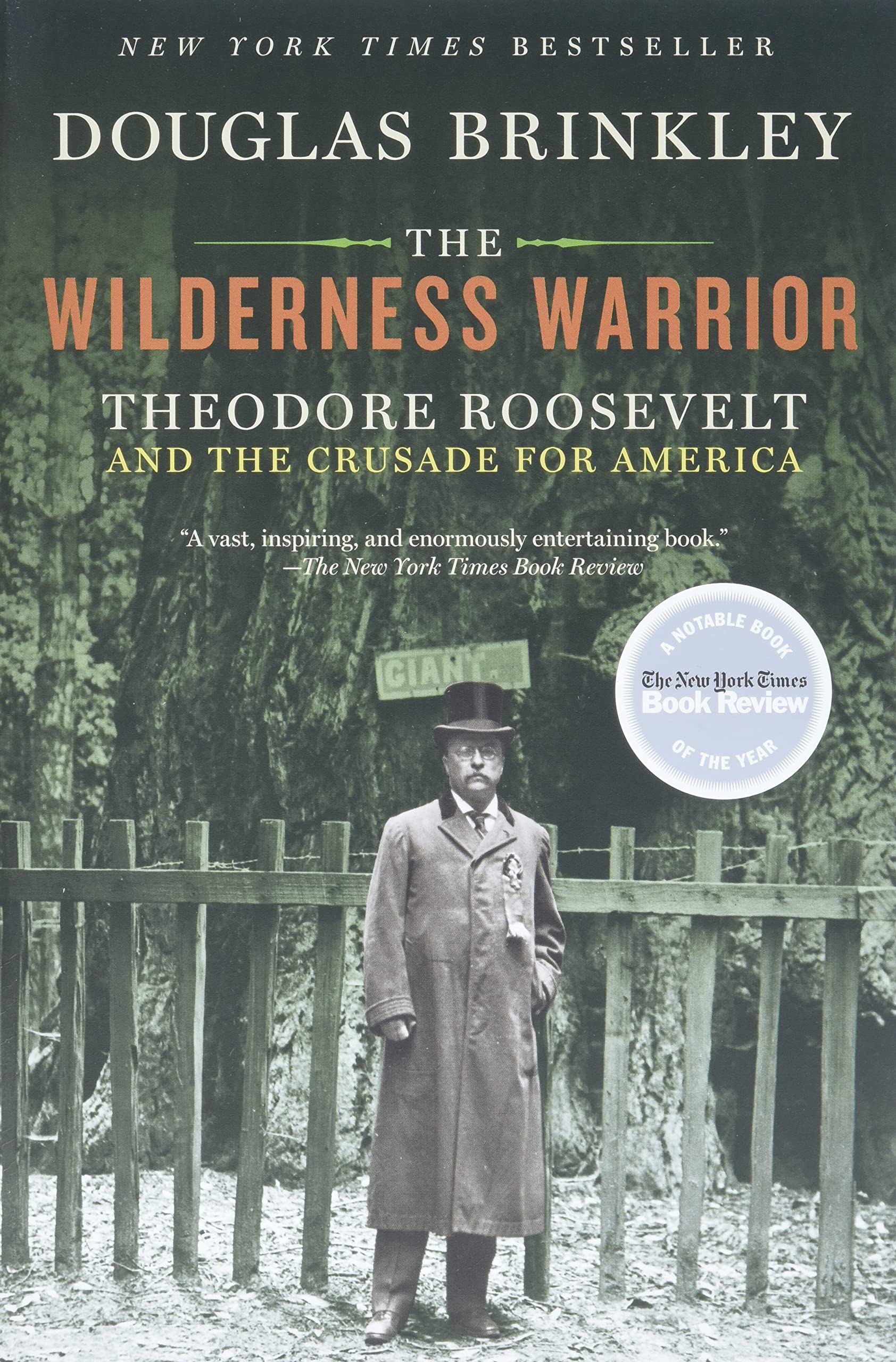
The Wilderness Warrior: Theodore Roosevelt and the Crusade for America [Brinkley, Douglas] on desertcart.com. *FREE* shipping on qualifying offers. The Wilderness Warrior: Theodore Roosevelt and the Crusade for America Review: A tour de force on Roosevelt the Environmental Activist - I'm sure many of you are wondering whether we really need another biography of Theodore Roosevelt. After all, there has been a spate of other biographies on the man, from Edmund Morris' Theodore Rex to Kathleen Dalton's Theodore Roosevelt: A Strenuous Life . In short, the answer is YES, this is an essential TR biography. Even if you have read all of those other books (as I have), Douglas Brinkley's The Wilderness Warrior: Theodore Roosevelt and the Crusade for America is a vital addition to our understanding of TR as a man, a politician, and an environmental activist. Brinkley's The Wilderness Warrior argues that Teddy Roosevelt was not simply a politician who cared about nature, but that his life as a naturalist permeated his entire outlook on life and use of political power. He goes further by arguing that TR was a committed preservationist who sought to protect nature forever, not just a "utilitarian" conservationist who sought to protect natural resources for later exploitation - despite his affinity for hunting. The first part of the book documents TR's fascination with wildlife and the outdoors as a young child. Even by the age of 10, he had established a small "museum" of his favorite wildlife specimens (which he later donated to the Smithsonian and American Museum of Natural History). Brinkley portrays a young TR excitedly studying the radula (mouthparts) of small mollusks - hardly what one would imagine as the hobby of a future president. Brinkley also digs up some less appreciated influences on young TR. For example, he shines a light on Robert B. Roosevelt, TR's "black sheep" uncle who became a prominent advocate for fish conservation in New York and probably played a key role in encouraging TR's activism. Right up until college, Brinkley recalls how TR seemed destined for a career as a biologist. However, at Harvard, he became bored with lab biology and found another avocation - politics. The next chapters show how TR continued his passion for nature even while pursuing a political career. Some of the stories - such as his trips to the Badlands after his mother and first wife Alice both died - are well known, but Brinkley fills them with rich detail. More interesting are the events that receive scant attention in most TR biographies. Even after spending years immersed in U.S. environmental history, I never realized that TR had founded the very first nationally effective environmental advocacy NGO (the Boone and Crocket Club). Brinkley brings this group to life by recalling the personalities in the group, such as naturalist George Bird Grinnell, and the groups publications. Throughout this, TR wrote acclaimed books about the American West, his hunting exploits, and endangered species. It is fascinating to see TR heatedly debating species classification with the government biologist C. Hart Merriam, while TR was serving as Assistant Secretary of the Navy (and many biologists now agree with TR's position no less!). In short, as Brinkley makes clear, even if he had never become president, TR would have been an important historical figure in raising awareness of the natural heritage of the American West. However, of course TR was destined to play a much greater role as president. Much of the rest of the book shows how TR used the presidency to advance what Brinkley considers the most ambitious and meaningful conservationist agenda in U.S. history. At the stroke of a pen, TR would designate vast tracts of U.S. wilderness as National Refuges. When deciding to make Pelican Island, Florida, a Federal Bird Reservation, TR simply stated "I So Declare It"! In the end, Brinkley notes that TR not only protected some of our most important natural sites, such as the Grand Canyon, but also pushed for the laws and improvised the tools that would allow future presidents to follow in his footsteps. One things I really love about this book is that it stays focused on TR the naturalist. With a personality as engaging as Teddy Roosevelt, there is material enough to fill several biographies (not that this book is short - it's over 800 pages!). Fortunately, Brinkley never meanders too far into other aspects of TR's life, which means the book remains fresh. Every page has a new and exciting anecdote that is probably unfamiliar to all but hardcore TR fans. Furthermore, by staying so close to his theme, Brinkley shows just how deeply conservationist philosophies pervaded TR's life. For example, TR fell in love with Darwin's theories of evolution at a young age and later used them to justify his foreign policy exploits. After reading this book, I came away with a renewed appreciation of TR as a politician and a man (could you ever imagine George Bush or Barack Obama "roughing it" out West?). On the other hand, anybody interested in U.S. political history or environmentalism will find this book a treasure trove. Brinkley provides enough background on TR and U.S. history at the time so readers can follow along. Moreover, he writes well and makes every incident an adventure. The book has everything from hunting tales to political campaigning to battle skirmishes. Rather than feeling like 800 pages, you'll wish Brinkley had added another 400. In fact, my only criticism of the book is that Brinkley should have kept on writing. I know the poor guy had to finish the book somewhere. The book ends when TR leaves the presidency in 1908, but the adventures didn't stop there. TR took trips to East Africa and the desertcart River in Brazil on hunting and scientific expeditions. Surely these influenced TR's views of nature. Fortunately, Candice Millard's The River of Doubt: Theodore Roosevelt's Darkest Journey and TR's own African Game Trails: An Account of the African Wanderings of an American Hunter-Natrualist cover these exploits. However, I would have been interested in learning more about TR's 1912 campaign as the Bull Moose candidate from The Wilderness Warrior 's conservationist perspective. Hopefully, Brinkley can add some commentary in a revised edition on these episodes and how they influenced TR's views on conservation. In short, I can't recommend this book enough. It is something rare in biographies of famous politicians - it is both well-written and original. However, don't take my word - check out this brief excerpt from Vanity Fair earlier this summer: [...] In addition, if you like this book, you might also want to read Gifford Pinchot and the Making of Modern Environmentalism (Pioneers of Conservation) , about TR's righthand man in the U.S. Forest Service. Review: Theodore Roosevelt has been one of my favorite historical figures for almost my entire adult life - Theodore Roosevelt has been one of my favorite historical figures for almost my entire adult life. As someone who has a hard time narrowing down my own interests (let alone reading list), the breadth and depth of his pursuits is both fascinating and reassuring. As someone who enjoys being outside in wild spaces, his efforts in preserving them has been inspiring. He’s also one of the most intellectually challenging figures for me. Without delving too far into politics, I generally prefer the federal government to cast a smaller shadow in the average American’s life than is generally the case. TR’s progressive vision and use of the “bully pulpit” therefore give me pause, force me to reflect, and often leave me scratching my head and short of answers. However, one area where his inclinations and my beliefs intersect is in the preservation of the commons and protection of public lands. This is the central theme of Douglas Brinkley’s Wilderness Warrior. Calling it a biography of Roosevelt, while technically accurate, sells it short. Yes, you’ll read about his somewhat sickly youth. You’ll read about his time at Harvard (and see pictures of the pretty epic sideburns he wore in his early adulthood). You’ll read about the Rough Riders and his time as a rancher. But all of this revolves around the central theme of the fondness he developed early in life, thanks in part to his Uncle Robert, for nature – and the efforts he made as governor and president on its behalf. Brinkley is a professor at Rice University, author of almost two dozen books, and member of the Council on Foreign Affairs (which is to say, he certainly doesn’t need my review to sell his book – and not just because it’s been out for almost a decade). Among his other awards, this book earned the 2009 National Outdoor Book Award. Not surprisingly, then, the book is thoroughly researched and richly annotated. If you’re anything like me, its notes section will make your “want to read list” have a bit of a growth spurt. It takes short detours to explore the lives and exploits of people who lived where the rubber of TR’s initiatives met the proverbial road. While those detours add a bit to the work’s heft, I felt it placed this focused biography – this exploration of but one aspect of a larger-than-life man’s multi-faceted personality – in a broader and richer context. If there’s a downside to the book, it’s that its length and detail might make it less than accessible to a casual reader. While I’m enough of a bibliophile and history geek to have thoroughly enjoyed it, I have to admit that it’s not quite the sort of history or biography that feels more like a story. It doesn’t always move fast, and the sheer amount of information packed into it can make it at times a slightly dense read. But the reader sufficiently interested in Theodore Roosevelt, protection of wild spaces, or both, will be richly rewarded for their time.
| Best Sellers Rank | #66,267 in Books ( See Top 100 in Books ) #39 in Environmentalist & Naturalist Biographies #168 in US Presidents #507 in U.S. State & Local History |
| Customer Reviews | 4.4 out of 5 stars 475 Reviews |
A**D
A tour de force on Roosevelt the Environmental Activist
I'm sure many of you are wondering whether we really need another biography of Theodore Roosevelt. After all, there has been a spate of other biographies on the man, from Edmund Morris' Theodore Rex to Kathleen Dalton's Theodore Roosevelt: A Strenuous Life . In short, the answer is YES, this is an essential TR biography. Even if you have read all of those other books (as I have), Douglas Brinkley's The Wilderness Warrior: Theodore Roosevelt and the Crusade for America is a vital addition to our understanding of TR as a man, a politician, and an environmental activist. Brinkley's The Wilderness Warrior argues that Teddy Roosevelt was not simply a politician who cared about nature, but that his life as a naturalist permeated his entire outlook on life and use of political power. He goes further by arguing that TR was a committed preservationist who sought to protect nature forever, not just a "utilitarian" conservationist who sought to protect natural resources for later exploitation - despite his affinity for hunting. The first part of the book documents TR's fascination with wildlife and the outdoors as a young child. Even by the age of 10, he had established a small "museum" of his favorite wildlife specimens (which he later donated to the Smithsonian and American Museum of Natural History). Brinkley portrays a young TR excitedly studying the radula (mouthparts) of small mollusks - hardly what one would imagine as the hobby of a future president. Brinkley also digs up some less appreciated influences on young TR. For example, he shines a light on Robert B. Roosevelt, TR's "black sheep" uncle who became a prominent advocate for fish conservation in New York and probably played a key role in encouraging TR's activism. Right up until college, Brinkley recalls how TR seemed destined for a career as a biologist. However, at Harvard, he became bored with lab biology and found another avocation - politics. The next chapters show how TR continued his passion for nature even while pursuing a political career. Some of the stories - such as his trips to the Badlands after his mother and first wife Alice both died - are well known, but Brinkley fills them with rich detail. More interesting are the events that receive scant attention in most TR biographies. Even after spending years immersed in U.S. environmental history, I never realized that TR had founded the very first nationally effective environmental advocacy NGO (the Boone and Crocket Club). Brinkley brings this group to life by recalling the personalities in the group, such as naturalist George Bird Grinnell, and the groups publications. Throughout this, TR wrote acclaimed books about the American West, his hunting exploits, and endangered species. It is fascinating to see TR heatedly debating species classification with the government biologist C. Hart Merriam, while TR was serving as Assistant Secretary of the Navy (and many biologists now agree with TR's position no less!). In short, as Brinkley makes clear, even if he had never become president, TR would have been an important historical figure in raising awareness of the natural heritage of the American West. However, of course TR was destined to play a much greater role as president. Much of the rest of the book shows how TR used the presidency to advance what Brinkley considers the most ambitious and meaningful conservationist agenda in U.S. history. At the stroke of a pen, TR would designate vast tracts of U.S. wilderness as National Refuges. When deciding to make Pelican Island, Florida, a Federal Bird Reservation, TR simply stated "I So Declare It"! In the end, Brinkley notes that TR not only protected some of our most important natural sites, such as the Grand Canyon, but also pushed for the laws and improvised the tools that would allow future presidents to follow in his footsteps. One things I really love about this book is that it stays focused on TR the naturalist. With a personality as engaging as Teddy Roosevelt, there is material enough to fill several biographies (not that this book is short - it's over 800 pages!). Fortunately, Brinkley never meanders too far into other aspects of TR's life, which means the book remains fresh. Every page has a new and exciting anecdote that is probably unfamiliar to all but hardcore TR fans. Furthermore, by staying so close to his theme, Brinkley shows just how deeply conservationist philosophies pervaded TR's life. For example, TR fell in love with Darwin's theories of evolution at a young age and later used them to justify his foreign policy exploits. After reading this book, I came away with a renewed appreciation of TR as a politician and a man (could you ever imagine George Bush or Barack Obama "roughing it" out West?). On the other hand, anybody interested in U.S. political history or environmentalism will find this book a treasure trove. Brinkley provides enough background on TR and U.S. history at the time so readers can follow along. Moreover, he writes well and makes every incident an adventure. The book has everything from hunting tales to political campaigning to battle skirmishes. Rather than feeling like 800 pages, you'll wish Brinkley had added another 400. In fact, my only criticism of the book is that Brinkley should have kept on writing. I know the poor guy had to finish the book somewhere. The book ends when TR leaves the presidency in 1908, but the adventures didn't stop there. TR took trips to East Africa and the Amazon River in Brazil on hunting and scientific expeditions. Surely these influenced TR's views of nature. Fortunately, Candice Millard's The River of Doubt: Theodore Roosevelt's Darkest Journey and TR's own African Game Trails: An Account of the African Wanderings of an American Hunter-Natrualist cover these exploits. However, I would have been interested in learning more about TR's 1912 campaign as the Bull Moose candidate from The Wilderness Warrior 's conservationist perspective. Hopefully, Brinkley can add some commentary in a revised edition on these episodes and how they influenced TR's views on conservation. In short, I can't recommend this book enough. It is something rare in biographies of famous politicians - it is both well-written and original. However, don't take my word - check out this brief excerpt from Vanity Fair earlier this summer: [...] In addition, if you like this book, you might also want to read Gifford Pinchot and the Making of Modern Environmentalism (Pioneers of Conservation) , about TR's righthand man in the U.S. Forest Service.
K**R
Theodore Roosevelt has been one of my favorite historical figures for almost my entire adult life
Theodore Roosevelt has been one of my favorite historical figures for almost my entire adult life. As someone who has a hard time narrowing down my own interests (let alone reading list), the breadth and depth of his pursuits is both fascinating and reassuring. As someone who enjoys being outside in wild spaces, his efforts in preserving them has been inspiring. He’s also one of the most intellectually challenging figures for me. Without delving too far into politics, I generally prefer the federal government to cast a smaller shadow in the average American’s life than is generally the case. TR’s progressive vision and use of the “bully pulpit” therefore give me pause, force me to reflect, and often leave me scratching my head and short of answers. However, one area where his inclinations and my beliefs intersect is in the preservation of the commons and protection of public lands. This is the central theme of Douglas Brinkley’s Wilderness Warrior. Calling it a biography of Roosevelt, while technically accurate, sells it short. Yes, you’ll read about his somewhat sickly youth. You’ll read about his time at Harvard (and see pictures of the pretty epic sideburns he wore in his early adulthood). You’ll read about the Rough Riders and his time as a rancher. But all of this revolves around the central theme of the fondness he developed early in life, thanks in part to his Uncle Robert, for nature – and the efforts he made as governor and president on its behalf. Brinkley is a professor at Rice University, author of almost two dozen books, and member of the Council on Foreign Affairs (which is to say, he certainly doesn’t need my review to sell his book – and not just because it’s been out for almost a decade). Among his other awards, this book earned the 2009 National Outdoor Book Award. Not surprisingly, then, the book is thoroughly researched and richly annotated. If you’re anything like me, its notes section will make your “want to read list” have a bit of a growth spurt. It takes short detours to explore the lives and exploits of people who lived where the rubber of TR’s initiatives met the proverbial road. While those detours add a bit to the work’s heft, I felt it placed this focused biography – this exploration of but one aspect of a larger-than-life man’s multi-faceted personality – in a broader and richer context. If there’s a downside to the book, it’s that its length and detail might make it less than accessible to a casual reader. While I’m enough of a bibliophile and history geek to have thoroughly enjoyed it, I have to admit that it’s not quite the sort of history or biography that feels more like a story. It doesn’t always move fast, and the sheer amount of information packed into it can make it at times a slightly dense read. But the reader sufficiently interested in Theodore Roosevelt, protection of wild spaces, or both, will be richly rewarded for their time.
M**I
Long but Engaging, A Good and Informative Read
The Wilderness Warrior: Theodore Roosevelt and the Crusade for America, 1858-1919 is a biography of Theodore Roosevelt that concentrates strictly on his conservationist side. Other domestic policy and foreign policy occasionally come into play, but only when it's connected to conservation policy. It is a long book, repetitive on occasion, but very readable and engaging. “We regard Attic temples and Roman triumphal arches and Gothic cathedrals as of priceless value,” Roosevelt decreed, full of wilderness warrior fury. “But we are, as a whole, still in that low state of civilization where we do not understand that it is also vandalism wantonly to destroy or to permit the destruction of what is beautiful in nature, whether it be a cliff, a forest, or a species of mammal or bird. Here in the United States we turn our rivers and streams into sewers and dumping-grounds, we pollute the air, we destroy forests, and exterminate fishes, birds, and mammals—not to speak of vulgarizing charming landscapes with hideous advertisements.” From childhood to adult, Brinkley covers what made Roosevelt a conservationist and sets the stage for what he was to do as a public servant and politician; you really get an idea of what made Roosevelt the unique personality he was. He then explains in detail not only what Roosevelt did but how and why; you couldn't get a much better explanation of his conservation policy. Brinkley ties in the personalities from all walks of life who helped shape and execute his policies as well. Unfortunately, the book seems to end abruptly; Brinkley writes about Roosevelts plans post-Presidency but doesn't go into them in the same detail that he did everything else. Don't think, however, that this book is a hagiography. Brinkley takes care to point out the contrast between Roosevelt's conservationism and some, but not all, of his hunting and between his conservationist policy and reclamation policy. Granted, this would have made an already long book even longer, perhaps a second volume would have been in order. The book is well researched and documented, with good maps, annexes, and end notes; the maps, however, would have served better in-line with the relevant text. They very well may have been in the print edition, but I was reading the Kindle version and the maps came after the final chapter. "As forces of globalization run amok, Roosevelt’s stout resoluteness to protect our environment is a strong reminder of our national wilderness heritage, as well as an increasingly urgent call to arms." Published in 2009, The Wilderness Warrior is somewhat prescient given the environmental policies of the current administration. Many times as I was reading I found myself asking what Roosevelt would think of President Trump. In the area of environmental policy, there's no doubt that Roosevelt would find our current policies and administration wanting. I thoroughly enjoyed reading The Wilderness Warrior and learned quite a bit from it. If you're interested in nature and wildlife conservation and the origins of the forest service, our national parks and monuments, and our wildlife refuges, this book is a great place to start. If you're at all interested in what made our 26th President tick, this is a good book to read.
D**Y
Exhaustive Detail on Roosevelt the Political Hero of our National Parks
Douglas Brinkley writes an incredibly detailed book on the life of TR as an environmentalist and supporter and political inspiration and creator of our national parks. Most people recognize TR as an outdoorsman and a preservationist but in this book Brinkley goes into incredible detail to write about TR's fascination with birds, all types of creatures and taxidermy from a very young age continuing throughout his life. His collection as a youth is like a small museum and as an adult accelerates with his desire for fitness and the great outdoors whether climbing the mountains in Maine, Europe or out west near his beloved Badlands of North Dakota. Not even his stint as Colonel of the Rough Riders in Cuba during war curbs his observations and writing of the local fauna and animals. Roosevelt also rubs shoulders with the greatest naturalists of his time that includes George Bird Grinnell, John Burroughs and the great forest preservationist Gifford Pinchot. From his passion for ornithology, TR recognizes the need for preservation of rare species of birds on a national level graduating to all forms of endangered species. He becomes much more than an amateur biologist to write several books and articles on nature and the history of the west among his many subjects such as his book on the naval war of 1812. TR's development as a politician, head of the NYC police, Asst. Secretary of the Navy, governor, and vice-President are covered virtually as sidelines to his naturalist development. The story of the book is TR's desire to experience and preserve America's natural resources for the good of ecology such as watersheds, limiting pollution and to limit the destruction of forests to avoid what was considering the denuding of Europe of woodlands. TR's passion never stops and although a hunter, he recognizes nature's natural battle of survival and limits his hunting to species that are not endangered. This book is fascinating particularly if you are very interested in TR's role as a preservationist and naturalist in detail. However, at over 800 written pages, the one fault that I would agree with the NY Times book review about is the need for some editing to reduce the size and detail. Thus, unless you enjoy the topic to relative exhaustion, you may find the book a bit slow going. My favorite parts of the book are about TR in the great outdoors particularly his time n his ranches in the Badlands. To think that he went hunting alone in a blizzard, having to hole up alone in a discovered lean to then hunt & cook his food and tamp back the next day is quite entertaining and amazing. I give the book 5 stars because Brinkley has a passion for the naturalist aspect of TR and after reading this book, you will know everything you need to know on this subject
C**D
Fabulous history only 125 years ago
Wow, this should be required study for all American high school kids…. This is true leadership and the most important decisions for all future generations.. protecting our natural wonders…. Teddy was fabulous, didn’t care about Congress or Capitalists who simply didn’t get it. Too bad he didn’t live longer to take these conservation concepts to the world…. I have had the privilege of visiting several Roosevelt sites, but now I have many more on my list.. for more exploring and enjoying nature and animals. In this age of AI, electric batteries, etc…. Saving Nature seems much more important, not even close.
G**B
Very Impressive conservationist
Very Impressive how Roosevelt instituted so many national parks for us to enjoy and not be ruined by corporations and robber barons. It took me 2 years to finish reading off and on. Very factual, many names listed, and repetitive; but interesting!
P**S
Good, not great
I enjoyed Brinkley's Wilderness Warrior, but I did not love it. In fact, sometimes reading it struck me as a chore. I am a huge TR fan, and love hiking, running, and hunting in the great outdoors. My wife and I have made trips just to visit TR related sites, so I figured this would be the book for me. While it had some fascinating insights, and detours (the parts about the game wardens in Florida risking and losing their lives to defend the bird sanctuaries was particularly interesting), it could have used significant editing. There are only so many times a reader wants to have a list of how many warblers or sparrows President Roosevelt saw on a particular day, or esoteric minutia of deviations among species members, some of this could have been summarized. Much of the beginning on his childhood was long (though the parts on his uncle Robert shed interesting insights on TR himself), but then there was nothing about his time after the Presidency! How can we not consider his trips in Africa and Latin America in a book on his life as the wilderness warrior? I also disliked how during the sections on his presidency it did not appear to be chronological but instead seemed divided by topic, such as Bird Conservation, or National Monuments). Some mention of at least the issues he was dealing with contemporaneously would also have been useful (e.g. no mention of stand-offs with the Kaiser, trust-busting, food safety regulation, etc.). In conclusion, I do not want to make it appear that I actively disliked the book, but want it to be clear that it not an easy read, nor was it as good as it likely could have been.
E**R
TR: Conservation Activist
All of us who enjoy our nation's National Parks, Forests, bird rookeries etc. owe a tremendous debt of gratitude to Theodore Roosevelt. Without his conservation activism we would not have such wonders as the Red Woods, instead we would have a field of redwood stumps, the remnants of the greed of the logger barons in the late 19th and early 20th century. The loggers, miners, plumers and trophy hungers of the day cared not for the beauty of the forests and wildlife; all that mattered to them was the profits and ego gratification that could be derived from the exploitation of nature's wonders. True, Theodore himself was a trophy hunter and justified his trophies as "scientific research" and in some cases he should not be forgiven for his blood lust, yet on balance, his work protected the environment and preserved forests and wildlife for succeeding generations of Americans to enjoy. Brinkley is an amazing author with his ability to write a very long book that holds the reader's interest from the first page to the last. His history of the Hurricane Katrina is also a masterful work. I look forward to whatever his next project will be.
Trustpilot
3 weeks ago
2 weeks ago