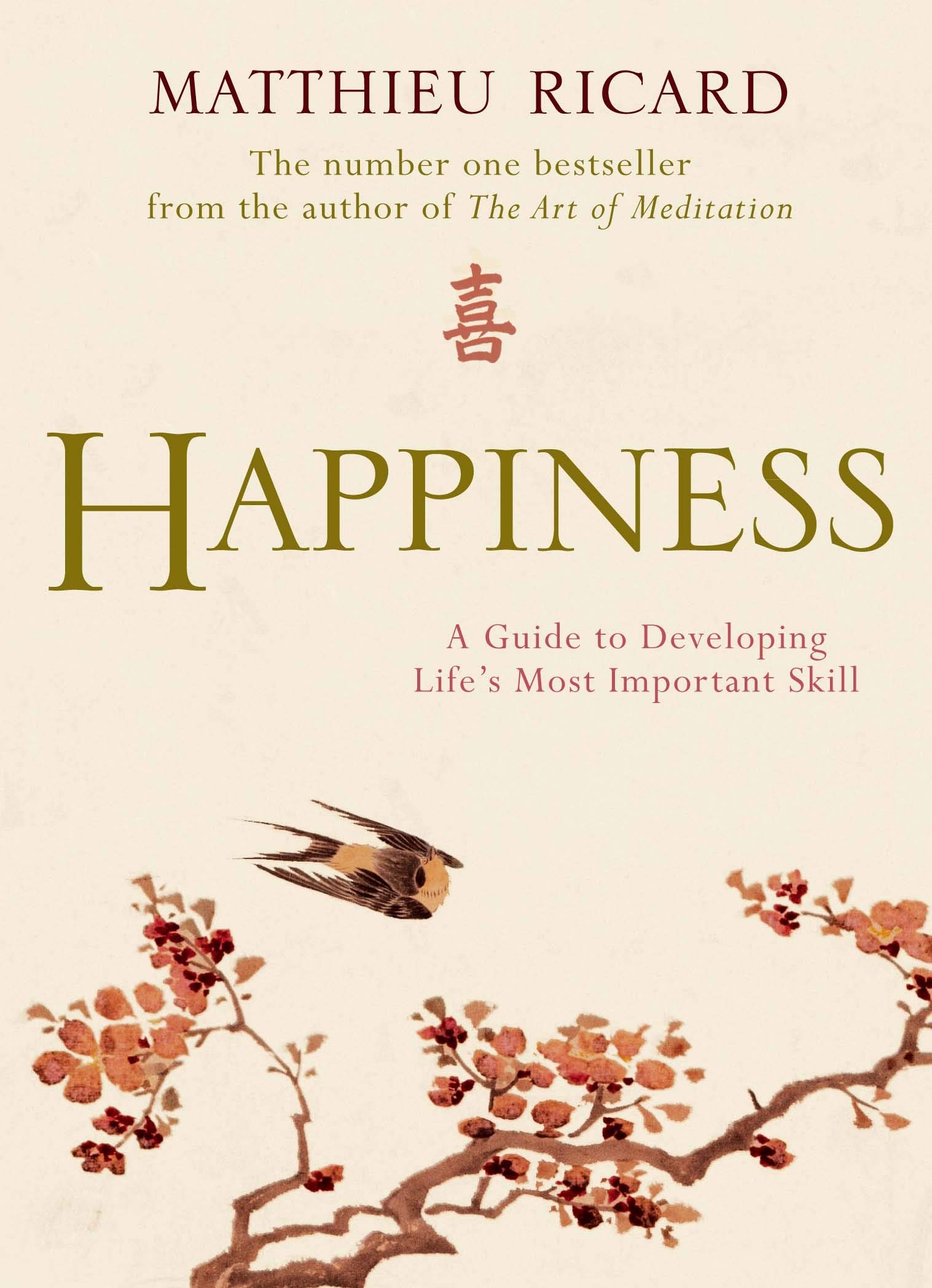
Full description not available
D**N
A beneficial 'prescription' for improving emotional well-being
I highly recommend this book. It needs a bit of self-discipline to work through it - it isn't a casual read - but it is well worth making the effort.The author, Matthieu Ricard, is a Buddhist monk with an academic background in genetics. More recently, he has conducted research into the neurological effects of meditation. Meditation is, indeed, very much commended in this book, and the author draws on both the natural sciences and Buddhist tradition to present an approach for increasing your 'happiness skills'. It's probably worth mentioning that Mattheiw Ricard has been described by The Independent newspaper as 'the happiest man in the world' (a claim prompted by results of an MRI scan of his left pre-frontal cortex).Some readers of a resolutely secular persuasion may find the idea of some Buddhist content off-putting, as may those of other religious traditions. In fact, the Buddhist content, though definitely present, isn't overly emphasised. The author does not attempt to indoctrinate the reader; essentially, he is offering a methodology - and a frequently effective one at that.This book is not a miracle cure for unhappiness, but it is a beneficial 'prescription' for improving emotional well-being.
P**Y
The simple truth for those willing to believe and accept it
Experience of life comes with some age, the exposure to years of newspapers, TV news and more recently social media coverage of world events. We can now see the horrors of every day happening around the planet in gritty detail. The truth is hurtful, disturbing and hard to bare. Here in the western world we every day have the privilege of the enormous luxuries that we absolutely take for granted. Delicious, regular food, a warm comfortable bed and somewhere to live, ready access to education, books, entertainment. All the technology we could ever wish for. Do we know if we are truly happy? This book is a must read for any human being who truly wants to know the meaning of life beyond the distractions of a busy career, every day routine and the many other distractions in our lives which leave no space in our mind for deep and considerate thinking about the self.
A**R
Has been helpful
I have been reading a lot of this kind of book recently and this one is one of the better ones. I haven't given it five stars as it wasn't life changing, but I will go back to it. Extracting the practical exercises is not as simple as in some others and I find the life style as a Buddhist monk doesn't chime with me. I do like the scientific approach he uses and the research results - more of an interest of mine.I do put some of his ideas into practice, along with those from other books, and have found them helpful. As I said, I will probably go back to it.
M**H
My Desert Island Book!
I've read several books on happiness but have found no more effective and convincing guide than this. Many other authors fall into "the Texas housewife" fallacy. Research shows that the average housewife is quite happy - but Ricard asks what happens if something goes wrong, if she loses her job or her child dies. Then he points to ways to overcome grief, or a reduced lifestyle - skillful ways to be, or become, happy in any situation. This advice is for everyone, not just the Texas housewife.Part of the Texas housewife fallacy is the idea that you can only be happy if you have an excellent marriage, loadsa money, zippy social life, and so on. I'd often wondered if such authors had ever considered the wise hermit in the cave. We've all heard he's the happiest man. Well, Ricard actually is that man!(There are MRI results that prove it, although he is too modest to claim that title.)Fans of Aristotle may now be grumbling about such brain centred results - saying happiness is flourishing. But this makes happiness seem like something only a superwoman Texas housewife can have! Not only a good job, and a great marriage, but she must also be a leader in the community. Ricard undermines Aristotle, with Buddha's help, and shows that happiness is, indeed, all in the mind, it's 'feeling good', it's 'joie de vivre'. The hermit can have joie de vivre. Anyone, with the right mentality, can 'feel good' most of the time. There is the caveat that people must be alive to the suffering of others, though; there is no retreat into solipsism. Ricard has taken the bodhisattva vow. Writing this book is, probably, part of living up to that.Ricard frequently uses examples from Western Culture, as well as Buddhism, to illustrate his points. He's the son of a famous Parisian philosopher, and is an excellent position to do this. For instance, early in the book, he points to Glenn Gould, Bobby Fischer, and Baudelaire. He says he didn't want to be like them (wouldn't we all agree!) We might pause and think, but, hey, these guys are at the pinnacle of Western Culture! But are they happy?Later in the book he undermines the negative side of bigger, stabler, cultural figures, like Kant and Aristotle. This is all done with the lightest touch and in a language anyone can understand. At one point, he even demolishes Bach (!) Maybe "demolish" is a bit strong - he praises Bach for producing beautiful music, but points out that we can only listen to even this music for a short time without becoming bored. We need something else to make us happy most of the time - like the skills taught to us by the Buddha and his followers.
T**
Book
Good quality
Trustpilot
1 week ago
2 weeks ago